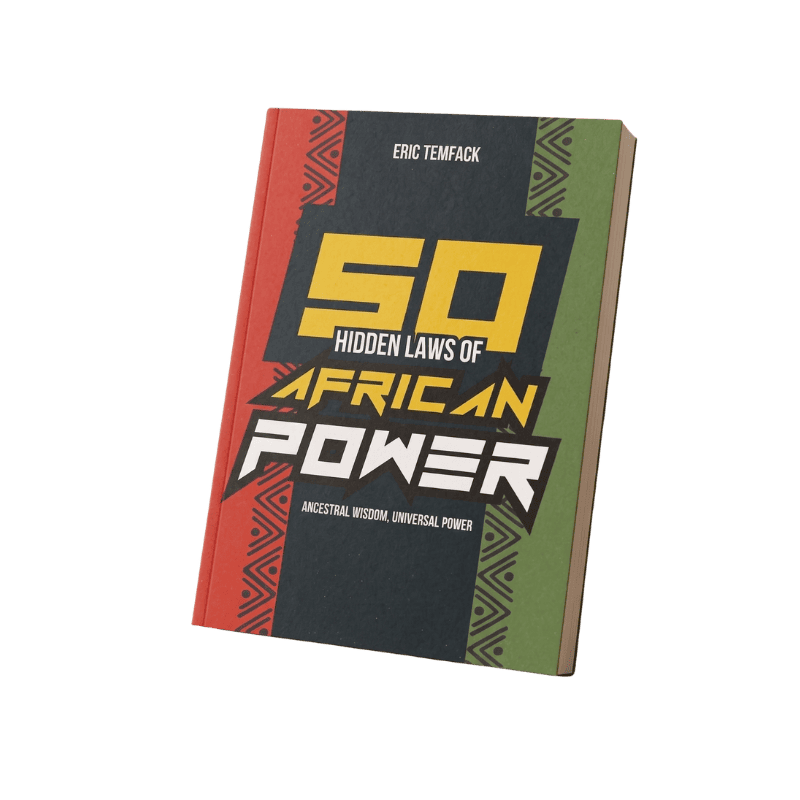
TAHARQA — EMBODIMENT OF THE 50 HIDDEN LAWS OF AFRICAN POWER
Through construction, resistance, and faith, the Kushite pharaoh left his mark on Egypt and Africa as a giant of the two Niles.
I. HISTORICAL AND CIVILIZATIONAL CONTEXT
⭐ Who was Taharqa? Taharqa (reigned c. 690‑664 BCE) was a pharaoh of the 25th Dynasty, of Kushite origin (present‑day Sudan). He is one of the most famous “Black Pharaohs”, known for his major building projects, his resistance against the Assyrian Empire, and his mention in the Bible (2 Kings 19:9; Isaiah 37:9). He ruled a double crown uniting Egypt and the Kingdom of Kush.
Egypt and Kush in the 7th Century BCE
Taharqa was the son of Piye (Piankhy) and the brother of Shabaka, who preceded him on the throne. The 25th Dynasty, founded by Piye, was at its peak. The empire stretched from the Mediterranean to the confluence of the Blue and White Niles. However, the Assyrian threat grew in the east. Taharqa had to defend his kingdom against the armies of Esarhaddon and then Ashurbanipal. Although he suffered military setbacks, he is remembered as a great builder (temples at Karnak, Gebel Barkal, sanctuaries).
❓ What does the name “Taharqa” mean? “Taharqa” is the Egyptian/Kushite form of his name; in Assyrian he is called “Tarqu’u” or “Tirhaqah”. The Bible calls him “Tirhaqah” (king of Ethiopia). The exact meaning is uncertain, but it may be linked to a divine epithet.
The Spiritual and Political Context
Taharqa was a king devoted to Amun, like his predecessors. He continued the policy of religious restoration: he rebuilt and enlarged temples, notably at Karnak (construction of the famous Taharqa’s kiosk) and at Sanam (Nubia). He saw himself as the protector of Maat, cosmic order. His faith was also a tool of legitimation against the Assyrians, whom he presented as impious invaders.
🔗 CONNECTION TO THE 50 HIDDEN LAWS OF AFRICAN POWER
→ Law #1: Master Cosmic Balance (building and resisting)
Points of convergence:
• Taharqa balanced monumental construction (temples, columns) with military defence (campaigns against Assyria).
• He embodied the pious and warrior pharaoh – two faces of Maat.
• Modern application: African leaders must combine infrastructure development with the protection of sovereignty.
• Strategic lesson: Enduring power is built through stone (culture) and sword (defence) – Taharqa mastered both.
II. ORIGINS AND SOCIAL ASCENSION
❓ How did Taharqa become pharaoh? Taharqa was the son of King Piye. His brother Shabaka ruled first, then his other brother Shabataka. After Shabataka’s death, Taharqa ascended the throne (c. 690 BCE) as the legitimate successor. He had already been trained as a general and administrator.
Birth and Family
Taharqa was born around 710 BCE in Napata (Sudan). He was the son of Piye (the conqueror of Egypt) and probably of Queen Abar, of the Kushite lineage. His family was the most powerful of the era: his brothers Shabaka and Shabataka ruled before him. He married several queens, including the famous “God’s Wife of Amun” (Amenirdis II?). He had several sons, some of whom were captured by the Assyrians.
Education and Training
Taharqa received a Kushite prince’s education: military school (bow, chariots, tactics), religious instruction (rites of Amun), hieroglyphs, and administration. He took part in his brother Shabaka’s campaigns in Asia, gaining military experience.
The Rise: The Builder’s Reign
As pharaoh, Taharqa launched a vast construction programme: restoration of the Karnak temple (addition of monolithic columns), erection of the “Taharqa’s kiosk” (a huge colonnade), construction of temples at Sanam, Kawa, and Jebel Barkal. He led campaigns as far as Phoenicia, but had to face the Assyrian offensive of Esarhaddon (671 BCE), who captured Memphis. Taharqa retreated to Nubia, counter‑attacked, but Ashurbanipal finally defeated him in 664. He died in exile at Napata.
🔗 CONNECTION TO THE LAWS OF AFRICAN POWER
→ Law #3: “Transform Knowledge into Power”
Points of convergence:
• Taharqa used his knowledge of architecture and engineering to erect monuments that reinforced his authority – stone as a language of power.
• His mastery of alliances and guerrilla tactics in Nubia allowed him to survive the Assyrian invasion.
• Modern application: African leaders must invest in cultural infrastructure while preparing retreat and counter‑attack strategies.
• Strategic lesson: Technical knowledge (construction) and military knowledge (guerrilla) combined can face superior invaders.
III. TITLES AND FUNCTIONS
❓ What titles did Taharqa hold? Taharqa held classic pharaonic titles: “King of Upper and Lower Egypt” (Nefertemkhura), “Son of Ra” (Taharqa), “Beloved of Amun”, “Lord of Nubia”, “King of Kush”.
- King of Upper and Lower Egypt (Nefertemkhura – “Nefertem is the manifestation of Ra”).
- Son of Ra (Taharqa).
- Beloved of Amun – piety title.
- Lord of Nubia – control of gold routes.
- King of Kush – maintained Nubian identity.
- Great Builder (Karnak kiosk, Nubian temples).
🔗 CONNECTION TO THE LAWS OF AFRICAN POWER
→ Law #12: “Become Indispensable to Power”
Points of convergence:
• Taharqa was the only pharaoh able to embody Nubian and Egyptian resistance against the Assyrians – focal point of identity.
• Despite military defeat, his religious and architectural stature made him indispensable to national memory.
• Modern application: African leaders must cultivate an image as builder and defender – indispensability is built over time.
• Strategic lesson: A leader can lose a battle but win eternity through his monuments – Taharqa exemplifies this.
IV. THE KIOSK OF TAHARQA – ARCHITECTURE OF POWER
❓ What is Taharqa’s kiosk at Karnak? The kiosk of Taharqa (or “Ethiopian kiosk”) is a monumental structure composed of ten monolithic sandstone columns. It stands within the precinct of the Amun‑Ra temple at Karnak, Luxor. It probably served as a resting place for the sacred barque of Amun during processions. Only one column remains standing today.
The kiosk is an architectural masterpiece. The columns, over 20 metres high, bear inscriptions glorifying Taharqa. Although ruined, it impresses visitors. It symbolises Kushite power at its peak and the will to restore Egyptian cults. Archaeologists have called it a “stone forest”.
🔗 CONNECTION TO THE LAWS OF AFRICAN POWER
→ Law #15: “Build Monuments That Speak for You”
Points of convergence:
• Taharqa’s kiosk is a speaking monument: even in ruins, it tells his imperial vision.
• Tourists and Egyptologists from around the world photograph it, spreading his name.
• Modern application: African leaders must erect remarkable cultural infrastructure – a standing column can cross millennia.
• Strategic lesson: Stone is more talkative than armies – Taharqa’s kiosk still speaks.
V. THE WAR AGAINST ASSYRIA – A HEROIC RESISTANCE
In 671 BCE, the Assyrian king Esarhaddon invaded Egypt. Taharqa offered fierce resistance, but Memphis fell. The royal family was captured (women, children); Taharqa retreated to Nubia. He organised guerrilla warfare and briefly retook Memphis in 669, but Ashurbanipal, Esarhaddon’s son, launched a new offensive in 664, sacking Thebes. Taharqa died shortly after, in 664. Despite the defeat, his courage against the greatest power of the era remains legendary.
🔗 CONNECTION TO THE LAWS OF AFRICAN POWER
→ Law #23: “Heal to Rule – The Power of the Healer” (adapted “Resist to Survive”)
Points of convergence:
• Taharqa “healed” Egypt by delaying Assyrian occupation and restoring temples between campaigns – palliative care for a nation.
• His heroic resistance, even if defeated, inspired later dynasties.
• Modern application: African leaders must resist even against superior forces – heroism can be more valuable than victory.
• Strategic lesson: Losing a war honourably can forge a legend – Taharqa proved it.
VI. TAHARQA IN THE BIBLE – A BIBLICAL FIGURE
❓ Where is Taharqa mentioned in the Bible? He appears in 2 Kings 19:9 and Isaiah 37:9 as “Tirhakah, king of Egypt (Cush)”. The text states that the Assyrian king Sennacherib (actually Esarhaddon) heard about him and it altered his plans. Taharqa is described as a threat to Assyria.
This biblical mention has contributed to Taharqa’s fame in the Judeo‑Christian world. It confirms his geopolitical importance in the 7th century BCE. Some exegetes see this passage as evidence of a potential alliance between Ethiopia (Kush) and the Kingdom of Judah against Assyria.
🔗 CONNECTION TO THE LAWS OF AFRICAN POWER
→ Law #28: “Control Your Narrative – History Belongs to the One Who Writes It”
Points of convergence:
• Taharqa did not write his own Bible, but he appears in it – his story is partly controlled by religious texts.
• The biblical mention helped preserve his memory in the Christian West.
• Modern application: African leaders should seek to be mentioned in influential documents (chronicles, treaties, memoirs) to ensure posterity.
• Strategic lesson: A name mentioned in a sacred text crosses centuries – Taharqa benefits from this.
VII. SACRED ARCHITECTURE – RESTORING SANCTUARIES
Taharqa built or restored temples throughout Nubia: at Sanam (near Napata), Kawa, Jebel Barkal (the “sacred mountain”), and at Karnak. He erected chapels, pylons and columns. These buildings ensured the continuity of the cult of Amun and legitimised Kushite rule. They also served as economic centres (land distribution, tax collection).
🔗 CONNECTION TO THE LAWS OF AFRICAN POWER
→ Law #42: “Create a Legacy That Multiplies Your Power”
Points of convergence:
• Taharqa’s Nubian temples are “franchises” of his power – each spreads his glory over hundreds of kilometres.
• Religious architecture still attracts archaeologists and tourists, perpetuating his name.
• Modern application: African leaders must scatter their achievements (universities, bridges, hospitals) across the country – geographical legacy multiplies.
• Strategic lesson: One temple per province means one pharaoh per province – Taharqa disseminated his memory.
VIII. LEGACY – A MODEL FOR MODERN AFRICA
Taharqa is today venerated in Sudan as a national hero. His portrait appears on banknotes (10 Sudanese pounds), statues and street names. Pan‑African conferences cite him as a precursor of Nubian‑Egyptian unity. Despite his final defeat, his courage against Assyria makes him an icon of resistance. The “Black Pharaohs” owe much of their media revival to Taharqa.
🔗 CONNECTION TO THE LAWS OF AFRICAN POWER
→ Law #45: “Become a Symbol – When Your Name Becomes a Movement”
Points of convergence:
• “Taharqa” is a first name given in Sudan – his name evokes pride and resistance.
• International exhibitions (“The Black Pharaohs”) feature him – a symbol of pre‑colonial Africa.
• Modern application: African leaders must aim for their name to become a brand of resistance and greatness.
• Strategic lesson: A defeated king can become a more powerful symbol than the victors – Taharqa embodies this.
IX. SOURCES AND TESTIMONIES
Egyptian/Nubian sources: Karnak stelae, Kawa inscriptions, Gebel Barkal monuments.
Assyrian sources: Annals of Esarhaddon and Ashurbanipal (prisms, cylinders).
Biblical sources: 2 Kings 19:9; Isaiah 37:9.
Archaeology: Excavations at Karnak, Sanam, Kawa, El‑Kurru pyramids.
❓ Where is Taharqa’s tomb? Taharqa was buried at El‑Kurru, Sudan (tomb Ku. 5), the same necropolis as Piye. His pyramid is modest, but the burial chamber yielded precious objects (armour, vases). Unfortunately, the site has been plundered many times.
🔗 CONNECTION TO THE LAWS OF AFRICAN POWER
→ Law #28: “Control Your Narrative – History Belongs to the One Who Writes It” (continued)
Points of convergence:
• Taharqa left many inscriptions, but it was his Assyrian enemies who dictated the narrative of his defeat – a double narrative.
• Modern archaeology has done him justice by revealing the scale of his constructions.
• Modern application: African leaders must fund excavations on their own historical sites – archaeology is a battle of memory.
• Strategic lesson: Victors may write history, but stones (temples, stelae) still speak – Taharqa left many.
X. MYSTERIES AND UNSOLVED QUESTIONS
❓ Why did Taharqa lose to the Assyrians? Several reasons: Egypt was divided (some Delta princes collaborated with Assyria), Assyrian military superiority (sieges, archers, cavalry), and the difficulty of defending two fronts (Delta and Nubia).
❓ What is the exact height of Taharqa’s kiosk column? The intact column stands about 21 metres tall. The original kiosk had ten columns arranged in two rows.
❓ Did Taharqa have links with the Queen of Sheba? No historical evidence. The confusion arises from the title “king of Ethiopia” in the Bible, but “Ethiopia” then meant Kush (Sudan), not the present‑day country.
🔗 CONNECTION TO THE LAWS OF AFRICAN POWER
→ Law #37: “Cultivate Mystery – What Is Hidden Fascinates”
Points of convergence:
• Gaps in the details of his death and his retreat in Nubia feed legends – shadow zones make the hero greater.
• The mystery of the kiosk (how were those columns erected?) intrigues architects.
• Modern application: Leaders may leave technical achievements unexplained – mystery inspires admiration.
• Strategic lesson: An architectural feat whose method is not understood becomes a myth – Taharqa understood this.
XI. FAQ – FREQUENTLY ASKED QUESTIONS ABOUT TAHARQA
❓ Was Taharqa the brother of Shabaka? Yes, Taharqa was the son of Piye and the younger brother of Shabaka and Shabataka. Shabaka reigned before him.
❓ How long did Taharqa reign? Most Egyptologists agree on about 26 years (690‑664 BCE). Exact dates are debated.
❓ Is there a film about Taharqa? There is no major Hollywood film, but documentaries (BBC, “The Black Pharaohs”) and novels (“Taharqa, the Ethiopian King”) exist.
❓ What was the connection between Taharqa and Queen Candace? No direct link; Queen Candace (Amanirenas) lived several centuries later (1st centuries BCE/CE). Both are Kushite rulers, but of different dynasties.
XII. LESSONS AND CONTEMPORARY RELEVANCE
💡 What can Africa learn from Taharqa? Taharqa shows that an African leader can build universal monuments, resist superpowers, and leave a mark in sacred texts. He teaches that a leader’s greatness is measured not only by victories but by the ability to inspire generations after defeat.
Investing in lasting infrastructure: His temples and kiosks still stand – build for eternity.
Resisting even when outmatched: His war against Assyria, though lost, forged a legend – symbol sometimes outweighs reality.
Using religion and culture as weapons: He restored Egyptian cults to legitimise his rule – religious soft power is potent.
Leaving dispersed monuments: From Sudan to Egypt, his constructions are silent ambassadors.
🔗 CONNECTION TO THE LAWS OF AFRICAN POWER
→ Law #5: “Master Multiple Domains – The Power of the Renaissance”
Points of convergence:
• Taharqa was simultaneously builder, general, priest, diplomat – an imperial polymath.
• He combined Nubian and Egyptian identities, the sacred and the military – a complete leader.
• Modern application: African leaders must be versatile – infrastructure, defence, culture, spirituality.
• Strategic lesson: The African renaissance needs leaders able to master several arts – Taharqa offers a model.
CONCLUSION: IMMORTALITY THROUGH THE KIOSK AND THE BIBLE
Taharqa remains, more than 2,600 years after his death, one of the most famous African pharaohs. His journey – Kushite prince turned pharaoh, builder of Karnak, resister against the Assyrians – testifies to the power of ambition, faith, and perseverance. Despite losing his throne, he won a place in collective memory, from the columns of Karnak to the verses of the Bible.
For contemporary Africa and its diaspora, Taharqa represents the leader who dared to defy the dominant empire of his time and bequeathed speaking stones. He reminds us that even a defeated man can become immortal if his works are solid enough. May each generation produce its own Taharqa – those leaders who, through construction, faith, and courage, write their name (and Africa’s) in the annals of history.
🔗 SYNTHESIS: TAHARQA AS THE EMBODIMENT OF THE HIDDEN LAWS OF AFRICAN POWER
📜 Summary of the laws embodied by Taharqa: Balance (#1), Knowledge as Power (#3), Polymathy (#5), Control of Time (#8), Indispensability (#12), Monuments (#15), Therapeutic Resistance (#23), Narrative Control (#28), Mystery (#37), Multiplicative Legacy (#42), Symbol (#45), Immortality (#50).
- Law #1 (Balance) – Construction and war, piety and resistance.
- Law #3 (Knowledge as Power) – Architecture, religion, tactics – three knowledges combined.
- Law #5 (Polymathy) – Builder, general, priest, diplomat – unifier.
- Law #8 (Control of Time) – Using military cycles, strategic retreat to Nubia.
- Law #12 (Indispensability) – Symbol of Kushite resistance – focal point.
- Law #15 (Monuments) – Karnak kiosk, Nubian temples – eternal stones.
- Law #23 (Heal to Rule) – Resistance as “national healing”, religious restoration.
- Law #28 (Control of Narrative) – Kushite inscriptions vs Assyrian annals – double narrative.
- Law #37 (Mystery) – Kiosk secrets, details of his death – technical and historical mysteries.
- Law #42 (Multiplicative Legacy) – Temples, banknotes, biblical mentions – active legacy.
- Law #45 (Symbol) – “Taharqa” = Black Pharaoh, builder, biblical king – living concept.
- Law #50 (Immortality) – Standing column, biblical verse – double immortality.
Practical Application for the Modern Leader:
✅ Build monuments that withstand time – a column at Karnak still speaks
✅ Resist even against superior forces – heroism inspires generations
✅ Invest in cultural infrastructure – it is your future “kiosk”
✅ Use religion or spiritual values to legitimise your power
✅ Leave scattered traces – a temple in Nubia, a column at Karnak, a mention in the Bible
The Taharqa Challenge for You:
“What column (project, institution) will you erect so that it speaks after you? How will you resist the modern ‘Assyrians’ while preserving your heritage?”