


Pillar 1 – Dark Psychology & Influence
This pillar analyzes the mechanisms of manipulation, persuasion, and counter-manipulation present in African history. It draws on figures such as Queen Nzinga (power theater, flexible resistance), Shaka Zulu (tactical reinvention), and secret societies (simulated submission).
- Frantz Fanon – Black Skin, White Masks (1952), The Wretched of the Earth (1961) – analysis of colonial trauma and liberation psychology.
- Albert Memmi – The Colonizer and the Colonized (1957) – decryption of internalized domination dynamics.
- Linda Heywood – Njinga of Angola (2017) – communication and deception strategies.
- John Laband – The Rise and Fall of the Zulu Nation (1997) – military psychology and manipulation of alliances.
- Wyatt MacGaffey – Religion and Society in Central Africa (1986) – role of secret societies in psychological resistance.
Pillar 2 – Geopolitics & African Influence
This pillar decodes 50 power mechanisms through the history of African empires: control of trade routes (Mansa Musa), mountain diplomacy (Moshoeshoe I), narrative reconquest (Cheikh Anta Diop), and economic resistance (Samori Touré).
- Cheikh Anta Diop – Nations nègres et culture (1954) – demonstration of Africa's centrality in power history.
- Joseph Ki‑Zerbo – Histoire de l'Afrique noire (1972) – synthesis of great states and their systems.
- Nehemia Levtzion – Ancient Ghana and Mali (1973) – political economy and gold routes.
- Ivor Wilks – Forests of Gold (1993) – analysis of the Ashanti Empire and its symbolism.
- Yves Person – Samori : Une révolution dyula (1968‑75) – diplomatic and military resistance.
- John Hunwick – Timbuktu and the Songhay Empire (2003) – influence of knowledge centers.
Pillar 3 – History, Memory & Founding Narratives
This pillar rehabilitates the great African narratives: ancient Egypt as a black mother civilization, the Charter of Manden (1222), the Mali Empire, the Kingdom of Kongo, and anti-colonial resistance. It aims to deconstruct the "memory gap" imposed by colonization.
- Cheikh Anta Diop – The African Origin of Civilization (1967) – linguistic and anthropological evidence.
- Théophile Obenga – The Egyptian Geometry (1990) – scientific contributions of ancient Africa.
- Elikia M'Bokolo – Afrique noire : histoire et civilisations (2004) – global approach.
- Djibril Tamsir Niane – Sundiata: An Epic of Old Mali (1960) – oral transmission and constitutionalism.
- Amadou Hampâté Bâ – The Strange Destiny of Wangrin (1972) – memory and ethics of power.
- Basil Davidson – The African Genius (1969) – rehabilitation of forgotten civilizations.
References of the 50 Laws
Foundations of the Inner Throne (Laws 1–10)
Affirm Your Divine Origin
Kebra Nagast (The Glory of the Kings), 14th c.
Kyerematen, A.A.Y. Panoply of Ghana. 1964, pp. 45‑58.
Forge Your Legend by Deeds
Niane, Djibril Tamsir. Sundiata: An Epic of Old Mali. 1960, pp. 38‑42.
Conrad, David C. Empires of Medieval West Africa. 2010, pp. 23‑45.
Le Quellec, Jean‑Loïc. Histoire et pouvoir en Afrique. 2020, pp. 75‑90.
Master the Routes of Gold and Knowledge
Levtzion, Nehemia. Ancient Ghana and Mali. 1973, pp. 112‑130.
Hunwick, John. Timbuktu and the Songhay Empire. 2003, pp. 25‑47.
Embody a Symbol Greater Than Yourself
Rattray, Robert Sutherland. Ashanti. 1927, pp. 260‑278.
Wilks, Ivor. Forests of Gold: Essays on the Ancient Akan. 1993, pp. 89‑105.
Never Define Yourself by Your Limits
Ritter, E.A. Shaka Zulu: The Rise of the Zulu Empire. 1955, pp. 98‑112.
Laband, John. The Rise and Fall of the Zulu Nation. 1997, pp. 84‑101.
Stand at the Top of the Mountain
Sanders, Peter. Moshoeshoe, Chief of the Sotho. 1975, pp. 130‑145.
Thompson, Leonard. Survival in Two Worlds: Moshoeshoe of Lesotho. 1975, pp. 156‑167.
Become a Master of the Theater of Power
Heywood, Linda. Njinga of Angola: Africa's Warrior Queen. 2017, pp. 78‑95.
Cadornega, António de Oliveira. História Geral das Guerras Angolanas (1680). Republished 1972, pp. 210‑225.
Cultivate the Patience of the Baobab
Pankhurst, Richard. The Ethiopians: A History. 2001, pp. 150‑165.
Marcus, Harold G. A History of Ethiopia. 1994, pp. 112‑125.
Practice the Art of the Detour
Abrahams, Roger D. African Folktales. 1983.
Pelton, Robert D. The Trickster in West Africa. 1980.
Appiah, Peggy. Ananse the Spider: Tales from an Ashanti Village. 1967.
Transform Iron into Gold
Ben‑Amos, Paula. Art, Innovation, and Politics in Eighteenth‑Century Benin. 1995, pp. 40‑58.
Connah, Graham. African Civilizations: An Archaeological Perspective. 2001, pp. 145‑160.
Strategies of Expansion (Laws 11–20)
Unify by Symbols, Rule by Institutions
Al‑Bakri, Abu Ubayd. Kitab al‑Masalik wa'l‑Mamalik (1068).
Levtzion, Nehemia. Ancient Ghana and Mali. 1973, pp. 22‑45.
Know When to Be the Lion and the Fox
Tarikh al‑Soudan (17th c.).
Hunwick, John O. Timbuktu and the Songhay Empire. 1999, pp. 89‑105.
Reinvent the Rules of the Game
Laband, John. The Rise and Fall of the Zulu Nation. 1997, pp. 75‑90.
Edgerton, Robert B. Like Lions They Fought: The Zulu War and the Last Black Empire in South Africa. 1988.
Control the River, Not the Fish
Ibn Battuta. Rihla (1354).
Pearson, Michael N. Port Cities and Intruders: The Swahili Coast, India, and Portugal in the Early Modern Era. 1998, pp. 28‑46.
Turn the Enemy into a Student
Person, Yves. Samori : Une révolution dyula. 1968‑75, pp. 745‑780.
Boahen, A. Adu. African Perspectives on Colonialism. 1987.
Govern Through Organized Mystery
Al‑Bakri (1068).
Conrad, David C. & Fisher, Humphrey J. "The Conquest that Never Was: Ghana and the Almoravids, 1076". History in Africa, Vol. 9, 1982, pp. 21‑59.
Use Faith as Imperial Cement
Munro‑Hay, Stuart. Aksum: An African Civilization of Late Antiquity. 1991.
Phillipson, David W. Foundations of an African Civilisation: Aksum & the Northern Horn, 1000 BC – AD 1300. 2012, pp. 190‑212.
Isolationism Is a Double‑Edged Sword
Campbell, Gwyn. An Economic History of Imperial Madagascar, 1750‑1895. 1991.
Cohen, Ronald. "The Making of Ethnicity: A Modest Defence of Primordialism". In E. Tonkin et al. (eds.), History and Ethnicity. 1995.
Logistics Is the Queen of Battles
Beauchesne, A. Les sources de l'histoire du Congo : les documents portugais. 1985.
Newitt, Malyn. Portuguese Settlement on the Zambesi. 1973, pp. 112‑130.
Do Not Conquer – Absorb
Levtzion, Nehemia. Ancient Ghana and Mali. 1973, pp. 180‑200.
Conrad, David C. Empires of Medieval West Africa. 2010.
Arts of Resistance (Laws 21–30)
Practice Flexible Resistance
Heywood, Linda. Njinga of Angola: Africa's Warrior Queen. 2017, pp. 150‑180.
Miller, Joseph C. Kings and Kinsmen: Early Mbundu States in Angola. 1975, pp. 210‑230.
Choose Your Death
Barry, Boubacar. Senegambia and the Atlantic Slave Trade. 1985.
Robinson, David. Muslim Societies in African History. 2000.
Resist Through the Mind
Babou, Cheikh Anta. Fighting the Greater Jihad: Amadu Bamba and the Founding of the Muridiyya of Senegal, 1853‑1913. 2007.
Cruise O'Brien, Donal. The Mourides of Senegal: The Political and Economic Organization of an Islamic Brotherhood. 1971.
Exile Is a Waiting Room
De Witte, Ludo. The Assassination of Lumumba. 2000.
Nzongola‑Ntalaja, Georges. The Congo from Leopold to Kabila: A People's History. 2002.
Be as Elusive as Water
Campbell, Gwyn. "The Structure of Slavery in S.E. Africa". Journal of African History, 1988.
Price, Richard. Maroon Societies: Rebel Slave Communities in the Americas. 1979.
Speak the Language of Power, Think in Your Own
Achebe, Chinua. Things Fall Apart. 1958.
Irele, Abiola. The African Experience in Literature and Ideology. 1981.
Feigned Submission Is a Form of War
MacGaffey, Wyatt. Religion and Society in Central Africa. 1986.
Thornton, John K. The Kongolese Saint Anthony: Dona Beatriz Kimpa Vita and the Antonian Movement, 1684‑1706. 1998.
Mobilize the Excluded
Boahen, A. Adu. Africa and the Colonial Challenge. Vol. VII of UNESCO General History of Africa, 2003.
Wilks, Ivor. Asante in the Nineteenth Century. 1975.
Launch a Call That Resonates
Lumumba, Patrice. Speech at the Ceremony of the Proclamation of the Congo's Independence (1960).
De Witte, Ludo. The Assassination of Lumumba. 2000.
Live as You Teach
Jaffré, Bruno. Biographie de Thomas Sankara: La patrie ou la mort. 2007.
Harsch, Ernest. Thomas Sankara: An African Revolutionary. 2014.
Ziegler, Jean. La victoire des vaincus. 2005.
Power in the Modern Arena (Laws 31–40)
Control the Narrative
Diop, Cheikh Anta. Nations nègres et culture. 1954; The African Origin of Civilization. 1967.
The Idea Must Survive the Man
Birmingham, David. Kwame Nkrumah: The Father of African Independence. 1998.
Davidson, Basil. Black Star: A View of the Life and Times of Kwame Nkrumah. 1973.
Imprisonment Can Be a Platform
Mandela, Nelson. Long Walk to Freedom. 1994.
Carlin, John. Playing the Enemy: Nelson Mandela and the Game That Made a Nation. 2008.
Lodge, Tom. Mandela: A Critical Life. 2006.
Master New Territories
Adesina, Akinwumi. "Africa's Agricultural Revolution". Foreign Affairs, 2017.
Mwangi, Esther. "Digital Agriculture in Africa". World Bank, 2019.
Build Economic Walls
Financial Times, "Africa's New Trading Powerhouse", 2023.
Bloomberg, "African Continental Free Trade Area", 2022.
To Educate Is to Liberate
Nyerere, Julius. Ujamaa: Essays on Socialism. 1968.
Muli, Joseph. "Education for Liberation in Africa". 2015.
Reinvent Tradition
Senghor, Léopold Sédar. Liberté 1: Négritude et humanisme. 1964.
Kesteloot, Lilyan. Histoire de la littérature négro-africaine. 2001.
The Network Is the New Kingdom
Gilroy, Paul. The Black Atlantic: Modernity and Double Consciousness. 1993.
Mbembe, Achille. Sortir de la grande nuit. 2010.
Be a Lighthouse, Not an Echo
Maathai, Wangari. Unbowed: A Memoir. 2006.
UNEP, "The Green Belt Movement", 2009.
Use the System to Change the System
Brossier, Marie. "Senegalese Democratic Transition". 2016.
Pitfalls of Power and Laws of Decline (Laws 41–50)
Do Not Confuse the Mask with the Face
Braeckman, Colette. Le dinosaure: Le Zaïre de Mobutu. 1992.
Young, Crawford. The Postcolonial State in Africa: Fifty Years of Independence, 1960–2010. 2015.
Beware the Curse of Easy Wealth
Sala‑i‑Martin, Xavier. "The curse of aid". 2003.
Omotola, J. Shola. "Oil and the crisis of governance in Nigeria". 2009.
Ross, Michael L. The Oil Curse: How Petroleum Wealth Shapes the Development of Nations. 2012.
The People Are the Guardian of Your Legitimacy
Achcar, Gilbert. The People Want: A Radical Exploration of the Arab Uprising. 2013.
El‑Mahdi, Rabab. "Egypt's Failed Transition". 2011.
The Foreign Friend Is a Hidden Creditor
Mbembe, Achille. De la postcolonie. 2000.
Chabal, Patrick & Daloz, Jean‑Pascal. Africa Works: Disorder as Political Instrument. 1999.
Paranoia Is a Prison
Kyemba, Henry. A State of Blood: The Inside Story of Idi Amin. 1977.
Rice, Andrew. The Teeth May Smile But the Heart Does Not Forget: Murder and Memory in Uganda. 2009.
Insane Splendor Signals the End
Titi, Noko. "Le faste des dirigeants africains". 1987.
Bancel, Nicolas. "La fin des présidences à vie". 2014.
Neglecting Succession Is to Sow War
Young, Crawford. The African Colonial State in Comparative Perspective. 2012.
Englebert, Pierre. Africa: Unity, Sovereignty, and Sorrow. 2009.
Forget the Past at Your Own Risk
Diop, Cheikh Anta. Berceau de l'humanité. 1987.
Shinnie, P.L. Ancient Nubia. 1996.
Your Legacy Is Your Last Act of Power
Hampâté Bâ, Amadou. L'étrange destin de Wangrin. 1972.
Mandela, Nelson. Long Walk to Freedom. 1994.
Become an Ancestor in Your Lifetime
Gyekye, Kwame. An Essay on African Philosophical Thought: The Akan Conceptual Scheme. 1995.
Mbiti, John S. African Religions and Philosophy. 1969.
Selected Bibliography – Key Authors
- Cheikh Anta Diop – Nations nègres et culture, The African Origin of Civilization
- Joseph Ki-Zerbo – Histoire de l'Afrique noire
- Linda Heywood – Njinga of Angola
- Djibril Tamsir Niane – Sundiata: An Epic of Old Mali
- Nehemia Levtzion – Ancient Ghana and Mali
- Ivor Wilks – Forests of Gold
- John Laband – The Rise and Fall of the Zulu Nation
- Peter Sanders – Moshoeshoe, Chief of the Sotho
- Bruno Jaffré / Ernest Harsch – Thomas Sankara
- Kwame Nkrumah – Neo-colonialism
- Frantz Fanon – The Wretched of the Earth
- Achille Mbembe – De la postcolonie, Sortir de la grande nuit
- Nelson Mandela – Long Walk to Freedom
- Wangari Maathai – Unbowed
- Amadou Hampâté Bâ – The Strange Destiny of Wangrin
- John S. Mbiti – African Religions and Philosophy
Dive into the Book
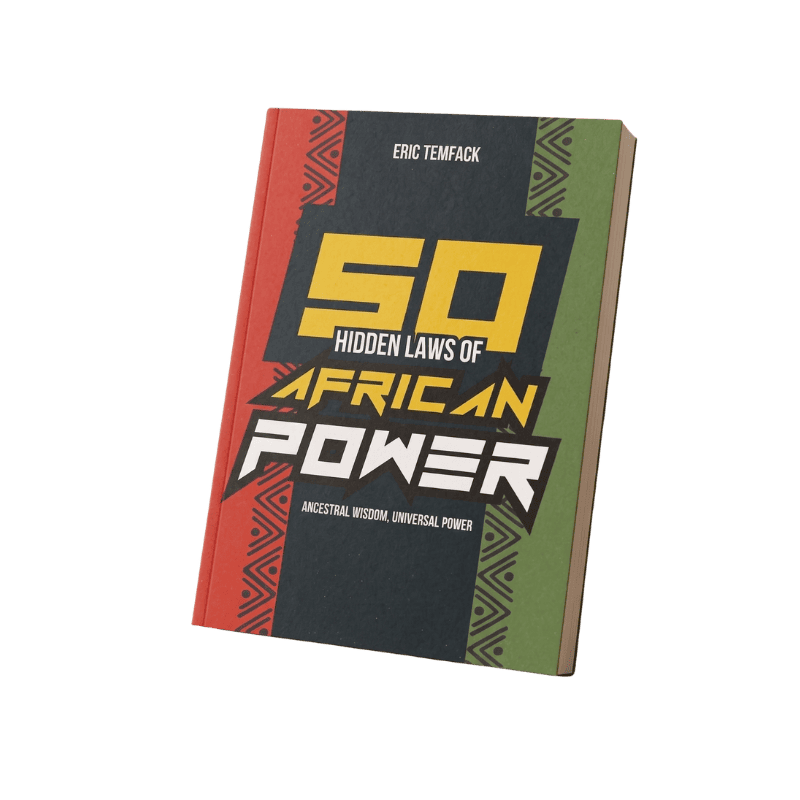
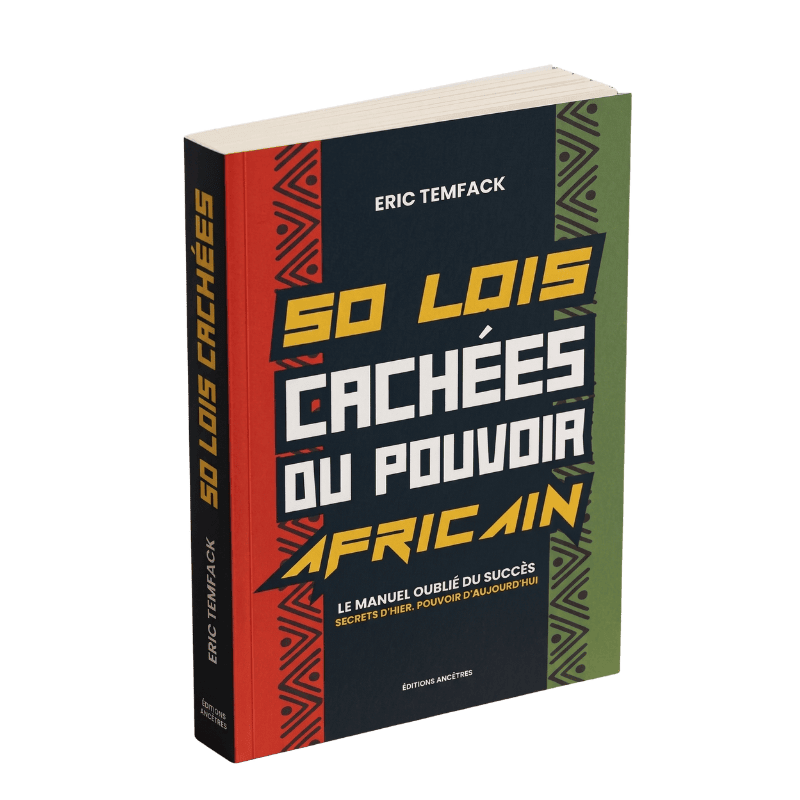
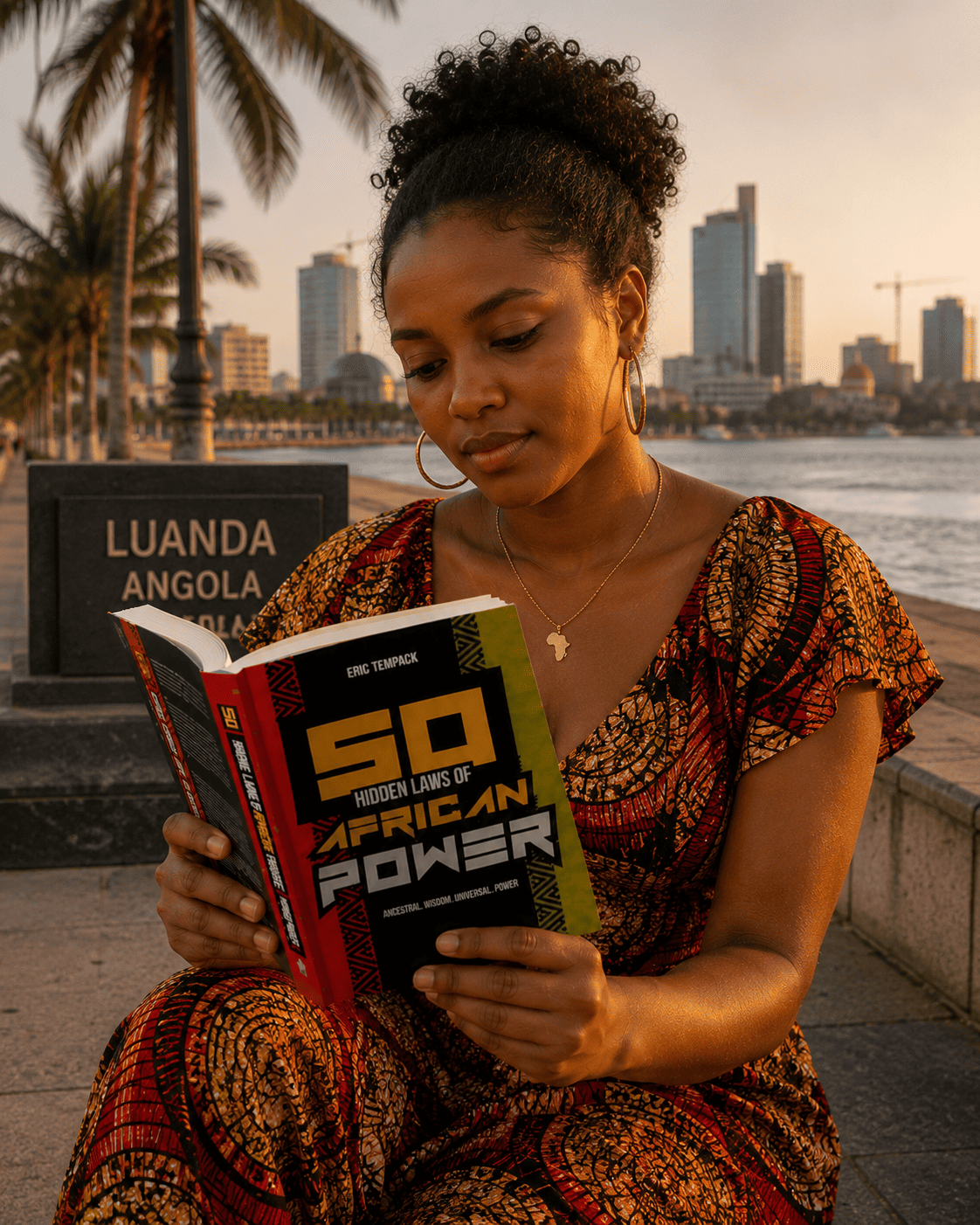
The 50 laws, their historical studies and practical applications await you.
📖 Order the Book