African Geopolitics & Influence: 50 Power Mechanisms Decoded
African geopolitics examines power dynamics, alliances, and influence strategies across the continent and in international relations, blending pre-colonial heritage, post-independence developments, and contemporary challenges: resources, demographics, digital transformation, and sovereignty.
3-Level Analytical Framework: Decoding African Geopolitics
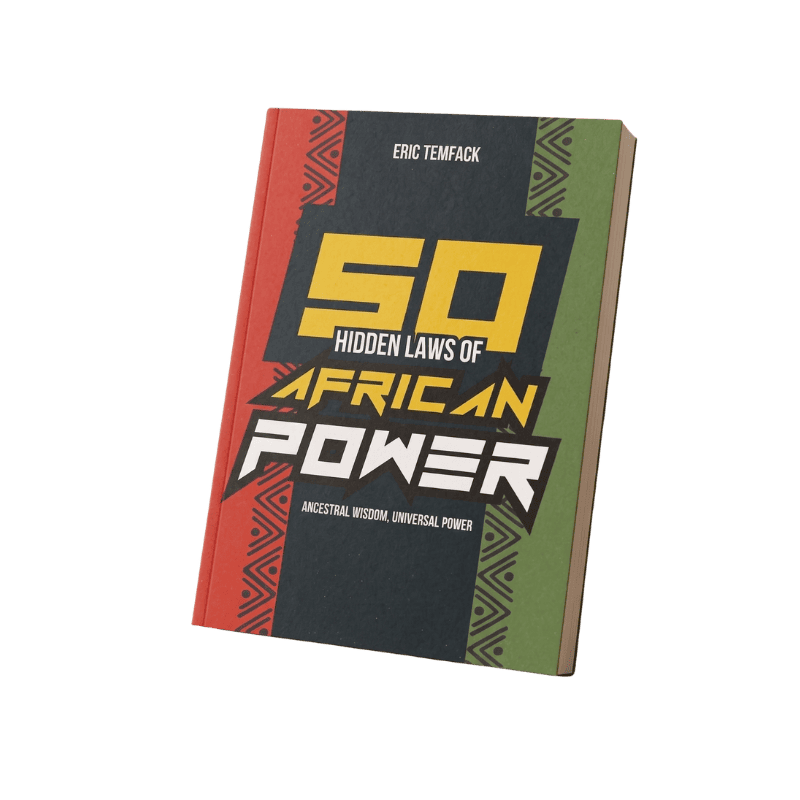
To analyze African power dynamics without narrative bias, apply this methodological framework rooted in historical research and validated by contemporary observation. This 3-level approach is at the core of the Ancestral History + Modern Proof™ method developed in 50 Hidden Laws of African Power.
🏛️ Level 1: Historical – Pre-colonial Mechanisms
African empires developed sophisticated power systems long before colonization. Understanding these mechanisms is essential to decoding contemporary strategies:
- Kemet (Ancient Egypt): Mastery of river diplomacy, natural border management, strategic use of the sacred to legitimize power. Law 4 – "The river unites, the desert protects" – still applies to transboundary water management (Nile, Niger, Congo).
- Mali Empire (13th-16th c.): Trade diplomacy based on trust, griot networks as strategic intelligence, flexible alliance management. Law 7 – "A flexible alliance beats rigid loyalty" – still influences West African regional negotiations.
- Kongo Kingdom (14th-19th c.): Federal structure respecting local autonomies, succession mechanisms balancing tradition and innovation, early maritime diplomacy with Europe. Law 18 – "Strong central power relies on legitimate local nodes" – sheds light on modern decentralization challenges.
- Ethiopian Empire: Resilience against external pressures, strategic use of geographic isolation, religious diplomacy as an influence lever. Law 33 – "Independence is negotiated, not endured" – echoes in contemporary African sovereignty stances.
Modern Application: In AfCFTA negotiations or regional political coalitions, favoring modular partnerships allows rapid adaptation to fast-changing geopolitical landscapes. Example: Senegal maintaining EU ties while developing BRICS+ partnerships.
🏗️ Level 2: Structural – Institutions, Economies, Alliances
Contemporary structures shape power balances. Analyze them with these lenses:
- Continental Institutions: The African Union (55 states) coordinates global stances (climate, UNSC reform). But effectiveness depends on member states' political will. Law 22 – "An institution without real power is mere decoration" – reminds us that structures only matter through concrete commitment.
- Regional Integrations: ECOWAS, SADC, EAC, ECCAS. Each bloc has distinct dynamics: ECOWAS manages Sahel security crises, SADC drives Southern African mining integration. Law 14 – "Regional unity precedes global influence" – guides strategy: strengthen proximity cooperation first.
- Economic Architectures: The African Continental Free Trade Area (AfCFTA) represents a 1.3B consumer market. But implementation faces logistical and regulatory hurdles. Law 36 – "Trade follows routes, power follows trade" – explains why infrastructure corridors (Lobito, Lamu, Trans-Saharan) are major geopolitical stakes.
⚙️ Level 3: Operational – Actors, Decisions, Impacts
Who decides, how, and with what effects? This operational analysis is crucial for action:
- State Actors: Presidencies, foreign ministries, intelligence services. Law 11 – "Power concentrates where information flows" – explains why states investing in strategic intelligence (e.g., Morocco, Rwanda) gain influence.
- Non-State Actors: African multinationals (Dangote, MTN, Safaricom), NGOs, think tanks (ISS Africa, Policy Center), digital influencers. Law 29 – "Influence no longer recognizes institutional borders" – describes the rising power of private actors in contemporary geopolitics.
- Decision-Making Processes: Opacity vs transparency, economic elites' role, civil society pressure. Law 44 – "Legitimacy stems from participation, not proclamation" – guides governance reforms to strengthen internal and external influence.
The 5 African Influence Levers in the 21st Century
These levers, identified in 50 Hidden Laws of African Power, structure the continent's influence capacity. Master them to decode or act upon African geopolitics.
African Geopolitics & Influence: 50 Power Mechanisms Decoded
African geopolitics examines power dynamics, alliances, and influence strategies across the continent and in international relations, blending pre-colonial heritage, post-independence developments, and contemporary challenges: resources, demographics, digital transformation, and sovereignty.
3-Level Analytical Framework: Decoding African Geopolitics
To analyze African power dynamics without narrative bias, apply this methodological framework rooted in historical research and validated by contemporary observation. This 3-level approach is at the core of the Ancestral History + Modern Proof™ method developed in 50 Hidden Laws of African Power.
🏛️ Level 1: Historical – Pre-colonial Mechanisms
African empires developed sophisticated power systems long before colonization. Understanding these mechanisms is essential to decoding contemporary strategies:
- Kemet (Ancient Egypt): Mastery of river diplomacy, natural border management, strategic use of the sacred to legitimize power. Law 4 – "The river unites, the desert protects" – still applies to transboundary water management (Nile, Niger, Congo).
- Mali Empire (13th-16th c.): Trade diplomacy based on trust, griot networks as strategic intelligence, flexible alliance management. Law 7 – "A flexible alliance beats rigid loyalty" – still influences West African regional negotiations.
- Kongo Kingdom (14th-19th c.): Federal structure respecting local autonomies, succession mechanisms balancing tradition and innovation, early maritime diplomacy with Europe. Law 18 – "Strong central power relies on legitimate local nodes" – sheds light on modern decentralization challenges.
- Ethiopian Empire: Resilience against external pressures, strategic use of geographic isolation, religious diplomacy as an influence lever. Law 33 – "Independence is negotiated, not endured" – echoes in contemporary African sovereignty stances.
Modern Application: In AfCFTA negotiations or regional political coalitions, favoring modular partnerships allows rapid adaptation to fast-changing geopolitical landscapes. Example: Senegal maintaining EU ties while developing BRICS+ partnerships.
🏗️ Level 2: Structural – Institutions, Economies, Alliances
Contemporary structures shape power balances. Analyze them with these lenses:
- Continental Institutions: The African Union (55 states) coordinates global stances (climate, UNSC reform). But effectiveness depends on member states' political will. Law 22 – "An institution without real power is mere decoration" – reminds us that structures only matter through concrete commitment.
- Regional Integrations: ECOWAS, SADC, EAC, ECCAS. Each bloc has distinct dynamics: ECOWAS manages Sahel security crises, SADC drives Southern African mining integration. Law 14 – "Regional unity precedes global influence" – guides strategy: strengthen proximity cooperation first.
- Economic Architectures: The African Continental Free Trade Area (AfCFTA) represents a 1.3B consumer market. But implementation faces logistical and regulatory hurdles. Law 36 – "Trade follows routes, power follows trade" – explains why infrastructure corridors (Lobito, Lamu, Trans-Saharan) are major geopolitical stakes.
⚙️ Level 3: Operational – Actors, Decisions, Impacts
Who decides, how, and with what effects? This operational analysis is crucial for action:
- State Actors: Presidencies, foreign ministries, intelligence services. Law 11 – "Power concentrates where information flows" – explains why states investing in strategic intelligence (e.g., Morocco, Rwanda) gain influence.
- Non-State Actors: African multinationals (Dangote, MTN, Safaricom), NGOs, think tanks (ISS Africa, Policy Center), digital influencers. Law 29 – "Influence no longer recognizes institutional borders" – describes the rising power of private actors in contemporary geopolitics.
- Decision-Making Processes: Opacity vs transparency, economic elites' role, civil society pressure. Law 44 – "Legitimacy stems from participation, not proclamation" – guides governance reforms to strengthen internal and external influence.
The 5 African Influence Levers in the 21st Century
These levers, identified in 50 Hidden Laws of African Power, structure the continent's influence capacity. Master them to decode or act upon African geopolitics.
👥 Lever 1: Demographics & Human Capital
- 1.4 billion people in 2025, median age 19: Africa is the world's youngest continent.
- 2050 projection: 2.5 billion inhabitants, 40% of the global population under 25.
- Strategic challenge: Transform the demographic dividend into economic power through education, employment, and innovation.
Modern Application: States investing heavily in technical education and youth entrepreneurship (e.g., Rwanda's African Leadership University, Senegal's DER) turn demographics into competitive advantage. Conversely, youth unemployment fuels irregular migration and social unrest. Strategic advice: Prioritize training aligned with market needs (digital, green energy, agro-industry).
⚡ Lever 2: Strategic Resources & Energy Transition
- 60% of uncultivated arable land globally: massive agricultural potential for continental and global food security.
- 30% of critical minerals (DRC cobalt, Zimbabwe lithium, South Africa rare earths): essential for the global energy transition.
- Underexploited energy potential: solar (Sahara), hydroelectric (Congo, Nile basins), wind (Atlantic coasts), geothermal (East African Rift).
Modern Application: Sovereignty over critical mineral value chains is becoming a geopolitical negotiating lever. Example: DRC mandating local cobalt processing to capture higher value-added. Strategic advice: Don't just export raw materials; invest in local processing, technical training, and logistics infrastructure to maximize geopolitical ROI.
🗺️ Lever 3: Geostrategic Position
- Maritime route control: Bab-el-Mandeb Strait (20% of global oil traffic), Suez Canal, Cape of Good Hope.
- Land corridors: Trans-Saharan (Europe-West Africa), Lobito corridor (Angola-DRC-Zambia), LSET (Lamu-South Sudan-Ethiopia Transport).
- Logistical footholds: deep-water ports (Tangier Med, Lekki, Doraleh), air hubs (Addis Ababa, Casablanca, Johannesburg), contested military bases.
Strategic advice: States mastering their geostrategic position (e.g., Morocco with Tangier Med, Egypt with Suez Canal) transform geography into power. Invest in port infrastructure, multimodal corridors, and transit agreements to capture continental and intercontinental traffic value.
🤝 Lever 4: Multilateral Diplomacy & Alliances
- African Union: 55 states, growing weight in global forums (UN, G20, COP). Ongoing reforms for own financing and accelerated decision-making.
- BRICS+: Egypt, Ethiopia, Iran, UAE, Saudi Arabia accession redraws balance. Opportunities: new financing, tech transfer. Risks: asymmetric dependence, automatic alignment.
- Asymmetric partnerships: China (Belt & Road infrastructure), EU (trade/migration agreements), US (security via AFRICOM), Russia (political/security support).
Modern Application: African states diversifying partnerships (e.g., Morocco with EU, Gulf, Sub-Saharan Africa; Ethiopia with China, EU, AU) maximize geopolitical maneuvering room without depending on a single power. Strategic advice: Avoid exclusive alliances; prioritize thematic cooperations (infrastructure with China, training with EU, security with regional partners) to preserve decision sovereignty.
🎭 Lever 5: Cultural Narratives & Soft Power
- Reclaiming narratives: Deconstructing Eurocentric frames, promoting African histories through research, education, media.
- Cultural influence: Music (afrobeats, amapiano), cinema (Nollywood, FESPACO), literature (Nobel, Goncourt prizes), fashion, gastronomy.
- Diaspora as amplifier: 150M+ people connecting Africa to global decision centers via advocacy, skills transfer, cultural diffusion.
Strategic advice: Invest in quality cultural production (cinema, series, music, literature) and content creator training. African soft power is an underestimated but powerful influence lever: it shapes perceptions, attracts investment, and reinforces continental pride.
10 African Power Laws Applied to Contemporary Geopolitics
These principles, extracted from 50 Hidden Laws of African Power, offer actionable frameworks to decode influence dynamics. Each law is illustrated with a historical origin and a modern application.
Application: In international negotiations (climate, debt, trade), African delegations mastering tactical silence often secure better concessions than those overexposing themselves prematurely. Example: South Africa's COP stance, waiting for the optimal moment to champion continental demands. Advice: Prepare arguments upfront, identify allies, and intervene when your voice carries maximum impact.
Application: The narrative battle on social media, international media, and digital platforms has become a major geopolitical confrontation field. Controlling your narrative means protecting your sovereignty. Example: Rwanda's communication strategy, transforming its post-genocide image into an African tech hub. Advice: Invest in independent media, train spokespersons in crisis communication, and produce quality content in local and international languages.
Application: African leaders grounding legitimacy in tangible results (infrastructure, public services, inclusion) resist contestation better than those relying on coercion or inheritance. Example: Ghana's Nana Akufo-Addo, whose legitimacy rests on concrete economic reforms. Advice: Prioritize visible, population-benefiting policies; communicate results, not just intentions.
Application: States valuing cultural diversity as an asset (e.g., Tanzania using Swahili as a unifying language) strengthen internal cohesion and external attractiveness. Example: Post-apartheid South Africa, building an inclusive national identity around the "rainbow nation" concept. Advice: Promote local languages, celebrate diverse cultural heritage, and create inter-community dialogue spaces.
Application: Facing crises (climate, health, economic), states investing in foresight and resilience mechanisms (stabilization funds, economic diversification) limit impacts and preserve influence. Example: Botswana creating a sovereign wealth fund to smooth diamond price shocks. Advice: Develop forward-looking scenarios, diversify economies, and build strategic reserves.
Application: Symbolic initiatives (Africa-France Summit, Year of Girls' Education, satellite launches) reinforce perceptions of dynamic, visionary African leadership. Example: Egypt's NARSSCube satellite launch, symbolizing continental technological ambition. Advice: Link every public policy to a strong symbol (name, visual, ceremony) to amplify memorial and media impact.
Application: South-South cooperations (Africa-Africa, Africa-Asia) often offer more flexibility and reciprocity than partnerships with former colonial powers. Example: Senegal-Morocco cooperation in phosphate and vocational training. Advice: Prioritize partnerships with countries sharing your challenges and aspirations; negotiate win-win agreements with reversibility clauses.
Application: Reclaiming pre-colonial history (e.g., empire celebrations, cultural property restitution) fuels continental pride and strengthens Africa's negotiating position internationally. Example: France's restitution of Abomey royal treasures to Benin, strengthening cultural and diplomatic ties. Advice: Invest in African historical research, archive digitization, and cultural mediation to turn memory into an influence lever.
Application: African solutions to contemporary challenges (M-Pesa fintech, Hello Tractor agritech, Babyl digital health) prove constraints can stimulate innovation and create exportable competitive advantages. Advice: Encourage experimentation, protect local IP, and build bridges between African innovators and global markets.
Application: African leaders placing public service at the core of their action (education access, health, justice) build lasting legitimacy and authentic influence beyond electoral mandates. Example: "Education Cannot Wait" initiative led by African leaders for crisis-zone education. Advice: Align strategic decisions with long-term public interest; communicate social impact of policies, not just economic indicators.
Alliances & Diplomatic Shifts: 2026 Cartography
The African alliance landscape is evolving rapidly. Here are the key dynamics to monitor, analyzed through the lens of the 50 Power Laws.
🌍 African Union: Toward a Unified Continental Voice?
- Institutional reforms: Own financing via 0.2% intra-African import tax, accelerated decision mechanisms for urgent crises.
- Global issue coordination: Climate (common COP positions), UNSC reform (permanent seat demands), debt (G20 payment suspension initiative).
- Persistent challenges: Regional divergences (e.g., differing Sahel crisis stances), external funding dependence (60% of AU budget), limited decision implementation.
Law 22 Application: "An institution without real power is mere decoration". For the AU to become a top-tier geopolitical actor, member states must transfer real competencies and adequate resources. Strategic advice: Prioritize reforms strengthening AU financial and decision autonomy.
🤝 BRICS+: Opportunities & Risks for Africa
- Opportunities: New financing via New Development Bank, tech transfer (digital, green energy), trade partnership diversification.
- Risks: Asymmetric dependence (e.g., Chinese debt), automatic alignment on contested geopolitical stances (e.g., Ukraine war), dilution of African voice in a heterogeneous group.
- Recommended strategy: Selective, conditional engagement. Negotiate agreements with reversibility clauses, preserve diplomatic maneuvering room, coordinate AU positions before BRICS+ commitments.
Law 31 Application: "Multipolarity: Navigate Without Anchoring". Africa must avoid replacing one dependence with another. Advice: Diversify partnerships (EU, China, US, Gulf, other African states) to maximize negotiating power.
🌐 Regional Partnerships: ECOWAS, SADC, EAC
- ECOWAS: Economic integration via planned common currency (eco), Sahel security crisis management (G5 Sahel force), free movement of people/goods. Challenge: Recent coups (Mali, Burkina, Niger) weaken cohesion.
- SADC: Southern African stability via peace missions (e.g., Mozambique), mining/energy corridors (Lobito, Maputo), financial integration via Johannesburg Stock Exchange.
- EAC: Expanding common market (DRC, Somalia accession), political challenges (Kenya-Uganda tensions, Tanzania governance), logistical opportunities (Lamu port, northern corridor).
Law 14 Application: "Regional unity precedes global influence". Before weighing globally, Africa must consolidate proximity cooperation. Advice: Invest in cross-border infrastructure, harmonize regulations, and create peaceful conflict resolution mechanisms.
Strategic Resources: Between Opportunity & Dependence
Natural resource management is a central geopolitical issue. Apply these principles from the 50 Laws to transform wealth into lasting power.
🔑 Resource-Based Sovereignty Principles
- Local processing: Value minerals locally to capture higher added value. Example: DRC mandating cobalt transformation before export.
- Diversify outlets: Avoid dependence on a single buyer or export corridor. Example: Nigeria developing local refineries to reduce imported petroleum product dependence.
- Invest revenues: Create sovereign wealth funds for future generations (adapted Norwegian model). Example: Botswana's Pula Fund.
- Protect the environment: Link extraction with just transition to avoid future conflicts. Example: South Africa conditioning mining exploitation on ecological rehabilitation plans.
Application: Resource-rich but governance-weak states become geopolitical competition grounds. Strengthening transparency (Extractive Industries Transparency Initiative - EITI), accountability, and citizen participation is a sovereignty protection strategy. Advice: Publish mining contracts, involve civil society in revenue monitoring, and invest in productive sectors (education, health, infrastructure) to transform rent into development.
🌱 Renewable Resources: The New Geopolitical Frontier
Beyond minerals, renewable resources are becoming strategic:
- Water: Nile, Niger, Congo basins. Law 4 – "The river unites, the desert protects" – applies to dam negotiations (e.g., GERD in Ethiopia). Advice: Prioritize concerted management agreements over unilateral approaches.
- Arable land: 60% of uncultivated global arable land is in Africa. Law 19 – "Land feeds, but also divides" – warns of land grabbing risks. Advice: Regulate land investments with local community protection and food sovereignty clauses.
- Biodiversity: Congo Basin forests (2nd planetary lung), marine ecosystems. Law 47 – "Protecting nature means protecting the future" – guides conservation strategies. Advice: Monetize ecosystem services via carbon markets, while preserving indigenous peoples' rights.
Digital & Dematerialized Influence: The New Battlefield
Digital technology radically transforms African power relations. Master these issues to avoid suffering digital geopolitics.
📊 Key 2026 Data
- 570 million internet users in Africa, 12% annual growth.
- Google Cloud opens first African region in Johannesburg (2024), followed by AWS and Microsoft Azure.
- Generative AI: Deployment of models adapted to African languages (Swahili, Yoruba, Amharic) by local startups (e.g., AfriAI, Data Science Nigeria).
- Cybersecurity: Rising attacks (ransomware, espionage) targeting African critical infrastructure.
⚡ Digital Geopolitical Issues
- Data sovereignty: Where is African data stored and processed? Law 41 – "Information flows, power follows" – explains why data center localization is a strategic issue. Advice: Adopt GDPR-inspired data protection legislation, adapted to African realities.
- Critical infrastructure: Subsea cables (e.g., 2Africa, world's longest), data centers, cybersecurity. Advice: Invest in infrastructure redundancy and cybersecurity specialist training.
- Standards & governance: African participation in AI and Internet regulation bodies (ITU, UNESCO, Partnership on AI). Advice: Coordinate AU positions to weigh in international digital standards negotiations.
Application: Mastering information flows (social media, platforms, algorithms) has become as strategic an influence lever as controlling trade routes. States investing in digital literacy and independent media strengthen geopolitical resilience. Advice: Train citizens in digital critical thinking, support quality local media, and develop African platforms to reduce GAFAM dependence.
Geopolitical Role of the African Diaspora
The 150M+ African diaspora members form an underestimated influence multiplier. Here's how to activate it strategically.
💡 4 Diaspora Action Levers
- Financial remittances: $54B/year, economic stabilizers and development levers. Advice: Reduce transfer costs, channel portions into productive investment (diaspora bonds, impact funds).
- Political advocacy: Influence on host countries' foreign policies (EU, US, Canada). Example: Ethiopian diaspora's role in Tigray peace lobbying. Advice: Structure diaspora associations, train them in advocacy mechanisms, coordinate with embassies.
- Skills transfer: Technical expertise, professional networks, innovation. Example: Senegal/Rwanda "Diaspora Skills" programs. Advice: Create flexible mechanisms (short missions, remote work, mentoring) to facilitate diaspora talent engagement.
- Cultural soft power: African culture diffusion, counter-narratives, identity pride. Example: Global afrobeats/Nollywood influence. Advice: Invest in creative industries, support artists and content creators, use culture as a diplomatic influence vector.
Application: A well-organized diaspora can exert disproportionate influence on geopolitical decisions affecting Africa, acting as an interface between the continent and global decision centers. Advice: Create dedicated institutions (Diaspora Ministries, advisory councils), facilitate dual citizenship and remote voting rights, involve diaspora in public policy design.
Priority Geopolitical Challenges for Africa in 2026
Based on current trends and 50 Laws analysis, five issues require immediate strategic attention:
- Security & regional stability: Sahel crisis management (coups, terrorism), Horn of Africa (Ethio-Somali conflicts, drought), Great Lakes region (DRC-Rwanda tensions). Law 28 Application: "Anticipating the shock means already overcoming it". Advice: Strengthen AU early warning mechanisms, invest in conflict prevention (development, inclusion), coordinate regional responses.
- Economic sovereignty: Reduce food dependence (60% cereal imports), energy (refining, electricity), technology (AI, semiconductors). Law 23 Application: "Control the resource, control the narrative". Advice: Prioritize local agro-industry, decentralized renewable energy, digital skills training investments.
- Climate transition & environmental justice: Adaptation financing ($50B/year need for Africa), loss & damage, green economy. Law 47 Application: "Protecting nature means protecting the future". Advice: Carry a unified African stance in climate negotiations, fairly monetize carbon credits, invest in local adaptation solutions.
- Data governance & digital sovereignty: AI regulation, personal data protection, critical infrastructure. Law 41 Application: "Information flows, power follows". Advice: Adopt harmonized continental legal frameworks, invest in digital skills, develop African alternatives to dominant platforms.
- Diplomatic coordination in a multipolar world: Navigate powers (EU, China, US, Russia, Gulf) without automatic alignment. Law 31 Application: "Multipolarity: Navigate Without Anchoring". Advice: Define a clear African diplomatic doctrine, coordinate positions via AU, prioritize thematic win-win cooperations.
✅ Key Takeaways for Strategic Decision-Making
- Apply the 3-level framework (historical, structural, operational) to decode any African geopolitical dynamic
- Identify which influence levers (demographics, resources, position, diplomacy, narratives) are activated in your context
- Use African power laws as reading grids, not recipes: adapt them to your reality
- Anticipate alliance recompositions: strategic flexibility beats rigid loyalty (Law 7)
- Invest in information flow mastery: digital is the new geopolitical battlefield (Law 41)
- Transform wealth into lasting power: resource sovereignty requires transparency and human capital investment (Law 25)
- Activate diaspora as an influence multiplier: structure, train, coordinate (Law 37)
Methodology & Sources: How This Analysis is Built
To ensure rigor and utility, this page follows the principles of the Ancestral History + Modern Proof™ method developed in 50 Hidden Laws of African Power.
🔍 Methodological Principles
- Source triangulation: Cross-referencing African academic sources (CODESRIA, Pretoria, Dakar, Makerere universities), official data (AU, AfDB, ECA), and field observations via the Africa & Power expert network.
- Limit transparency: Acknowledging uncertainty zones and ongoing research debates (e.g., real AfCFTA impact, AU reform effectiveness).
- Regular updating: Quarterly revisions to integrate geopolitical shifts, new data, and reader feedback.
- Practical application: Every theoretical principle is linked to concrete cases and actionable tools for decision-makers, researchers, and citizens.
📚 Recommended Sources for Deepening
- African think tanks: Institute for Security Studies (ISS Africa), Policy Center for the New South (Morocco), Afrobarometer (opinion polling), African Arguments (political analysis).
- Continental institutions: African Union (strategic documents), African Development Bank (economic reports), UN Economic Commission for Africa (ECA, macro data).
- Academic research: CODESRIA (Council for the Development of Social Science Research in Africa), specialized journals (African Affairs, Journal of Modern African Studies), African university theses and publications.
- Media monitoring: Independent African media (Jeune Afrique, The Africa Report, African Arguments, SABC, Channel Africa) for contextualized information.
- Reference book: 50 Hidden Laws of African Power by Éric Temfack (Ancêtres Publishing, 2026) for complete methodological framework and 200+ case studies.
⚠️ Avoid reductive or non-contextualized external narratives. Prioritize analyses produced by African researchers and practitioners, or in close partnership with them.
FAQ: African Geopolitics & Influence
Deepen Your Understanding with 50 Hidden Laws of African Power
This page synthesizes core principles developed in Book 1 of the Africa & Power series. For complete, structured, actionable analysis:
- ✅ 50 power mechanisms decoded, from Kemet to today, with historical context, universal principle, and modern application
- ✅ 200+ verifiable contemporary case studies, covering all sectors (politics, economy, society, culture, technology)
- ✅ Ancestral History + Modern Proof™ methodological framework to apply laws to your own strategic challenges
- ✅ Strategic applications for decision-makers (checklists, decision matrices), researchers (bibliography, methods), and entrepreneurs (sector opportunities, partnerships)
- ✅ Selective academic bibliography (150+ references) and deepening resources (think tanks, data, media)