Dark Psychology
and Leadership
25 Manipulation Techniques + 15 Countermeasures
7000 years of African power history decoded

What is Dark Psychology in Leadership?
Dark psychology is the study of psychological techniques of influence, persuasion and manipulation used to gain power or control others. In leadership, it encompasses 25 main strategies: gaslighting, exploitation of cognitive biases, emotional manipulation, information control, and psychological domination tactics inherited from 7000 years of African history (Kemet, Mali, Zulu).
📑 Table of Contents
7000 Years of African Dark Psychology
Long before Robert Greene published "The 48 Laws of Power", African civilizations already mastered the psychological mechanisms of power. From ancient Egypt (Kemet) to pre-colonial kingdoms, dark psychology was a tool for survival, conquest, and resistance.
The 5 Great Traditions of African Dark Psychology
Kemet (Ancient Egypt): Power Through Mystique
Period: 3100 BCE - 30 BCE
Main technique: Divinization of the pharaoh. Pharaohs presented themselves as living gods (sons of Ra), making any opposition sacrilegious.
Example: Ramses II used monumental architecture (temples, colossal statues) to create a sense of psychological inferiority in his subjects and enemies.
Modern application: Extreme personal branding, creating an aura of invincibility.
Mali Empire: Power Through Opulence
Period: 1235 - 1670
Main technique: Displaying overwhelming wealth to intimidate and attract loyalty.
Example: Mansa Musa's pilgrimage (1324) where he distributed so much gold that he destabilized the Egyptian economy for 12 years. This was not generosity, but a demonstration of power.
Modern application: Ostentatious display of success to attract opportunities and discourage competition.
Zulu Kingdom: Power Through Calculated Terror
Period: 1816 - 1897
Main technique: Strategic use of violence to create a reputation that precedes action.
Example: Shaka Zulu publicly massacred traitors and cowards, creating a culture where absolute loyalty was the only survival option.
Modern application: "Making an example" to deter undesirable behavior in an organization.
Kongo Kingdom: Power Through Diplomatic Manipulation
Period: 1390 - 1914
Main technique: Playing foreign powers against each other.
Example: Queen Nzinga of Angola (1583-1663) signed treaties with the Portuguese while secretly fighting them, using their own greed against them.
Modern application: Triangulation in negotiation, playing multiple stakeholders against each other.
Modern Leaders: Power Through Narrative Control
Period: 20th century - today
Main technique: Mastery of mass communication and symbolism.
Example: Nelson Mandela turning 27 years in prison into a symbol of resilience, Thomas Sankara using simple language to mobilize the masses.
Modern application: Personal branding, storytelling, control of your public image.
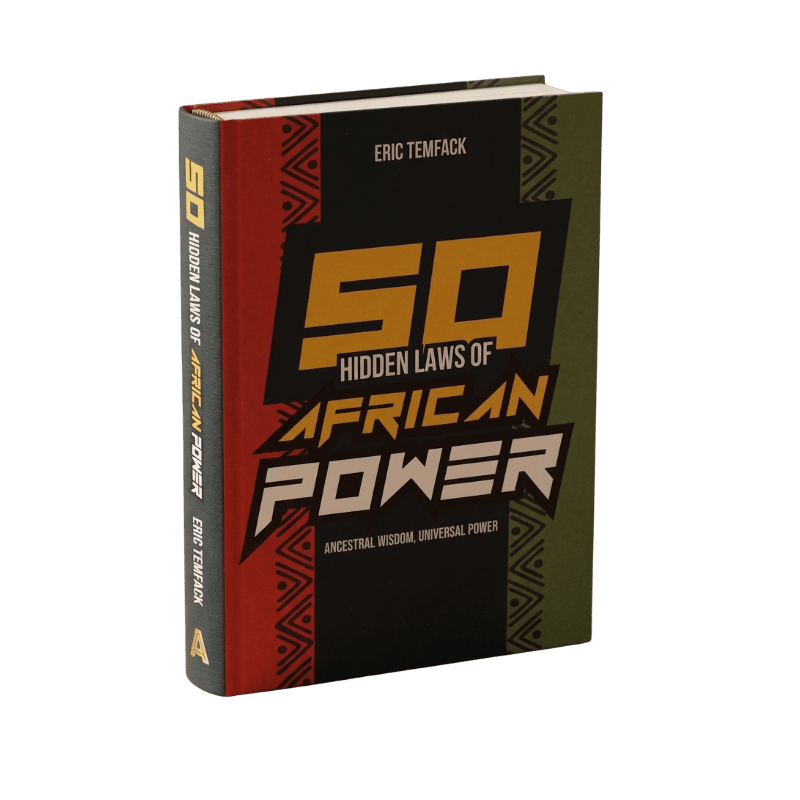
📚 Discover the 50 Laws of African Power
Dive into 7000 years of African history to master the power laws used by Soundjata Keïta, Mansa Musa, Shaka Zulu and many others.
Order on Amazon → Read the Free Guide →Dark Psychology vs Manipulation vs Persuasion
Many confuse these three concepts. Here are the key differences:
| Criterion | Persuasion | Manipulation | Dark Psychology |
|---|---|---|---|
| Definition | Convincing through rational and honest emotional arguments | Influencing through deception, emotional exploitation, or hiding information | Academic study of psychological mechanisms of power and control |
| Intention | Mutual benefit (win-win) | Unilateral benefit (win-lose) | Neutral (analytical tool) |
| Transparency | Total: arguments are visible | None: true intentions are hidden | Variable depending on use |
| Consent | Informed: the person chooses freely | Void: the person is deceived or coerced | Depends on application |
| Reversibility | Easy: the person can change their mind | Difficult: psychological traps | Variable |
| Positive Example | Convincing a friend to exercise together | None (by definition negative) | Studying manipulation to protect oneself |
| Negative Example | Excessive social pressure | Gaslighting, emotional blackmail | Using this knowledge to exploit others |
| Legality | Legal | Often illegal (fraud, harassment) | Legal (study), illegal (malicious application) |
| Ethics | Generally ethical | Always unethical | Neutral (depends on use) |
💡 Golden Rule
Persuasion seeks to convince. Manipulation seeks to control. Dark psychology seeks to understand.
This guide uses dark psychology for educational purposes: to help you recognize and protect yourself from manipulation, not to practice it unethically.
The 25 Dark Psychology Techniques in Leadership
Here are the 25 most powerful techniques, categorized. Each technique includes a definition, an African historical example, and a modern application.
Category 1: Reality Manipulation (Techniques 1-5)
Gaslighting
Definition: Making someone doubt their own perception of reality by systematically denying their experiences.
African example: Some colonizers used this technique by denying the existence of advanced African civilizations, forcing Africans to doubt their own history.
Modern application: A manager who denies having said something during a meeting, even with witnesses.
Countermeasure: Document everything in writing (emails, dated notes).
Information Control
Definition: Filtering, distorting, or withholding information to shape others' perception.
African example: The griots (traditional storytellers) controlled the official history of kingdoms, legitimizing or delegitimizing rulers through their narratives.
Modern application: A leader who selectively shares data to influence a decision.
Countermeasure: Diversify your information sources, verify facts.
History Rewriting
Definition: Retroactively modifying past facts to serve a present agenda.
African example: Soundjata Keïta transformed his childhood disability (paralysis) into a heroic story of overcoming, erasing less glorious aspects.
Modern application: An entrepreneur who recounts their initial failure as a "planned pivot strategy".
Countermeasure: Keep contemporary records, not just retrospective accounts.
Creating False Urgency
Definition: Inventing or exaggerating a threat to force quick decisions without thought.
African example: Shaka Zulu sometimes created false invasion alerts to keep his troops in constant readiness.
Modern application: "This offer expires in 2 hours!" (when it will be renewed tomorrow).
Countermeasure: Always take 24 hours before any important decision, no matter what you are told.
Doublespeak
Definition: Using words that mean the opposite of what they say ("restructuring" = layoffs).
African example: Colonizers spoke of a "civilizing mission" to describe exploitation and genocide.
Modern application: "We value transparency" (said by a company that hides its finances).
Countermeasure: Judge actions, not words. "Show me, don't tell me."
Category 2: Emotional Manipulation (Techniques 6-10)
Love Bombing
Definition: Overwhelming someone with affection and attention to create emotional dependence.
African example: Some leaders gave lavish gifts to new allies, creating a psychological debt.
Modern application: A new manager who showers you with compliments the first week, then becomes tyrannical.
Countermeasure: Beware of excessive affection too quickly. Genuine relationships build slowly.
Strategic Guilt-Tripping
Definition: Making others bear responsibility for your own failures or emotions.
African example: Technique used in some dowry systems where the bride's family was guilt-tripped if the marriage failed.
Modern application: "If you really loved me, you would do this for me."
Countermeasure: Remember: you are only responsible for your own actions and emotions.
Exploiting Fear
Definition: Amplifying others' fears to control them.
African example: The pharaohs used fear of divine curse and the afterlife to maintain social order.
Modern application: Politicians who stir fear of immigration, terrorism, economic crisis.
Countermeasure: Analyze rationally: what is the actual probability of this threat?
Hot-Cold Technique
Definition: Alternating between affection and rejection to create emotional dependence.
African example: Shaka Zulu alternated between generous rewards and severe punishments, creating loyalty based on unpredictability.
Modern application: A romantic partner who ignores you then showers you with attention, cyclically.
Countermeasure: Demand consistency. Healthy relationships are stable, not roller coasters.
Triangulation
Definition: Introducing a third party into a relationship to create jealousy, competition, or insecurity.
African example: Queen Nzinga played the Portuguese against the Dutch, creating competition for her diplomatic favors.
Modern application: A manager who constantly compares two employees: "Why aren't you like Pierre?"
Countermeasure: Refuse comparisons. Your value is intrinsic, not relative.
Category 3: Exploitation of Cognitive Biases (Techniques 11-15)
Confirmation Bias
Definition: Presenting only information that confirms the target's pre-existing beliefs.
African example: Mansa Musa used his pilgrimage to confirm to Muslims that Africa was a land of faith, and to merchants that it was a land of wealth.
Modern application: Social media algorithms that only show content aligned with your opinions.
Countermeasure: Actively seek sources that contradict your beliefs.
Anchoring
Definition: Setting a first reference point (often extreme) that influences all subsequent decisions.
African example: In trans-Saharan trade negotiations, Malian merchants started with astronomical prices, making the final price (still high) acceptable.
Modern application: A seller announcing "Initial price: €10,000, on sale: €3,000" (when it's worth €2,000).
Countermeasure: Ignore the first number. Do your own value research.
Artificial Scarcity
Definition: Creating a perception of scarcity to increase perceived value.
African example: The pharaohs strictly controlled access to temples and rituals, making these experiences "rare" and therefore precious.
Modern application: "Only 3 spots left!" (when there are actually 100).
Countermeasure: Ask yourself: "Do I really need this right now?"
Social Proof
Definition: Using others' behavior to validate an action ("Everyone is doing it").
African example: Soundjata Keïta rallied the Mandinka clans by showing that other prestigious clans had already joined him.
Modern application: "10,000 satisfied customers" (without verifiable proof).
Countermeasure: Verify testimonials. Ask for concrete evidence.
Authority Bias
Definition: Exploiting the automatic respect toward authority figures (titles, uniforms, diplomas).
African example: The pharaohs wore specific crowns (Pschent) that symbolized unquestionable divine authority.
Modern application: A self-proclaimed "expert" selling training without real qualifications.
Countermeasure: Verify credentials. Authority must be earned, not assumed.
Category 4: Social Domination Tactics (Techniques 16-20)
Social Isolation
Definition: Cutting a person off from their support network to make them dependent.
African example: Some leaders removed influential advisors from their rivals, isolating them before neutralizing them.
Modern application: A toxic partner who gradually distances you from your family and friends.
Countermeasure: Always maintain a diverse social network. Don't let anyone become your sole source of support.
Divide and Conquer
Definition: Creating divisions within a group to weaken their collective power.
African example: Colonizers exploited existing ethnic rivalries (Hutus vs Tutsis, etc.) to prevent African unity.
Modern application: A manager who pits teams against each other to prevent them from uniting against him.
Countermeasure: Identify the common enemy. Refuse artificial conflicts.
Public Shaming
Definition: Humiliating someone publicly to break them psychologically and deter others.
African example: Shaka Zulu publicly executed traitors, creating a spectacle of terror.
Modern application: Cancel culture, doxing, social media humiliation.
Countermeasure: Don't participate in public lynchings. Judge actions, not people.
Control Through Debt
Definition: Creating debt (financial, emotional, social) to control others.
African example: Dowry systems created intergenerational debts that bound families together.
Modern application: "I helped you last year, now you owe me this."
Countermeasure: Repay debts quickly. Don't let anyone have leverage over you.
Toxic Mirroring
Definition: Imitating the target's behaviors, values, and interests to create a false connection.
African example: Some African diplomats temporarily adopted foreign customs to gain trust, then betrayed them.
Modern application: A colleague who pretends to share your passions to gain your trust, then stabs you in the back.
Countermeasure: Test sincerity. Real friends remain consistent over time.
Category 5: Advanced Strategies (Techniques 21-25)
The Paradox of Choice
Definition: Offering too many options to paralyze decision-making, or fake choices that all lead to the same outcome.
African example: Some royal councils presented the king with several options that all led to the decision the council wanted.
Modern application: "Do you want the €99 version or the €199 version?" (when you didn't want to buy anything).
Countermeasure: Always add a third option: "Neither."
Foot-in-the-Door
Definition: Asking for a small favor first, then escalating to larger demands.
African example: Colonizers first asked for a "simple" trading post, then a military base, then total annexation.
Modern application: "Can you just proofread this document?" → "Can you rewrite it?" → "Can you do the whole project?"
Countermeasure: Clarify the full commitment upfront. "What does this really involve?"
The Scapegoat Technique
Definition: Blaming a person or group to divert attention from one's own failures.
African example: Some leaders blamed witches or evil spirits for famines caused by their own mismanagement.
Modern application: Politicians who blame immigrants for unemployment caused by their economic policy.
Countermeasure: Look for the real causes. Who has the power to change the situation?
Sunk Cost Fallacy Exploitation
Definition: Exploiting the investment someone has already made to force them to continue (even if it's irrational).
African example: In some initiations, trials became increasingly harder, but quitting meant losing all prior investment.
Modern application: "You've already invested 5 years in this toxic relationship, are you really going to leave now?"
Countermeasure: Past costs are unrecoverable. Decide based on the future, not the past.
Control Through Chaos
Definition: Intentionally creating chaos so that people turn to you for order.
African example: Some leaders created artificial crises (false invasion threats) to justify their absolute power.
Modern application: A manager who creates constant emergencies to appear indispensable.
Countermeasure: Identify who benefits from the chaos. Often, it's the one who creates it.
🎁 Download the Free PDF Guide
Receive the 25 techniques + 15 countermeasures in PDF, plus an exclusive video analysis on African power psychology
No spam. One-click unsubscribe.
10 Historical Examples of African Dark Psychology
Here are 10 concrete cases where African leaders used dark psychology to conquer, resist, or transform their society.
Soundjata Keïta: Turning Disability into Legend
Context: Paralyzed as a child, mocked by his family, exiled.
Technique: History rewriting + creation of personal mystique.
Action: He transformed his disability into a narrative of "the hero who overcomes the impossible", creating an aura of divine destiny.
Result: Foundation of the Mali Empire (1235), one of the greatest African empires.
Lesson: Your greatest weakness can become your greatest narrative asset.
Queen Nzinga: Master of Diplomatic Manipulation
Context: Angola under Portuguese threat (1620s).
Technique: Triangulation + diplomatic double game.
Action: She signed treaties with the Portuguese while secretly allying with the Dutch and neighboring kingdoms to fight them.
Result: 40 years of resistance against Portuguese colonization.
Lesson: Never put all your eggs in one diplomatic basket.
Shaka Zulu: Power Through Calculated Terror
Context: Unification of Zulu clans (1816-1828).
Technique: Public shaming + fear exploitation + hot-cold.
Action: Spectacular public executions of traitors, alternated with generous rewards for the loyal.
Result: Creation of a 40,000-strong disciplined army, conquest of 2 million km².
Lesson: Fear can unite, but it also creates hatred (he was assassinated by his half-brother).
Mansa Musa: Soft Power Through Opulence
Context: Pilgrimage to Mecca (1324).
Technique: Wealth demonstration + social proof + anchoring.
Action: He distributed so much gold that he destabilized the Egyptian economy for 12 years, creating a legendary reputation.
Result: Mali became the commercial center of West Africa. Timbuktu attracted the best scholars from the Muslim world.
Lesson: Strategic display of wealth opens doors that force cannot.
Nelson Mandela: Narrative Control
Context: 27 years in prison (1962-1990).
Technique: History rewriting + symbol creation.
Action: He turned his prison sentence into a symbol of moral resistance, refusing conditional release to avoid compromising his principles.
Result: Upon release, he had become a global symbol of justice, making it impossible for the regime to ignore him.
Lesson: Control your narrative, even (especially) in adversity.
Thomas Sankara: Simple Language, Maximum Impact
Context: President of Burkina Faso (1983-1987).
Technique: Mirroring (positive) + exploitation of social proof.
Action: He spoke like the people, dressed like the people, lived like the people. He renamed the country "Burkina Faso" (Land of Upright Men).
Result: Massive mobilization for self-sufficiency. Vaccination of 2.5 million children in 2 weeks.
Lesson: Authenticity (or its appearance) is immense power.
Ramses II: Architecture as Propaganda
Context: Ancient Egypt (1279-1213 BCE).
Technique: Authority bias + creation of mystique + visual anchoring.
Action: Construction of monumental temples (Abu Simbel) with colossal statues of himself, creating a sense of psychological inferiority.
Result: Reign of 66 years, one of the longest in history. Considered a living god.
Lesson: The physical environment influences the perception of power.
Samori Touré: Psychological Warfare
Context: Resistance against French colonization (1882-1898).
Technique: Control through chaos + false urgencies.
Action: Unpredictable guerrilla tactics, misinformation, surprise attacks. He burned his own towns before abandoning them (scorched earth).
Result: 16 years of resistance against a technologically superior army.
Lesson: Unpredictability is a weapon against a stronger enemy.
Hatshepsut: Gender Manipulation
Context: Ancient Egypt, female pharaoh (1479-1458 BCE).
Technique: History rewriting + authority bias.
Action: She had herself represented with a false beard (male symbol of power) and used male pronouns in inscriptions.
Result: Reign of 22 years, one of the most prosperous in ancient Egypt.
Lesson: Adapt the symbols of power to your context, even if you have to subvert them.
Kwame Nkrumah: Pan-Africanism as Soft Power
Context: Independence of Ghana (1957), first independent sub-Saharan African country.
Technique: Symbol creation + social proof + narrative control.
Action: He made Ghana a symbol of African independence, hosting pan-African leaders, creating "proof" that independence was possible.
Result: Inspiration for 17 African countries that gained independence in 1960 ("Year of Africa").
Lesson: Be the first, become the symbol, inspire others.
Ethics and Moral Limits of Dark Psychology in Leadership
The central question: Can one be an ethical leader while knowing dark psychology?
The Ethical Power Paradox
"He who fights with monsters should look to it that he himself does not become a monster. And if you gaze long into an abyss, the abyss also gazes into you." — Friedrich Nietzsche
This paradox applies perfectly to dark psychology. By studying it to protect yourself, you risk becoming what you fight against. Here is how to navigate this fine line.
The 7 Principles of Ethical Leadership Against Dark Psychology
The Transparency Principle
Rule: If you have to hide your method, it is probably immoral.
Application: An ethical leader can say: "I will use persuasion to convince you." A manipulator cannot say: "I will gaslight you."
Test: Could you explain your strategy publicly without shame?
The Informed Consent Principle
Rule: Affected people must be able to choose freely, with all necessary information.
Application: Persuasion = presenting arguments and letting them choose. Manipulation = hiding information or distorting the choice.
Test: Would the person make the same decision if they knew the whole truth?
The Reciprocity Principle
Rule: The interaction must benefit all parties, not just the leader.
Application: A good business deal benefits both parties. A scam benefits only one.
Test: If the roles were reversed, would you accept this treatment?
The Proportionality Principle
Rule: Dark psychology techniques are ethical only if they are proportional to the threat.
Application: Using gaslighting against an aggressor to protect yourself = legitimate defense. Using it against an innocent partner = abuse.
Test: Does the severity of your action match the severity of the situation?
The Reversibility Principle
Rule: The effects of your action must be reversible if the person wishes.
Application: Convincing someone to buy a product with a right of withdrawal = ethical. Trapping them in a contract with no exit = immoral.
Test: Can the person easily go back?
The Non-Exploitation of Vulnerabilities Principle
Rule: Do not exploit the psychological, emotional, or situational weaknesses of others.
Application: Selling insurance to someone who needs it = service. Selling it to a confused elderly person by exploiting their fear = predation.
Test: Are you taking advantage of a temporary or permanent weakness?
The Accountability Principle
Rule: Assume the consequences of your actions. No "I was just following orders."
Application: If your strategy causes harm, you must repair it, not blame the victims.
Test: Are you willing to publicly own the results of your actions?
Ethical Use Cases of Dark Psychology
✅ When Dark Psychology is Morally Acceptable
- Psychological self-defense: Using gaslighting against a gaslighter to protect yourself.
- Protecting vulnerable people: Manipulating a predator to keep them away from a potential victim.
- Education and prevention: Teaching these techniques so people can protect themselves (like this guide).
- Negotiation against bad-faith actors: Using counter-tactics against professional manipulators.
- Crisis leadership: Using fear to evacuate a burning building (proportional to the danger).
❌ When Dark Psychology is Immoral
- Financial exploitation: Scamming vulnerable people (elderly, people in distress).
- Power abuse: Using your hierarchical position to manipulate subordinates.
- Personal relationships: Manipulating a romantic partner, friends, or family for your sole benefit.
- Toxic politics: Creating social divisions to win elections.
- Cults and sects: Using mind control to exploit followers.
The Ultimate Test: The Reverse Golden Rule
Before using a dark psychology technique, ask yourself this question:
"If someone used this technique against me or against someone I love, would I find it acceptable?"
If the answer is no, do not do it. If the answer is "it depends on the context", make sure that the current context truly justifies this exception.
🎤 Invite Éric Temfack for a Talk
Training and conferences on power psychology, African leadership, and protection against manipulation
Book an Intervention → Request a Quote →How to Protect Yourself: 15 Countermeasures Against Dark Psychology
Now that you know the attack techniques, here is your defensive arsenal. These 15 countermeasures will allow you to detect and neutralize manipulation.
Preventive Countermeasures (1-5): Before the Attack
Develop Your Emotional Intelligence
Why: Manipulators exploit unregulated emotions (fear, anger, desire).
How: Practice meditation, keep an emotional journal, learn to name your emotions accurately.
Result: You detect when someone tries to play with your emotions.
Establish Clear Boundaries
Why: Manipulators test your limits to see how far they can go.
How: Define your non-negotiables (values, time, money, body). Communicate them clearly. Enforce consequences if violated.
Result: Manipulators avoid you (too much resistance) or reveal themselves quickly.
Cultivate a Strong Social Network
Why: Isolation is the first step of manipulation.
How: Maintain diverse relationships (family, friends, colleagues, mentors). Regularly share your experiences with trusted people.
Result: You have external "reality checks" that detect manipulations you don't see.
Continuously Educate Yourself
Why: Knowledge is the best defense.
How: Read about psychology, cognitive biases, manipulation techniques. Analyze power dynamics around you.
Result: You recognize manipulation patterns from the first signs.
Practice Healthy Skepticism
Why: Manipulators rely on your naive trust.
How: Verify extraordinary claims. Ask for evidence. Don't take promises at face value.
Result: You avoid scams and false opportunities.
Reactive Countermeasures (6-10): During the Attack
The "Time Out" Technique
When: Someone pressures you to make an immediate decision.
How: Say: "I need 24 hours to think it over." If refused, it's a red flag. Good opportunities don't disappear in 24 hours.
Result: You escape impulsive decisions and artificial urgency traps.
The "Broken Record" Technique
When: Someone ignores your refusals and insists.
How: Repeat your refusal with the same words, calmly, as many times as necessary. "No, I can't." "No, I can't." "No, I can't."
Result: The manipulator understands you won't give in and gives up.
The "Outside Observer" Technique
When: You feel someone is playing with your emotions.
How: Imagine you are watching the scene from outside. What would you see? What would you advise that person (you)?
Result: You create emotional distance that neutralizes manipulation.
The "Socratic Questioning" Technique
When: Someone makes dubious claims or guilt-trips you.
How: Ask questions to expose inconsistencies. "Why do you think that?" "What evidence do you have?" "How is that my responsibility?"
Result: The manipulator contradicts themselves or reveals their lack of solid arguments.
The "Mirror" Technique
When: Someone uses projection or responsibility shifting.
How: Return the accusation. "You say I'm aggressive, but you're the one yelling. Why are you projecting that onto me?"
Result: The manipulator is destabilized and often backs down.
Strategic Countermeasures (11-15): After the Attack
Document Everything
Why: Gaslighting relies on denial of facts.
How: Keep emails, texts, dated notes, witnesses. If someone denies having said something, you have proof.
Result: You neutralize gaslighting and have evidence if needed (HR, legal).
Cut Contact (No Contact)
When: The manipulator doesn't change despite your boundaries.
How: Block all communication channels. No exceptions, no "final conversation". Total silence.
Result: You permanently protect yourself. Manipulators lose their power without access to you.
Seek Professional Support
When: Manipulation has caused psychological damage (anxiety, depression, PTSD).
How: Consult a therapist specializing in trauma or narcissistic abuse. Join support groups.
Result: You heal and develop tools to avoid future manipulation.
Expose the Manipulator (If Safe)
When: The manipulator continues to harm other people.
How: Share your experience (anonymously if necessary) to warn others. Report to competent authorities (HR, police, regulators).
Result: You protect future victims and break the cycle of abuse.
Transform the Experience into Wisdom
Why: The best revenge is to become stronger.
How: Analyze what happened. What red flags did you miss? What boundaries must you strengthen? Use this knowledge to protect yourself in the future.
Result: You become "manipulation-proof" and can help others protect themselves.
⚠️ Important Warning
If you are in a situation of physical danger (domestic violence, criminal harassment), these psychological techniques are not enough.
Contact immediately:
- 🇫🇷 France: 3919 (Violences Femmes Info) or 17 (Police)
- 🇨🇲 Cameroon: 1500 (Emergencies) or local associations
- 🌍 International: Embassies, human rights protection NGOs
Your physical safety comes first. Leave first, analyze afterwards.
50 LOIS CACHEES DU POUVOIR AFRICAIN
Hello ! Tu as des questions concernant le livre {50 lois cachées}?
je suis en ligne
En ligne | Politiques de confidencialité
Contacter l'auteur 📱