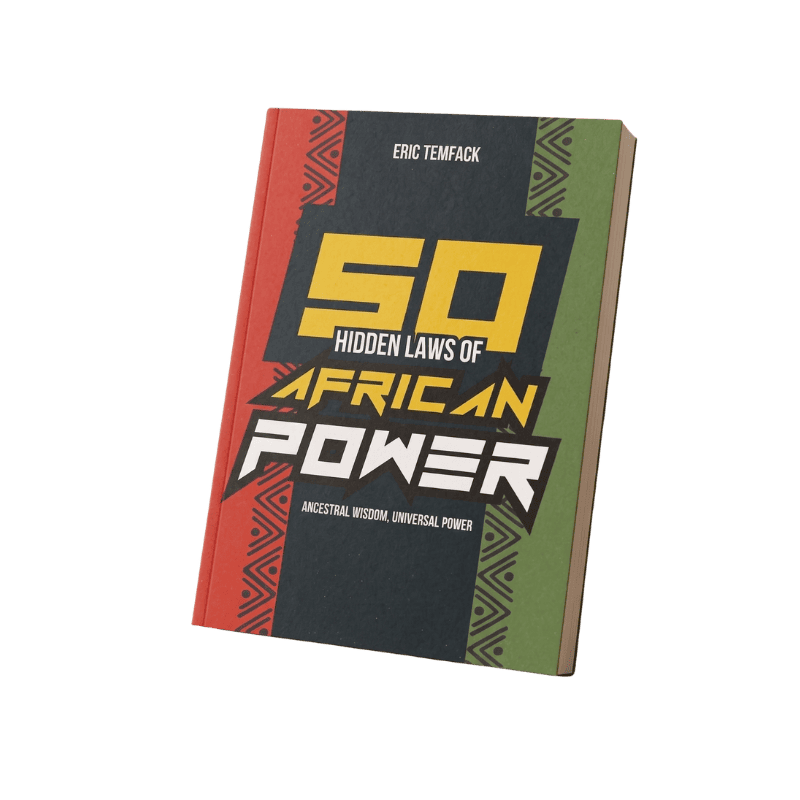
SEPTIMIUS SEVERUS — EMBODIMENT OF THE 50 HIDDEN LAWS OF AFRICAN POWER
Through the army, cunning, and imperial vision, the African emperor of Rome restored authority and founded a dynasty.
I. HISTORICAL AND CIVILIZATIONAL CONTEXT
⭐ Who was Septimius Severus? Lucius Septimius Severus (145‑211 CE) was Roman emperor from 193 to 211. Born in Leptis Magna (modern‑day Libya), he was the first emperor of African origin (Berber‑Punic) since the founding of Rome. He founded the Severan dynasty, defeated his rivals during the “Year of the Five Emperors” (193), reformed the army and administration, and led victorious campaigns in Mesopotamia and Britain.
The Roman Empire in the Late 2nd Century – Civil War and Expansion
After the assassination of Commodus (192), the Empire plunged into civil war. Several claimants fought for the throne: Pescennius Niger in the East, Clodius Albinus in Britain, and Septimius Severus in Pannonia. Severus, a skilled general and administrator, eliminated his rivals one by one. He restored imperial authority, strengthened the frontiers, and enlarged the empire. He died at York (Eboracum) in 211, leaving his sons Caracalla and Geta (briefly) on the throne.
❓ What does “Septimius Severus” mean? “Septimius” is his family name (nomen), inherited from his father. “Severus” means “severe” in Latin, a cognomen he already bore. He added “Pertinax” after the death of Emperor Pertinax to associate himself with his memory. His full name was Lucius Septimius Severus Pertinax.
Cultural and Religious Context
Septimius Severus was a Romanised African, speaking Latin and Punic, worshipping Roman gods but also Eastern deities (Sol, Serapis). He favoured equestrians and provincials in the imperial administration, to the detriment of the old Italian senatorial aristocracy. His wife, Julia Domna, from Emesa (Syria), was an intellectual, patron of letters and political advisor.
🔗 CONNECTION TO THE 50 HIDDEN LAWS OF AFRICAN POWER
→ Law #1: Master Cosmic Balance (army and administration, Rome and provinces)
Points of convergence:
• Septimius Severus balanced military power (legions) with administrative reform – a warrior and lawgiver emperor.
• He integrated provincials (Africans, Syrians) into the highest spheres of the state – balance between Italy and the Empire.
• Modern application: African leaders must know how to blend military force with civil organisation, and involve all regions of a country.
• Strategic lesson: Enduring power comes from balancing the repression of revolts with the integration of local elites – Severus understood this.
II. ORIGINS AND SOCIAL ASCENSION
❓ How did Septimius Severus, from a provincial family, become emperor? Born into an equestrian family in Leptis Magna, he rose through the ranks thanks to the army. He was consul under Commodus, then governor of Upper Pannonia. After Pertinax’s assassination (193), he proclaimed himself emperor, marched on Rome, defeated his rivals, and had himself recognised by the Senate. He rewarded his troops and founded a dynasty.
Birth and Family
Septimius Severus was born on 11 April 145 in Leptis Magna (modern‑day Libya). His family was of Berber (Punic) origin, Romanised for several generations. His father, Publius Septimius Geta, was an equestrian (knight) of modest but respected rank. His mother, Fulvia Pia, was of Italian origin. He had an elder brother, Publius Septimius Geta (the father of the future Geta). He lost his father young but was supported by his uncles.
Education and Early Career
He studied Latin and Greek in Leptis, then in Rome where he took rhetoric courses. He spoke with an African accent, which was sometimes criticised by the Italian elite. He entered the Senate as a quaestor, then was successively military tribune, legate, provincial governor. He served in Syria, Gaul, Africa and Pannonia, earning the esteem of the legionaries.
The Rise: The Civil War (193‑197)
In 193, after the death of Pertinax and the auction of the throne by the Praetorian Guard (Julianus), Severus was acclaimed emperor by his Pannonian legions. He marched on Rome, executed Julianus, got rid of Pescennius Niger (194) and then Clodius Albinus (197). He eliminated his rivals’ supporters, attached the legions through donatives and privileges, and reformed the army.
🔗 CONNECTION TO THE LAWS OF AFRICAN POWER
→ Law #3: “Transform Knowledge into Power”
Points of convergence:
• Septimius Severus used his knowledge of the army’s workings (legions, tactics) to secure his seizure of power – military experience as capital.
• His mastery of law and administration allowed him to reward his supporters and punish his adversaries legally.
• Modern application: African leaders must know the inner workings of the military and bureaucracy – two pillars of power.
• Strategic lesson: Legitimacy also comes from the ability to manage civil war – Severus won because he understood military loyalty better than his rivals.
III. TITLES AND FUNCTIONS
❓ What titles did Septimius Severus hold? He was Roman emperor, Augustus, consul several times, Pontifex Maximus, Pater Patriae, Parthicus Maximus, Arabicus Maximus, Adiabenicus Maximus, etc. He called himself “Divi Marci Antonini filius” (son of the divine Marcus Aurelius) to claim a prestigious dynasty.
- Roman emperor – Princeps, Augustus.
- Imperator – acclaimed victorious several times.
- Consul – in 190, 194, 202, etc.
- Pontifex maximus – head of Roman religion.
- Pater patriae – father of the fatherland.
- Parthicus Maximus, Arabicus Maximus, Adiabenicus Maximus – military titles.
- Founder of the Severan dynasty – father of Caracalla and Geta.
🔗 CONNECTION TO THE LAWS OF AFRICAN POWER
→ Law #12: “Become Indispensable to Power”
Points of convergence:
• Severus became the only leader able to pacify the Empire after the anarchy of 193 – without him, the legions fought each other.
• He held the roles of general, lawgiver, supreme judge, reformer – indispensable to the restoration of order.
• Modern application: African leaders must make themselves indispensable by solving crises that no one else can solve.
• Strategic lesson: Indispensability is won through decisive action in times of chaos – Severus used instability to impose himself.
IV. MILITARY REFORMS – AN EMPIRE UNDER THE SWORD
❓ What military reforms did Septimius Severus carry out? He increased legionaries’ pay by 33%, allowed legionaries to marry (previously forbidden), created three new legions (I, II, III Parthica), integrated more provincial soldiers into the army (Africans, Syrians, Illyrians), and reinforced the Praetorian Guard with his own loyalists. He stationed a legion in Italy (for the first time in centuries) to protect Rome.
This increased professionalisation made the army more loyal to the emperor, but also more politically powerful. Later emperors would be at the mercy of the legions (the 3rd century crisis). On his deathbed, Severus is said to have advised his sons: “Agree with each other, enrich the soldiers, and despise all others.”
🔗 CONNECTION TO THE LAWS OF AFRICAN POWER
→ Law #8: “Master Cycles – Time as a Weapon”
Points of convergence:
• Severus used the cycle of civil wars to reform deeply – the army became a machine to dominate time.
• The new legion in Italy (II Parthica) was an instrument of permanent control – reduced reaction time.
• Modern application: African leaders must reform defence institutions during transition periods – that is when opposition is weakest.
• Strategic lesson: Whoever controls the army controls the state – Severus bequeathed a formidable army, but also a Damoclean sword for his successors.
V. THE PARTHIAN CAMPAIGN – EXPANSION TO THE EAST
❓ Why did Severus attack the Parthian Empire? To legitimise his usurpation through a brilliant military victory, to strengthen imperial power, and to punish the Parthians who had supported his rival Pescennius Niger. He waged a lightning war, seized Ctesiphon (the Parthian capital) in 198, annexed northern Mesopotamia, and took the title “Parthicus Maximus”.
This campaign marked the peak of Roman expansion in the East. Severus established the province of Mesopotamia with two permanent legions. The colossal booty financed his reforms and largesse. He partly rebuilt Ctesiphon and organised the provinces of Osroene and Mesopotamia.
🔗 CONNECTION TO THE LAWS OF AFRICAN POWER
→ Law #15: “Build Monuments That Speak for You”
Points of convergence:
• The triumphal arch of Septimius Severus in Rome (Arch of the Argentarii, then Severus’ Arch in the Roman Forum) is a monument that celebrates his Parthian victories – it still speaks to visitors.
• The military campaigns are “intangible monuments” – the title “Parthicus Maximus” is inscribed in chronicles.
• Modern application: African leaders must erect arches or commemorative monuments – a well‑celebrated victory becomes a legend.
• Strategic lesson: A victorious war financed by booty allows one to bribe the army and build monuments – Severus did both at once.
VI. THE BRITISH EXPEDITION – THE LAST CAMPAIGN
❓ Why did Severus go to Britain? The Caledonian tribes (Scotland) threatened the Roman province. Severus, old and ill, wanted to crush the rebellion with a punitive campaign. He rebuilt Hadrian’s Wall, launched offensives north, but died at York (Eboracum) on 4 February 211. His sons Caracalla and Geta succeeded him.
The British campaign was costly and ended in stalemate. Severus’s health deteriorated (gout). He gave his famous advice to his sons: “Do not neglect the army, enrich the soldiers, despise all others.” He was deified after his death.
🔗 CONNECTION TO THE LAWS OF AFRICAN POWER
→ Law #50: “Transcend Death – The Art of Immortality”
Points of convergence:
• Severus died on campaign, in foreign territory – an imperial end that adds to his legend.
• He was deified by the Senate, and his name is carved in Rome’s marble – institutional immortality.
• Modern application: African leaders must prepare their succession – Severus failed to manage the rivalry between his sons, which weakened the dynasty.
• Strategic lesson: Dying wisely (advising his sons) can compensate for an indecisive military end – Severus’s speech became famous.
VII. JULIA DOMNA – THE POWERFUL WOMAN
❓ Who was Julia Domna? Julia Domna (c. 160‑217) was Septimius Severus’s second wife, from Emesa (Syria). Highly cultured, she patronised the arts, letters and philosophy, gathering around her a circle of intellectuals (Philostratus, Galen). After Severus’s death, she served as an advisor to her son Caracalla and took part in imperial administration. She committed suicide after Caracalla’s assassination.
Julia Domna is often described as an influential empress, playing a key political role. She accompanied her husband on his campaigns and negotiated with senators. Her literary circle (the “Severan court”) produced Philostratus’s “Lives of the Sophists” and other works. Her sister Julia Maesa founded the next dynasty (the Syrian Severans).
🔗 CONNECTION TO THE LAWS OF AFRICAN POWER
→ Law #23: “Heal to Rule – The Power of the Healer”
Points of convergence:
• Julia Domna “healed” tensions between the emperor and the senatorial elite through her diplomacy – female mediation as political therapy.
• She gathered intellectuals from all sides to legitimise the regime – culture as a balm.
• Modern application: African first ladies can play a crucial diplomatic and cultural role – women’s soft power is an asset.
• Strategic lesson: A learned and influential wife strengthens her husband’s power – Severus understood this and profited from it.
VIII. LEGACY – THE FATHER OF AFRICAN EMPERORS
The Severan dynasty he founded ruled until 235 (Caracalla, Geta, Elagabalus, Severus Alexander). Septimius Severus is often seen as a military reformer who militarised the state and weakened civilian power, preparing the ground for the 3rd‑century crisis. In North Africa, he is celebrated as a son of Leptis Magna, embellishing his native city (Severan forum, monumental arch). His triumphal arch in Rome is one of the best preserved.
🔗 CONNECTION TO THE LAWS OF AFRICAN POWER
→ Law #42: “Create a Legacy That Multiplies Your Power”
Points of convergence:
• The Severan dynasty lasted nearly half a century – active political legacy.
• Leptis Magna became an architectural showcase of his reign – monumental legacy that still attracts tourists.
• Modern application: African leaders must develop their home region – a forum, an arch, a university bequeathed to their native city are memory assets.
• Strategic lesson: An empire is strengthened when the sovereign enriches his homeland – Severus turned Leptis Magna into a jewel of Roman architecture.
IX. SOURCES AND TESTIMONIES
❓ Where are the main sources on Septimius Severus found? The “Augustan History” (Scriptores Historiae Augustae) gives a romanticised biography. Cassius Dio (Roman History) and Herodian provide contemporary accounts. Inscriptions, coins, and monuments (arches, forums) complement the written sources.
- Ancient sources: Cassius Dio (Books 74‑76), Herodian (History of the Emperors), Scriptores Historiae Augustae (Life of Septimius Severus).
- Archaeological sources: Triumphal arches in Rome (Forum) and Leptis Magna, inscriptions, coins, remains of his military reforms.
- Secondary sources: Anthony Birley (“Septimius Severus: The African Emperor”), Michael Grant, Xavier Loriot.
🔗 CONNECTION TO THE LAWS OF AFRICAN POWER
→ Law #28: “Control Your Narrative – History Belongs to the One Who Writes It”
Points of convergence:
• Severus systematically erased the memory of his rivals (damnatio memoriae) – he controlled the narrative.
• The “Augustan History” mixes fact and fiction; but monuments and inscriptions remain more objective.
• Modern application: African leaders must combine propaganda (media texts) and architecture (monuments) to mark their passage.
• Strategic lesson: If you cannot control the chroniclers, the stones will speak for you – Severus’s arch is more reliable than the writers.
X. MYSTERIES AND UNSOLVED QUESTIONS
❓ Where is Septimius Severus’s tomb? He was cremated in Rome, his ashes placed in Hadrian’s Mausoleum (Castel Sant’Angelo). The tomb was looted in the Middle Ages and the urns are lost. His exact remains are unknown.
❓ Why did he add “Pertinax” to his name? To associate himself with Emperor Pertinax, assassinated in 193, and legitimise his power by presenting himself as his avenger. A clever political manoeuvre.
❓ Was Septimius Severus black? He was of Berber‑Punic origin, thus North African. Ancient texts describe him as having a “swarthy” complexion (color subfuscus). He was not black in a sub‑Saharan sense, but typically Maghrebi. The question of his “race” is anachronistic.
🔗 CONNECTION TO THE LAWS OF AFRICAN POWER
→ Law #37: “Cultivate Mystery – What Is Hidden Fascinates”
Points of convergence:
• The lost ashes and emptied tomb add to the mystery – the absence of relics does not weaken the legend.
• The shadow zones about his exact complexion (“swarthy”) fuel current identity debates.
• Modern application: Leaders may leave questions about their origins or remains unanswered – enigma keeps interest alive.
• Strategic lesson: A well‑sustained mystery (what became of his ashes?) gives future generations a reason to search.
XI. FAQ – FREQUENTLY ASKED QUESTIONS ABOUT SEPTIMIUS SEVERUS
❓ What is Septimius Severus’s famous saying? “Enrich the soldiers, despise all others.” (Latin: “Donativum militi largitus est, ceteros praeter milites contemptui habuit”). He is said to have spoken it on his deathbed to his sons.
❓ Why did he build an arch at Leptis Magna? To celebrate his Parthian victories and honour his native city. The tetrapylon arch (four faces) still stands and remains a symbol of Roman Africa.
❓ Did Septimius Severus persecute Christians? He confirmed the prohibition of Christianity but did not wage systematic persecution. A few local martyrs are known (Perpetua and Felicity in Africa). He was more concerned with Jews and Eastern pagans.
XII. LESSONS AND CONTEMPORARY RELEVANCE
💡 What can Africa learn from Septimius Severus? Septimius Severus teaches that an African can govern a vast empire without renouncing his origins, relying on the army and provincials. He shows the importance of integrating minorities into state structures, valuing one’s native region, and reforming institutions to stabilise power. African leaders must cultivate the art of war, administration, and monumental symbolism.
The army as a lever of power: Severus conquered and ruled by the sword – leaders must master security forces.
Integration of peripheries: He promoted provincials to the highest offices – Africa must train its own cadres.
The monument as a tool of memory: Severus’s arch and the forum of Leptis Magna are eternal witnesses – build for eternity.
Prepare succession: The rivalry between Caracalla and Geta nearly ruined his work – a leader must ensure a conflict‑free transition.
🔗 CONNECTION TO THE LAWS OF AFRICAN POWER
→ Law #5: “Master Multiple Domains – The Power of the Renaissance”
Points of convergence:
• Septimius Severus was simultaneously general, lawgiver, builder, diplomat – a complete leader.
• He combined war, law, urban planning, and propaganda – a holistic vision.
• Modern application: African leaders must be versatile – the continent’s renaissance requires leaders who can embrace everything.
• Strategic lesson: An African can govern without imitating foreign models – Severus imposed his authoritarian style while respecting Roman traditions.
CONCLUSION: IMMORTALITY THROUGH ARCHITECTURE AND THE ARMY
Septimius Severus remains, eighteen centuries after his death, one of the greatest Roman emperors and a source of pride for North Africa. His journey – provincial turned master of the world – testifies to the power of ambition, troop loyalty, and the art of building monuments. Through civil war, military reforms, and the embellishment of Leptis Magna, he carved his name in marble.
For contemporary Africa and its diaspora, Septimius Severus represents the empire‑builder from the African continent, capable of rising above prejudice and governing the greatest power of his time. He reminds us that Africa has not only endured history; it has also shaped it, through its generals, intellectuals and emperors. His name, Septimius Severus, resonates as a challenge: may today’s Africa produce its own Severus – leaders able to restore order, modernise the army, build triumphal arches, and leave a dynasty.
🔗 SYNTHESIS: SEPTIMIUS SEVERUS AS THE EMBODIMENT OF THE HIDDEN LAWS OF AFRICAN POWER
📜 Summary of the laws embodied by Septimius Severus: Balance (#1), Knowledge as Power (#3), Polymathy (#5), Control of Time (#8), Indispensability (#12), Monuments (#15), Healing through force (#23), Narrative Control (#28), Mystery (#37), Multiplicative Legacy (#42), Symbol (#45), Immortality (#50).
- Law #1 (Balance) – Military force and administration, Rome and provinces, Africa and Empire.
- Law #3 (Knowledge as Power) – Mastery of laws, military strategy, propaganda.
- Law #5 (Polymathy) – General, lawgiver, builder, diplomat – complete leader.
- Law #8 (Control of Time) – Reforms during civil wars, using crisis time to rule.
- Law #12 (Indispensability) – The only man to reunify the Empire – focal point.
- Law #15 (Monuments) – Triumphal arches, forum of Leptis Magna – speaking stones.
- Law #23 (Heal to Rule) – Reforming the army to “heal” the Empire from civil wars.
- Law #28 (Control of Narrative) – Damnatio memoriae of his rivals, control of official history.
- Law #37 (Mystery) – Lost ashes, “swarthy” complexion, unknown details – mysteries.
- Law #42 (Multiplicative Legacy) – Severan dynasty (42 years), monuments, influence – active legacy.
- Law #45 (Symbol) – “Septimius Severus” = African emperor, reformer, conqueror – living concept.
- Law #50 (Immortality) – His arch in Rome, his forum in Leptis, his laws – eternal presence.
Practical Application for the Modern Leader:
✅ Master the army – troop loyalty is the first bulwark of power
✅ Reform in times of crisis – chaos is an opportunity to transform institutions
✅ Build monuments – a triumphal arch is worth a thousand speeches
✅ Integrate peripheries – involving provinces in central power prevents secessions
✅ Prepare your succession – war between sons destroys what a father built.
The Septimius Severus Challenge for You:
“What ‘army’ (organisation, faithful followers) will you build to establish your authority? What ‘triumphal arch’ (visible project) will you erect so that posterity remembers you?”