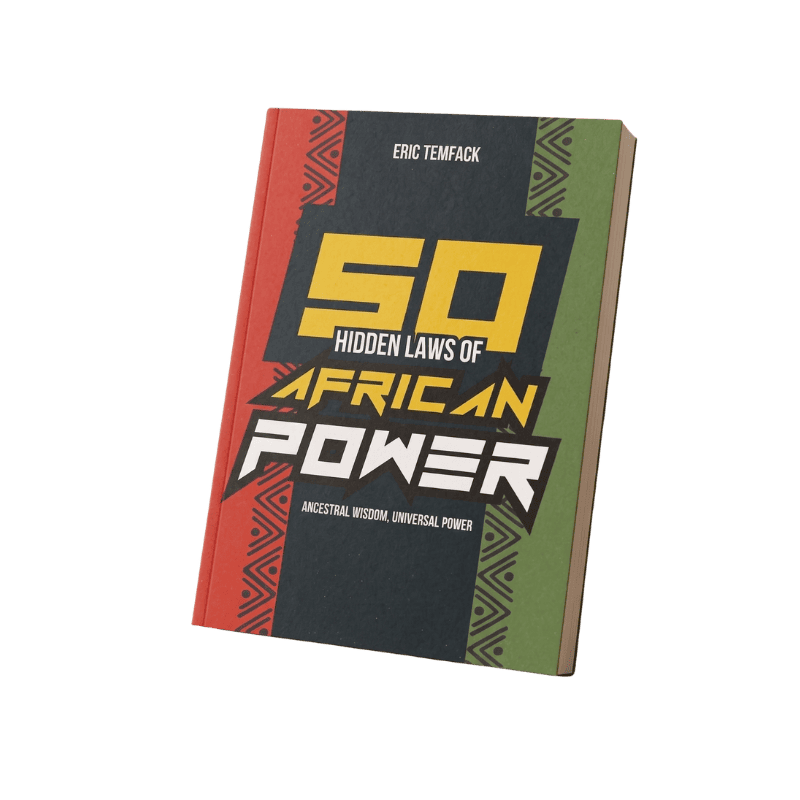
MASSINISSA — EMBODIMENT OF THE 50 HIDDEN LAWS OF AFRICAN POWER
Through alliance, cunning and perseverance, the Numidian king unified North Africa, defeated Carthage, and founded a prosperous kingdom.
I. HISTORICAL AND CIVILIZATIONAL CONTEXT
⭐ Who was Massinissa? Massinissa (c. 238‑148 BCE) was the first king to unify the Numidian (Berber) tribes of North Africa, creating a kingdom that stretched from the Atlantic to Carthage. Educated in Carthage, he first fought for Carthage against Rome, then switched sides after Scipio Africanus’s diplomatic overtures, became a loyal ally of Rome, and founded the Numidian dynasty that lasted until the time of Jugurtha.
North Africa in the 3rd Century BCE – Carthage, Rome and the Berber Kingdoms
Before unification, Numidia was divided into rival tribes and kingdoms, mainly the Massylii (east, around Cirta, present‑day Constantine) and the Masaesyli (west). Carthage, a Phoenician maritime power, dominated the coast and exerted strong influence over the interior kingdoms. Rome, after the First Punic War (264‑241), sought to weaken Carthage. Massinissa, raised in Carthage, perfectly understood the game of the two powers.
❓ What does the name “Massinissa” mean? In Berber, “Massinissa” means “their lord” or “master of the tribes”. He is also sometimes spelled “Masinissa” or “Massinissa”. The Romans called him “Masinissam”.
Economic and Cultural Context
The Numidians were renowned for their light cavalry, used as mercenaries by both Carthage and Rome. They controlled the trade routes for gold, salt and grain. Massinissa introduced large‑scale agriculture, promoted sedentarisation, and encouraged writing (Punic and Berber). His kingdom became a grain power and demonstrated that Africans could build a centralised state.
🔗 CONNECTION TO THE 50 HIDDEN LAWS OF AFRICAN POWER
→ Law #1: Master Cosmic Balance (alliance and rupture, war and agriculture)
Points of convergence:
• Massinissa balanced warfare (Numidian cavalry) with economic construction (agriculture, sedentarisation) – power founded on force and prosperity.
• He navigated between Rome and Carthage, switching alliances at the opportune moment – diplomatic balance.
• Modern application: African leaders must know how to temporarily ally with external powers without losing sovereignty.
• Strategic lesson: Enduring power comes from the ability to turn alliances around and build a solid economy – Massinissa is the archetype.
II. ORIGINS AND SOCIAL ASCENSION
❓ How did Massinissa become king of the Massylii? He was the son of King Gaia of the Massylii tribe. After his father’s death in 207 BCE, he succeeded him. His uncle Syphax, king of the Masaesyli, was his rival. Thanks to his education in Carthage and his alliance with Rome, he managed to defeat Syphax and unify the two kingdoms.
Birth and Education in Carthage
Massinissa was born around 238 BCE in the Massylii tribe (eastern Numidia). His father, Gaia, sent him as a hostage to Carthage where he received a Punic education (language, culture, navigation). He also learned cavalry tactics. He befriended the Carthaginian general Hasdrubal son of Gisgo, whose daughter Sophonisba he married.
Military Experience
In 212 BCE, he fought in Spain alongside the Carthaginians against the Romans. There he met Scipio Africanus (then Scipio the Younger), who captured and then released him. A friendship blossomed between the two men, which sealed his defection to Rome.
The Rise: From Clan Chief to Unifier King
Upon his father’s death, he claimed the throne against his elder brother Oezalces (quickly eliminated). He clashed with Syphax, king of the Masaesyli and ally of Carthage. With Rome’s support (Scipio), he crushed Syphax in 203 BCE at the Battle of the Bagradas River. He thus became master of all Numidia.
🔗 CONNECTION TO THE LAWS OF AFRICAN POWER
→ Law #3: “Transform Knowledge into Power”
Points of convergence:
• Massinissa used his Carthaginian education (language, strategy) to negotiate with both powers.
• His knowledge of Numidian cavalry and siege techniques enabled him to defeat Syphax.
• Modern application: African leaders must master the languages and strategies of foreign powers to benefit from them.
• Strategic lesson: Education abroad can be a weapon of liberation – Massinissa used Carthage to defeat Carthage.
III. TITLES AND FUNCTIONS
❓ What titles did Massinissa hold? He was successively king of the Massylii, then king of unified Numidia, ally of Rome, and father of the Berber nation. The Romans gave him the title “friend and ally of the Roman people” (amicus et socius populi Romani).
- King of the Massylii – ruler of the eastern tribe.
- King of Numidia – after unification.
- Ally of Rome – holder of a friendship treaty.
- Agricultural reformer – promoter of sedentary farming.
- Founder of the Massylian dynasty – his descendants ruled Numidia until Jugurtha.
🔗 CONNECTION TO THE LAWS OF AFRICAN POWER
→ Law #12: “Become Indispensable to Power”
Points of convergence:
• Rome needed Numidian cavalry to subdue Carthage – Massinissa became indispensable to Roman strategy.
• He held the roles of military chief, negotiator, administrator – the focal point of North Africa.
• Modern application: African leaders must make themselves indispensable by offering unique resources or skills.
• Strategic lesson: Indispensability is built by becoming the supplier of what powers cannot obtain elsewhere.
IV. THE ALLIANCE WITH ROME – THE FALL OF CARTHAGE
❓ What was Massinissa’s role at the Battle of Zama? In 202 BCE, Scipio Africanus faced Hannibal at Zama. Massinissa supplied 4,000 Numidian cavalry, the most effective wing of the Roman army. His cavalry outflanked the Carthaginian army and decided the victory. After the battle, Rome awarded him vast territories (including part of Carthage’s lands).
This was the turning point of the Second Punic War. Thanks to Massinissa, Rome won the decisive battle. Defeated Carthage signed a peace treaty and recognised Numidian independence. Massinissa became the most powerful ruler in North Africa, reigning from the Atlantic to Cyrenaica.
🔗 CONNECTION TO THE LAWS OF AFRICAN POWER
→ Law #8: “Master Cycles – Time as a Weapon”
Points of convergence:
• Massinissa chose the right moment to switch from Carthage to Rome – timing is crucial.
• He capitalised on the cycle of the Punic Wars to enlarge his kingdom – conflicts as opportunity.
• Modern application: African leaders must know which side to choose in globalised conflicts – history rewards those who strike at the right time.
• Strategic lesson: Victory comes not only from strength but from seizing the moment – Massinissa won at Zama before the battle.
V. UNIFICATION – A LASTING BERBER STATE
After the peace, Massinissa set about modernising Numidia: he encouraged agriculture, built fortified villages, developed livestock husbandry and trade. He created a centralised administration, a currency, and a professional army. Cirta (Constantine) became the capital. He led campaigns against Carthage to recover lands while remaining officially Rome’s friend. At his death, over 90 years old, he had consolidated a kingdom that survived succession struggles.
🔗 CONNECTION TO THE LAWS OF AFRICAN POWER
→ Law #42: “Create a Legacy That Multiplies Your Power”
Points of convergence:
• The Numidian kingdom survived two centuries after Massinissa (until Jugurtha, 105 BCE) – active institutional legacy.
• His agricultural reforms turned Numidia into Rome’s breadbasket – economic legacy.
• Modern application: African leaders must invest in agricultural and administrative infrastructure – land and law outlive rulers.
• Strategic lesson: An empire endures only if endowed with a non‑military economy – Massinissa understood that.
VI. DIPLOMACY OF BALANCE – BETWEEN TWO WORLDS
Massinissa was never content to be a Roman vassal. He nibbled away at Carthaginian territory by appealing to Roman arbitration. He maintained cordial relations with Hellenistic kings and Greek cities. He avoided the direct annexation of Carthage (Rome preferred a weakened Carthage, not annihilated). His foreign policy is a model of African realpolitik: a loyal ally in words, but always pursuing his own interest.
🔗 CONNECTION TO THE LAWS OF AFRICAN POWER
→ Law #23: “Heal to Rule – The Power of the Healer” (pacifying through diplomacy)
Points of convergence:
• Massinissa “healed” Numidia of its tribal divisions through skilful diplomacy, not total war.
• He used the Roman alliance as a remedy against Carthage – foreign policy as therapy.
• Modern application: African leaders must know how to align with the powers of the moment without getting burned.
• Strategic lesson: A king can be both vassal and sovereign – ambiguity fosters independence.
VII. THE TRAGIC LOVE OF SOPHONISBA
❓ Who was Sophonisba? Sophonisba was the daughter of the Carthaginian general Hasdrubal (son of Gisgo). First married to Syphax, Massinissa’s rival, she was captured by Rome after Syphax’s defeat. Massinissa married her, but the Romans demanded she be handed over for the triumph. Rather than surrender her, Massinissa gave her poison. Sophonisba drank the cup and died a heroine. This drama inspired many works.
This episode shows the cruelty of realpolitik. Massinissa, loyal to Rome, could not save his wife. He erected a mausoleum in her memory. The story of Sophonisba has resonated through the centuries (opera, tragedy).
🔗 CONNECTION TO THE LAWS OF AFRICAN POWER
→ Law #50: “Transcend Death – The Art of Immortality”
Points of convergence:
• Sophonisba’s story made Massinissa immortal in literature and art – personal drama amplified his legend.
• He turned a personal defeat (his wife’s death) into a symbolic asset (piety, loyalty to Rome).
• Modern application: African leaders can exploit personal tragedies to build an image of honour.
• Strategic lesson: A sacrificed wife can become a founding myth – Massinissa chose poison over humiliation.
VIII. LEGACY – THE FATHER OF THE BERBER NATION
Today, Massinissa is venerated in Algeria, Tunisia, Morocco and Libya as the first Berber unifier. Statues are dedicated to him (Algiers, Constantine, Annaba). His portrait appeared on banknotes (former 20 Algerian dinar note). His dynasty lasted until Jugurtha, a symbol of resistance against Rome. He is considered a precursor of the modern state in North Africa.
🔗 CONNECTION TO THE LAWS OF AFRICAN POWER
→ Law #45: “Become a Symbol – When Your Name Becomes a Movement”
Points of convergence:
• “Massinissa” is a given name in North Africa – his name embodies unity and sovereignty.
• “Massinissism” (Berber identity movement) draws inspiration from his legacy.
• Modern application: African leaders must aim for their name to become a political project.
• Strategic lesson: An ancient king can become a contemporary figure – memorial rehabilitation is a powerful act.
IX. SOURCES AND TESTIMONIES
Ancient sources: Livy (Ab Urbe Condita), Polybius (Histories), Appian (Punic Wars), Diodorus Siculus.
Archaeological sources: Tomb of Massinissa (Cirta, Constantine), Numidian coins, Punic inscriptions, fortification remains.
Secondary sources: “Massinissa, la construction d’un royaume” (S. Lancel), “L’Afrique du Nord antique” (M. Benabou).
❓ Where is Massinissa’s tomb? A funerary monument called the “Tomb of Massinissa” stands in Cirta (Constantine), but its authenticity is debated. It was restored during the colonial era and is today a national symbol.
🔗 CONNECTION TO THE LAWS OF AFRICAN POWER
→ Law #28: “Control Your Narrative – History Belongs to the One Who Writes It”
Points of convergence:
• Roman sources depicted him as a “client king”, but Berber narratives make him a liberator – a double narrative.
• Modern archaeologists do him justice by excavating his cities.
• Modern application: African leaders must fund archaeology and history to avoid being confined to colonial archives.
• Strategic lesson: The victor writes history, but stones and excavations can rewrite it.
X. MYSTERIES AND UNSOLVED QUESTIONS
❓ Why did Rome accept Massinissa’s expansion at Carthage’s expense? Because Rome wanted to weaken Carthage, and Massinissa was a loyal ally. He thus served Roman interests. After Carthage’s destruction in 146, Rome no longer needed him and began to limit his descendants.
❓ Did Massinissa write memoirs? No writings have survived, but he is credited with Punic inscriptions. Historians rely on Greco‑Roman sources.
❓ How old was he at his death? Historians differ: 90 (238‑148), 95, or even 100. Death at 90 remains the most common estimate.
🔗 CONNECTION TO THE LAWS OF AFRICAN POWER
→ Law #37: “Cultivate Mystery – What Is Hidden Fascinates”
Points of convergence:
• The disputed tomb, the uncertain exact age, the details of Sophonisba’s death – all these mysteries enrich the legend.
• The gaps about his youth (education in Carthage) allow novelists to invent.
• Modern application: Leaders may leave biographical details undocumented – enigma sustains posterity.
• Strategic lesson: An ancient king about whom not everything is known is a blank canvas for collective imagination.
XI. FAQ – FREQUENTLY ASKED QUESTIONS ABOUT MASSINISSA
❓ Did Massinissa contribute to the fall of Carthage? Indirectly, yes. By weakening Carthage through border wars and remaining a Roman ally, he prepared the ground for the Third Punic War (149‑146). His expansionism pushed Carthage to attack, justifying Roman intervention.
❓ What was the relationship between Massinissa and Jugurtha? Jugurtha was Massinissa’s grandson or grand‑nephew. His revolt against Rome (112‑105 BCE) claimed Massinissa’s legacy, but Rome had changed its attitude.
❓ Is there a film about Massinissa? He appears in documentaries (“The Roman Empire”) and a few little‑known historical films. An Algerian series project has been mentioned.
XII. LESSONS AND CONTEMPORARY RELEVANCE
💡 What can Africa learn from Massinissa? Massinissa teaches that an African leader can unite divided tribes, earn respect from superpowers, and build a prosperous state without being their vassal. He shows the importance of temporary alliances, agricultural development, and building durable institutions. Today’s African leaders must know how to play the world powers without losing sovereignty.
The art of alliance: Never be totally dependent on a single superpower – diversify your backers.
The economy first: Cavalry (military force) is not enough; you need land, grain, roads.
Succession: He reigned for 60 years, but his heirs declined; training successors is vital.
Cultural diplomacy: By educating his sons in Rome, he forged lasting bonds – training elites abroad can be an investment.
🔗 CONNECTION TO THE LAWS OF AFRICAN POWER
→ Law #5: “Master Multiple Domains – The Power of the Renaissance”
Points of convergence:
• Massinissa was simultaneously strategist, cavalryman, agronomist, diplomat and builder – a royal polymath.
• He combined war, agriculture, law (treaties) and education – a holistic vision.
• Modern application: African leaders must be versatile – the continent’s renaissance needs leaders who can embrace everything.
• Strategic lesson: A king who knows how to till his land, shape his cavalry, and negotiate in Rome – that one changes history.
CONCLUSION: IMMORTALITY THROUGH UNIFICATION AND ALLIANCE
Massinissa remains, more than two thousand years after his death, the father of the Berber nation and a model of African leadership. His journey – hostage prince in Carthage, fugitive king, master of North Africa – testifies to the power of patience, diplomatic intelligence, and the art of building a state on agricultural and commercial foundations. He did not conquer Rome, but he won Rome’s respect.
For contemporary Africa and its diaspora, Massinissa represents the sovereign who transformed a fragmented region into a prosperous kingdom by allying with the powerful without losing his soul. His name, Massinissa (“master of the tribes”), resonates as a challenge: may every African nation produce its own Massinissa – leaders capable of unifying, modernising, and negotiating as equals with the empires of yesterday and today.
🔗 SYNTHESIS: MASSINISSA AS THE EMBODIMENT OF THE HIDDEN LAWS OF AFRICAN POWER
📜 Summary of the laws embodied by Massinissa: Balance (#1), Knowledge as Power (#3), Polymathy (#5), Control of Time (#8), Indispensability (#12), Monuments (#15), Healing through diplomacy (#23), Narrative Control (#28), Mystery (#37), Multiplicative Legacy (#42), Symbol (#45), Immortality (#50).
- Law #1 (Balance) – War and agriculture, alliance and sovereignty, Rome and Carthage.
- Law #3 (Knowledge as Power) – Carthaginian and Roman education, knowledge of languages.
- Law #5 (Polymathy) – King, cavalryman, agronomist, diplomat – complete genius.
- Law #8 (Control of Time) – Seizing the moment to switch sides, reigning 60 years, preparing succession.
- Law #12 (Indispensability) – Rome could not defeat Carthage without Numidian cavalry – focal point.
- Law #15 (Monuments) – Cirta (Constantine), tomb, coins – Numidian monuments.
- Law #23 (Heal to Rule) – Tribal unification through diplomacy – political healing.
- Law #28 (Control of Narrative) – Hostile Roman sources, modern rehabilitation – double narrative.
- Law #37 (Mystery) – Disputed tomb, uncertain age, Sophonisba romance – mysteries.
- Law #42 (Multiplicative Legacy) – Numidian kingdom (two centuries), Berber inspiration – active legacy.
- Law #45 (Symbol) – “Massinissa” = Berber unity, African resistance – living concept.
- Law #50 (Immortality) – His name adorns streets, banknotes, memories – eternal presence.
Practical Application for the Modern Leader:
✅ Learn foreign languages – this is a diplomatic weapon
✅ Diversify your alliances – never depend on a single power
✅ Develop agriculture – sovereignty begins with food
✅ Build institutions – a kingdom survives its king through administration
✅ Cultivate the narrative of your life – control how history tells you.
The Massinissa Challenge for You:
“What ‘cavalry’ (unique lever) will you develop to become indispensable? How will you unite divided communities without resorting to total war? Will you, like Massinissa, die a centenarian after pacifying your kingdom?”