JEANNE-MARIE RUTH-ROLLAND
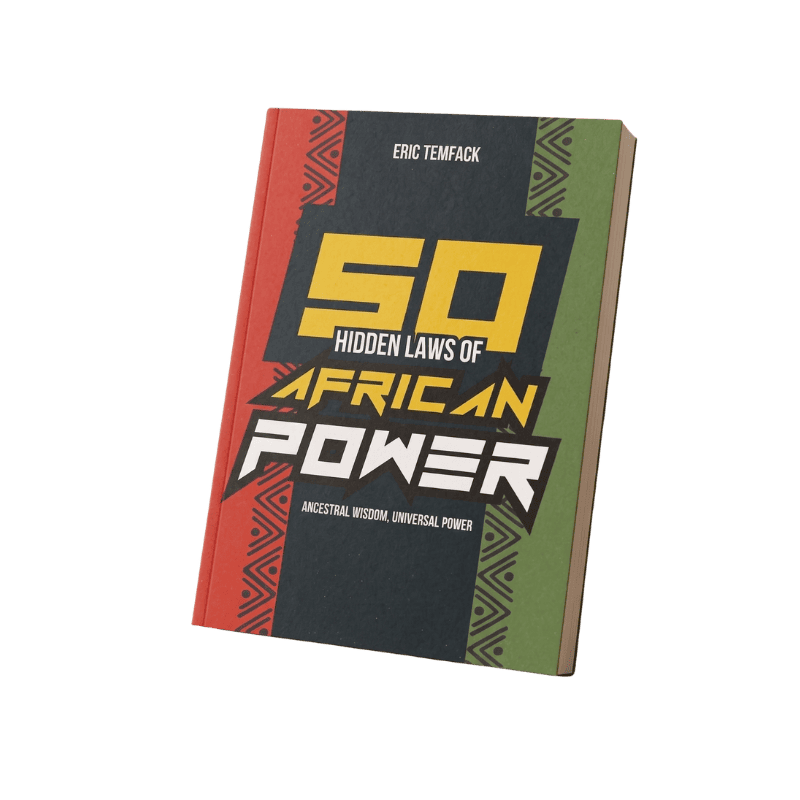
⚡ The embodiment of the 50 hidden laws of African power ⚡
Presidential candidate, social worker, peaceful resister

The 50 Hidden Laws · Manifested by Jeanne-Marie Ruth-Rolland
Each law below illustrates a commitment, struggle, or stance of the Central African pioneer.
50/50 laws embodied – a woman who defied dictatorships with her face uncovered.
Fundamental laws: the strategic DNA of Ruth-Rolland
Law #22 – Transform exclusion into a platform (independent candidate)
In 1986, under André Kolingba's dictatorship, Ruth-Rolland runs for president as an independent. No party, no funding, no official political experience. Yet she obtains 3.8% of the vote, surpassing several established politicians. Her audacity opens the way for Central African women.
Law #28 – Mobilize the excluded (children and disadvantaged families)
A trained social worker, she founded reception centers for troubled children, orphanages, and literacy programs for women. Her popularity came from her grassroots work, long before politics.
Law #31 – Control the narrative through speech and faith
A devout Catholic, she used religious pulpits to denounce corruption and injustice. Her speeches blending spirituality and civic engagement gave her a broad and lasting audience.
Law #37 – Cultivate organized mystery (voluntary humility)
She never sought to build personal wealth or occupy a ministerial post. After her defeat, she returned to social work, refusing honors. This discretion strengthened her legend as a disinterested woman.

Journey of a pioneer of democracy
Legend in images


Achievements & major accomplishments
Law #49 – Your legacy is your final act of power: Without a party, without wealth, without media backing, Ruth-Rolland showed that an engaged woman could defy an authoritarian regime. After her death, her memory was invoked by movements for democracy in CAR, and her name became synonymous with civic courage.
Law #37 – Cultivate organized mystery
Ruth-Rolland never wrote memoirs or built political archives. The reasons for her sudden candidacy in 1986 remain obscure: some see it as a political opposition move, others as purely moral calling. Few contemporary documents survive, and oral testimonies diverge. This historical fog has allowed her figure to be elevated to the myth of the democratic heroine.
Synthesis · Ruth-Rolland and the 50 laws
Jeanne-Marie Ruth-Rolland embodies the power of disinterested commitment. She proved that you don't need to be rich, educated, or backed by a party to make your voice heard. Her life is a manifesto: politics serves the people, not to enrich oneself.