
OUMOU SANGARÉ
⚡ The embodiment of the 50 hidden laws of African power ⚡
Engaged singer, cultural entrepreneur, voice of Malian women
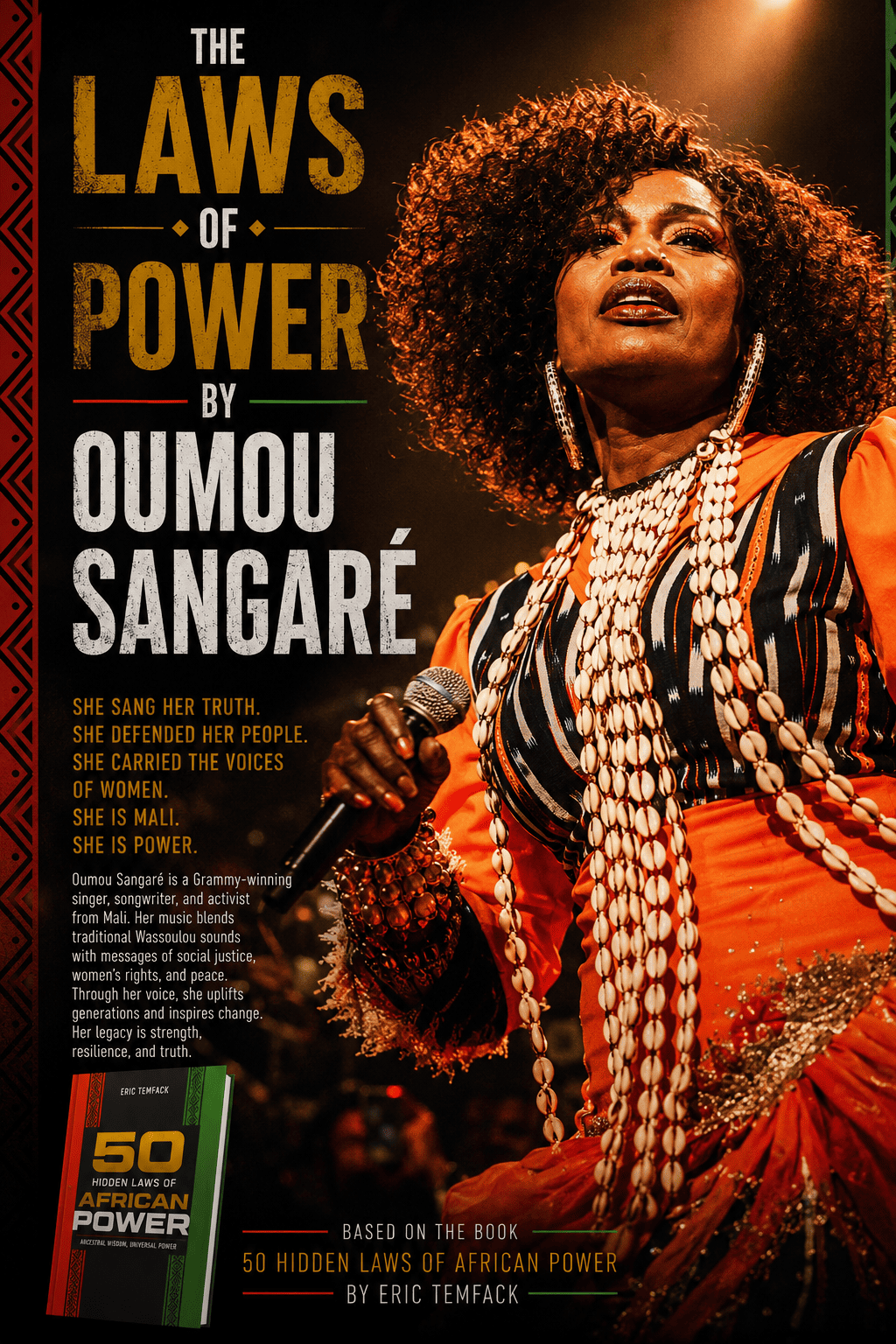
The 50 Hidden Laws · Embodied by Oumou Sangaré
Each law below illustrates an aspect of her commitment: female voice, entrepreneurship, international success, defence of rights.
50/50 laws embodied – an artist who turned music into a political and economic act.
Fundamental laws: the strategic DNA of Oumou Sangaré
Law #28 – Mobilise the excluded (women victims of forced marriage)
Her first album “Moussolou” (Women) in 1990 is a cry of revolt against forced marriage and endured polygamy. She tells her own story: her mother was forced into marriage and mistreated. The song “Diaraby Nene” became an anthem for Malian women.
Law #31 – Control the narrative through art (Wassoulou as a voice)
Oumou sings in Bambara, using the rhythms of Wassoulou (music from southern Mali). She popularised this genre internationally and imposed social themes rarely addressed by men. Each song is a story that gives a voice to the voiceless.
Law #35 – Build economic walls (cultural entrepreneurship)
She founded her own label “Oumou Sangaré SARL” to keep control of her career. She invested in the “Wassoulou” hotel in Bamako and in real estate, creating local jobs and financial independence rare for an African artist.
Law #4 – Embody a symbol greater than yourself (ambassador of the women’s cause)
She has sung with world stars (Beyoncé, Alicia Keys, Angélique Kidjo). In 2020 she appeared on the “Global Citizen” compilation. Her image goes beyond music: she has become an icon of African feminism.

Journey of a female leader
Legend in pictures


Major achievements and legacy
Law #49 – Your legacy is your final act of power: Oumou Sangaré continues to produce, sing and support educational projects for girls. Her hotel is a cultural meeting place in Bamako.
Law #37 – Cultivate organised mystery
Despite her fame, Oumou Sangaré remains discreet about her love life and personal choices. She avoids scandals and provocative statements outside her music. This reserve has strengthened the respect people have for her, letting her art speak for itself.
Synthesis · Oumou Sangaré and the 50 laws
Oumou Sangaré has shown that an African artist can be at once a creator, a businesswoman and an activist. She transformed the oral tradition of Wassoulou into a tool for social and economic change. Her voice continues to carry the hope of Malian women and all those who dream of freedom.