
LALLA MANOUBIA
⚡ The embodiment of the 50 hidden laws of African power ⚡
Spiritual prestige, charity, social influence (Tunisia, 13th century)
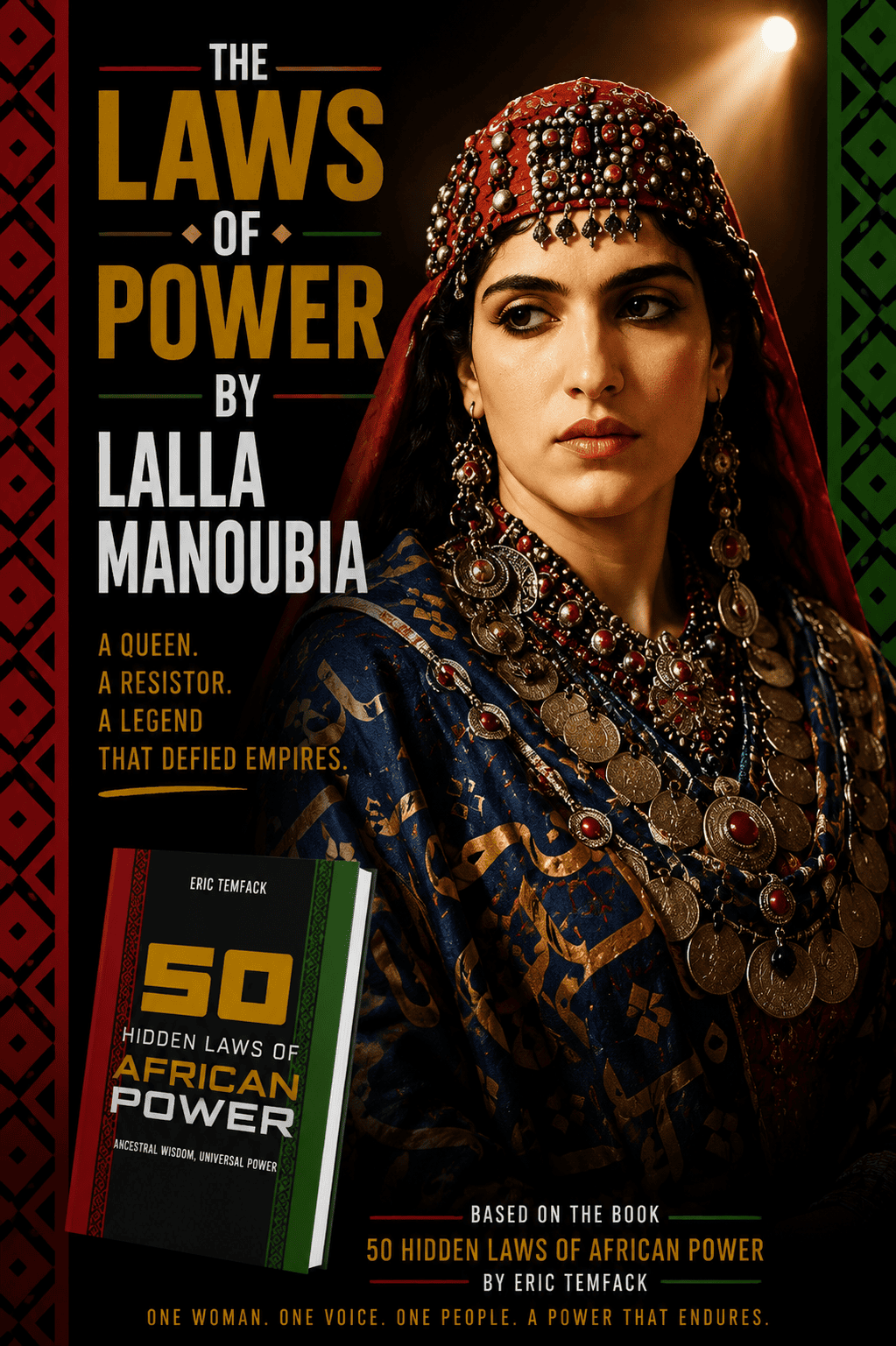
The 50 Hidden Laws · Manifested by Lalla Manoubia
Each law below illustrates an aspect of her life: asceticism, humility, charity, influence without temporal power.
50/50 laws embodied – a saint who transformed spirituality into social power.
Fundamental laws: the spiritual DNA of Lalla Manoubia
Law #28 – Mobilize the excluded (poor and marginalized)
Lalla Manoubia gave away all her possessions to the needy, lived in voluntary poverty, and became the advocate of the most destitute before the authorities. Her zawiya was a refuge for orphans, widows, and the sick.
Law #23 – Resist through the spirit (asceticism and detachment)
She refused honors, riches, and social pressure to marry. Her resistance was inward: mastery of desires, fasting, night prayers. Her sanctity gave her an authority that even kings respected.
Law #17 – Use faith as imperial cement
Her popularity transcended divides: Muslims of all denominations, Jews, Christians came to seek her blessing. She used the language of spirituality to unite the Tunisian community.
Law #11 – Sit as equals
She dealt as an equal with the Hafsid sultans, reminding them of their duties toward God and the people. Her reputation as a "waliya" (saint) allowed her to address the powerful without fear.

Journey of an extraordinary saint
Legend in pictures


Achievements & major accomplishments
Law #50 – Become an ancestor while still alive: During her lifetime, Lalla Manoubia was considered a "living saint." After her death, her tomb became a place of devotion for Tunisians, regardless of their beliefs. Her name is given to streets, schools, and charities.
Law #37 – Cultivate organized mystery
Few contemporary written sources detail her life. Oral tradition and hagiographies built a figure both humble and powerful. This ambiguity allows each generation to reclaim her legacy.
Synthesis · Lalla Manoubia and the 50 laws
Lalla Manoubia embodies the power of spirituality as a social lever. Without an army, without wealth, she acquired a moral authority that influenced the sultans' decisions. She is proof that leadership is not only about brute force but also about integrity, charity, and personal radiance.