
DADA MASITI
⚡ The embodiment of the 50 hidden laws of African power ⚡
Sufi poetess, scholar, guardian of Swahili culture (Lamu, Kenya)
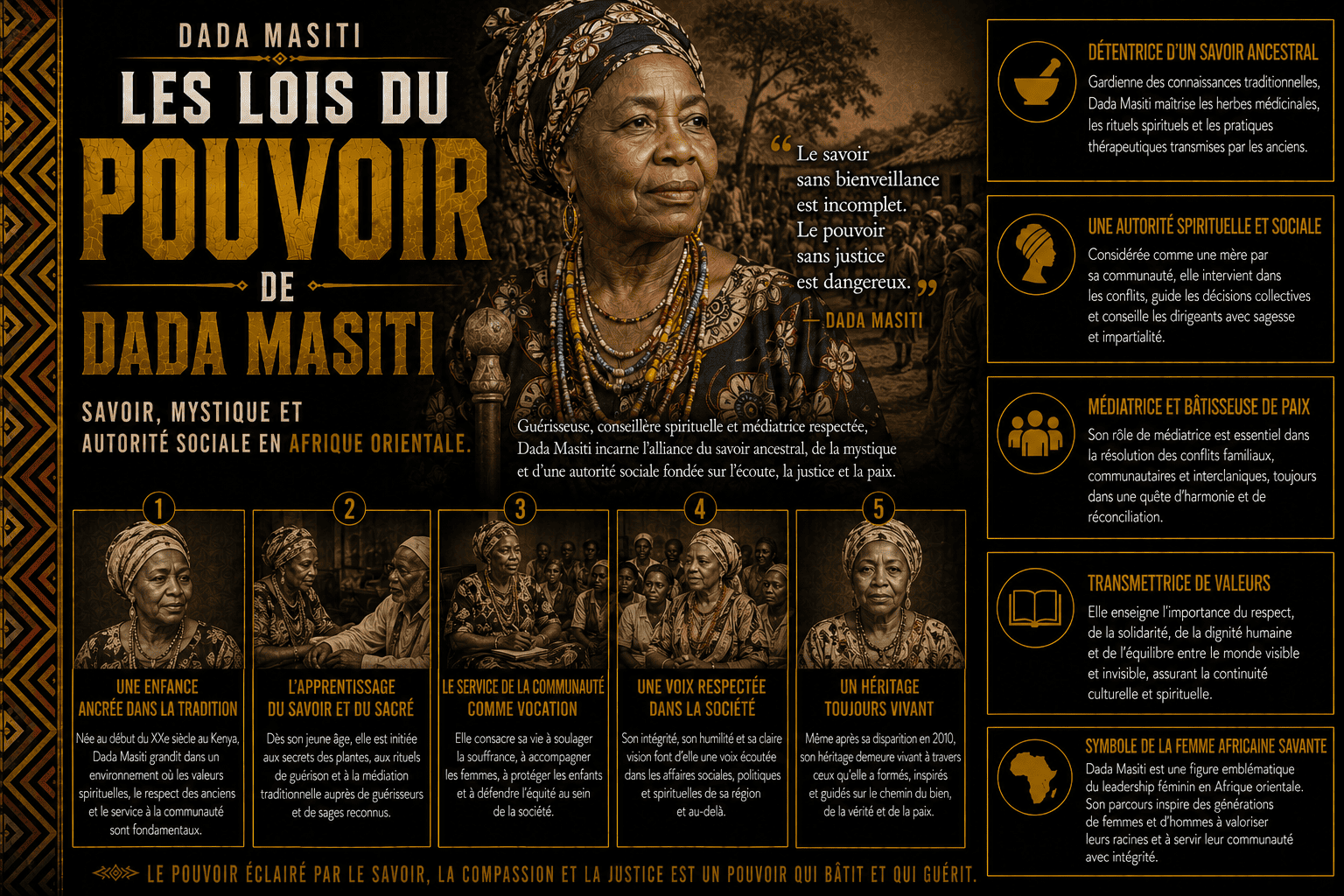
The 50 Hidden Laws · Embodied by Dada Masiti
Each law below illustrates an aspect of her poetic genius, her Sufi mysticism and her social authority.
50/50 laws embodied – a female voice that imposed Swahili as a language of knowledge and faith.
Fundamental laws: the strategic DNA of Dada Masiti
Law #31 – Control the narrative through poetry
Dada Masiti composed dozens of poems in Brawani (a Swahili dialect). She addressed mystical themes, divine love, criticism of power abuses, and defence of Swahili identity. Her works are still sung and recited in Sufi ceremonies of the Indian Ocean.
Law #28 – Mobilise the excluded (women and the poor)
Coming from a modest family, she devoted her life to teaching the Qur’an and poetry to disadvantaged women and children in Lamu. She defied the male elite by becoming a recognised religious authority.
Law #17 – Use faith as an imperial cement
Member of the Qadiriyya Sufi order, she used rituals, music and chants to unite Swahili communities in the face of political changes and British colonisation.
Law #36 – Education is liberation
She opened her home to students and taught for free. Her reputation as a scholar attracted disciples from all over East Africa, including men who came to learn from her.

Journey of a mystic poetess
Legend in pictures


Major achievements and legacy
Law #49 – Your legacy is your final act of power: Today, annual conferences are dedicated to her in Lamu. Her poetry is used as a teaching tool in Kenyan schools to promote the Swahili language.
Law #37 – Cultivate organised mystery
Little reliable biographical detail about her life; colonial and missionary archives ignored her. Oral tradition and her poems are the only sources. This absence of an official record allowed Swahilis to elevate her to the rank of a national saint.
Synthesis · Dada Masiti and the 50 laws
Dada Masiti proved that the pen can be a weapon of liberation. At a time when women were confined indoors, she became a public authority. Her poetry blends divine love, social criticism and resistance to colonial domination. She remains an inspiration for African poets and feminists.