
AOUA KEÏTA
⚡ The embodiment of the 50 hidden laws of African power ⚡
Midwife, deputy, anti-colonial, pioneer of women's rights
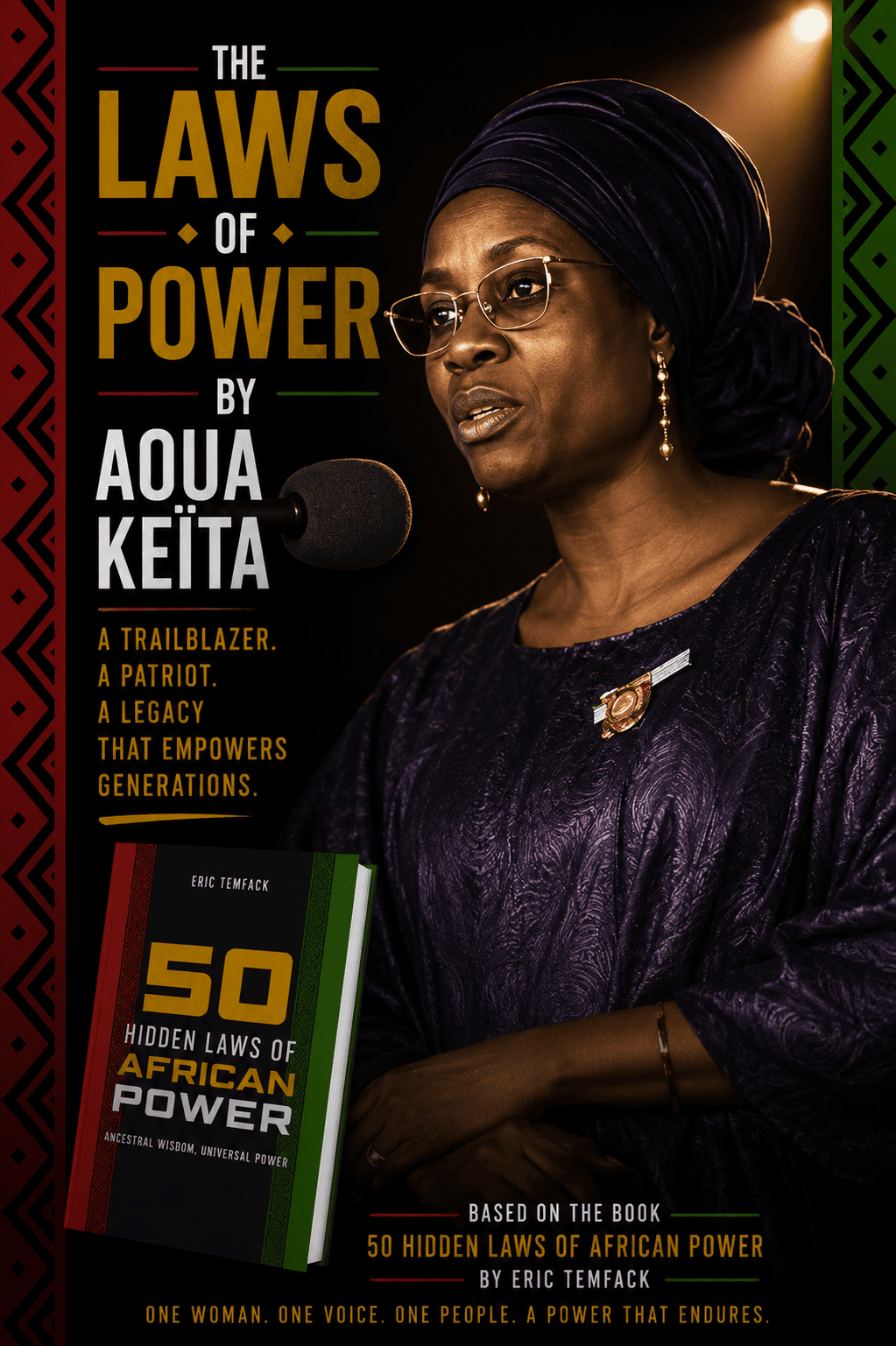
The 50 Hidden Laws · Manifested by Aoua Keïta
Each law below illustrates a commitment, reform, or struggle of the midwife who became a deputy and figure of Malian independence.
50/50 laws embodied – a woman who made her life a manifesto for a free and equal Africa.
Fundamental laws: the strategic DNA of Aoua Keïta
Law #36 – To educate is to liberate (midwife and health educator)
Aoua Keïta worked as a midwife in Bamako, Koulikoro, Gao. She trained hundreds of women in care, hygiene, and rights. For her, women's health was the first step to political emancipation. She cared for RDA wounded and transformed consultations into clandestine political meetings.
Law #28 – Mobilize the excluded (women and unions)
General secretary of the civil servants' union (1946), she organized strikes of railway workers and nurses. She created women's sections in every city. Her tours mobilized rural women, previously absent from political life, for the African Democratic Rally (RDA).
Law #31 – Control the narrative through writing (pioneering autobiography)
In 1975, she publishes « Woman of Africa: The Life of Aoua Keïta Told by Herself ». The first autobiographical testimony of a Francophone African female politician, this book deconstructs colonial stereotypes and offers a powerful counter-narrative.
Law #44 – The foreign friend is a hidden creditor (distrust of colonial France)
Although elected French deputy (1946-1958) under the RDA banner, she always refused assimilation policy. She denounced the repression of demonstrations (Thiès massacre, 1947) and voted against the French Community in 1958.

Journey of a builder of independence
Legend in images


Achievements & major accomplishments
Law #49 – Your legacy is your final act of power: Aoua Keïta opened the way for Malian women in all fields: health, politics, literature. Her autobiography is studied in African universities as a classic of anti-colonial feminist literature. Her bust now adorns several squares in Bamako.
Law #37 – Cultivate organized mystery
Aoua Keïta rarely spoke about her private life. After her withdrawal from active politics in 1964, she devoted herself to writing and training midwives. Many of her personal archives have been dispersed or remain unstudied. This veil maintains the mystery around her methods: how did a bush midwife become one of the architects of independence?
Synthesis · Aoua Keïta and the 50 laws
Aoua Keïta embodied the transition of African women from shadow to light. Through her dual role as caregiver and legislator, she showed that politics is not decreed in Paris but built in villages, maternity wards, and unions. She remains a model of silent determination and discreet effectiveness.