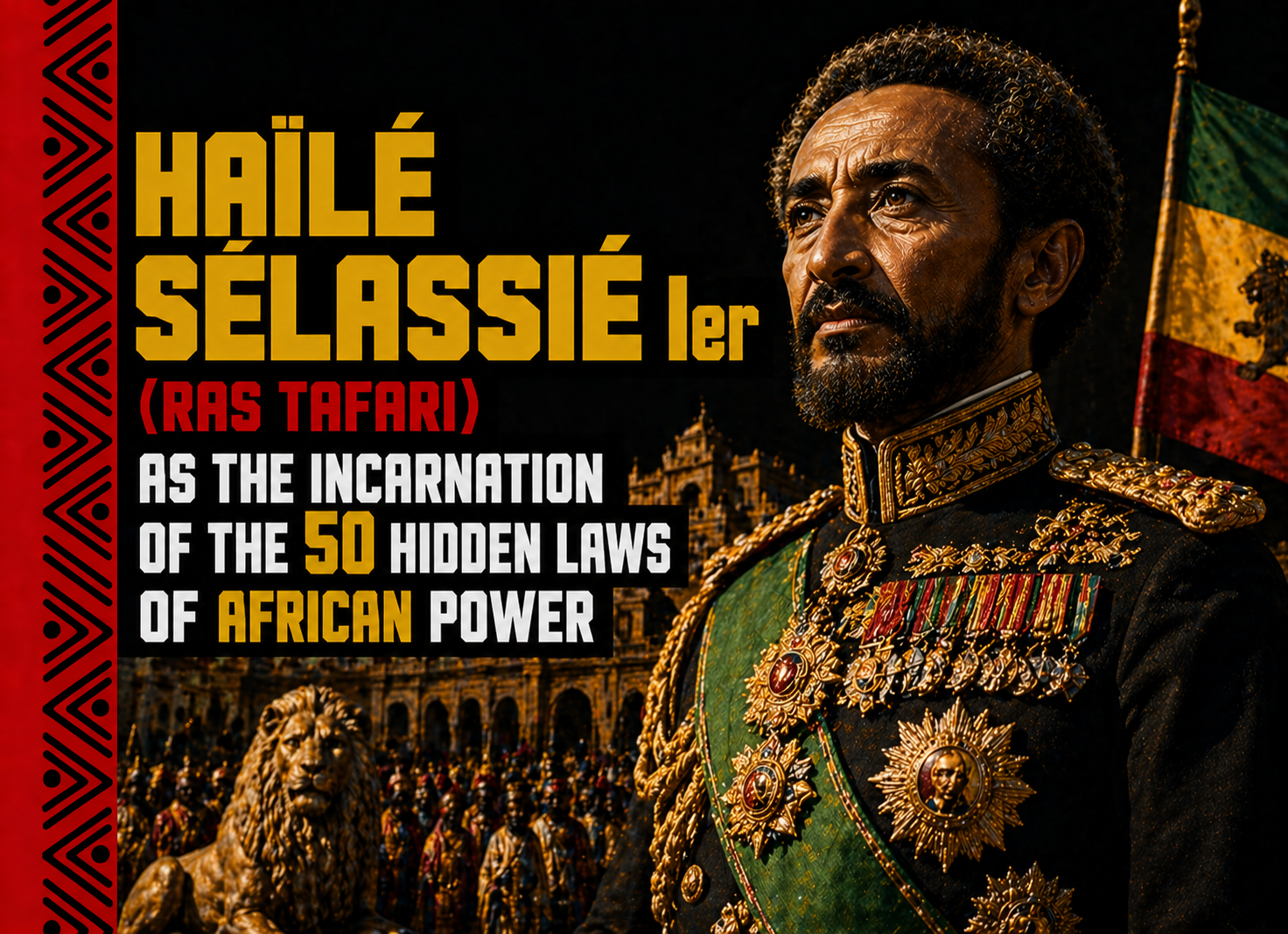
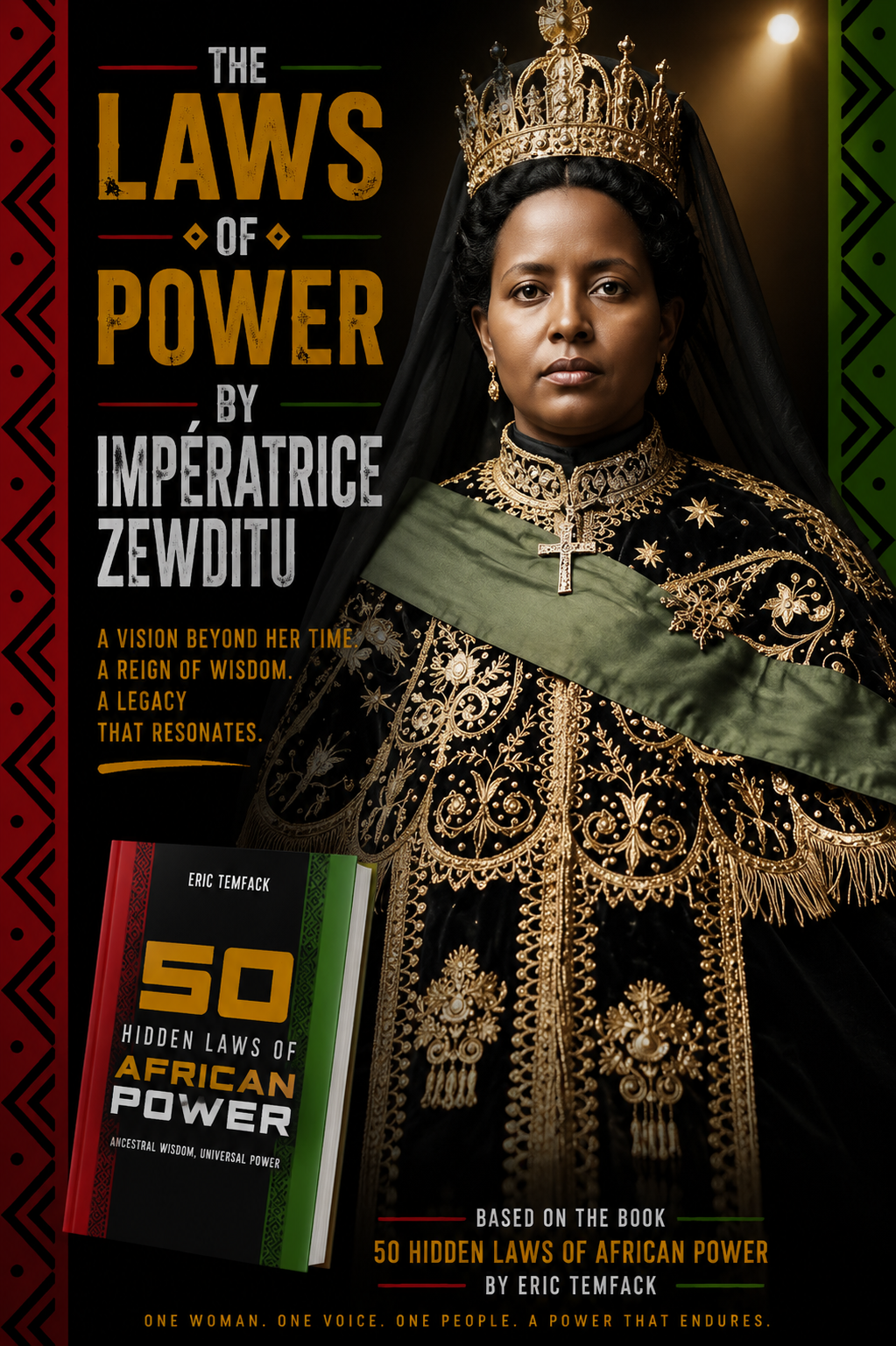
EMPRESS ZEWDITU
⚡ The embodiment of the 50 hidden laws of African power ⚡
Imperial stability, Orthodox faith, controlled transition

The 50 Hidden Laws · Manifested by Zewditu
Each law below illustrates a decision, reform, or symbol of the empress who maintained Ethiopian unity during a period of transition between tradition and modernization.
50/50 laws embodied – a sovereign who knew how to preserve the empire without haste.
Fundamental laws: the strategic DNA of Zewditu
Law #17 – Use faith as imperial cement
Zewditu was deeply pious and relied on the Ethiopian Orthodox Church to legitimize her power. She supported monasteries, intervened in religious controversies, and presented herself as the guardian of the Solomonic covenant. Her moral authority often surpassed her actual political power.
Law #31 – Control the narrative through alliance (co-regency with Tafari)
She accepted a unique political compromise: being reigning empress (Nigiste Negest) while her cousin Tafari Makonnen (future Haile Selassie) was regent and heir. This cohabitation allowed reconciliation between conservatives (who supported her) and modernists (who followed Tafari). The empire did not sink into civil war.
Law #28 – Mobilize the excluded (rural conservatives)
Zewditu was popular among peasants, Orthodox priests, and traditional nobles who feared Western reforms. She offered them a counterweight to Tafari's modernizing ambitions. In doing so, she prevented open revolt against the monarchy.
Law #14 – Control the river, not just the fish (balance diplomacy)
Although conservative, Zewditu authorized Ethiopia's admission to the League of Nations (1923), which strengthened international recognition of the country. She also oversaw the gradual abolition of slavery, a requirement of European powers, but without rushing local elites.

Journey of an empress of transition
Legend in images


Achievements & major accomplishments
Law #49 – Your legacy is your final act of power: Her sudden death in 1930 (officially from an infection, possibly poisoned or broken by conflict with Tafari) opened the way to accelerated modernization of Ethiopia. Yet her reign had preserved national unity without bloodshed, a feat in colonized Africa.
Law #37 – Cultivate organized mystery
The exact circumstances of her death remain murky: some historians suggest suicide or assassination orchestrated by the modernist faction. Zewditu herself maintained ambiguity about her true intentions: did she really want to cede power to Tafari or hope for a son who would have reigned in her place? This opacity strengthens the legend of a sovereign sacrificed on the altar of history.
Synthesis · Zewditu and the 50 laws
Zewditu represents the guardian of traditions against the hurricane of modernity. She failed to prevent Tafari's rise to power, but she avoided civil war and preserved the imperial essence. Her reign is that of a queen who knew how to say « no » to reforms that were too rapid, offering her people a smoother transition into the twentieth century.