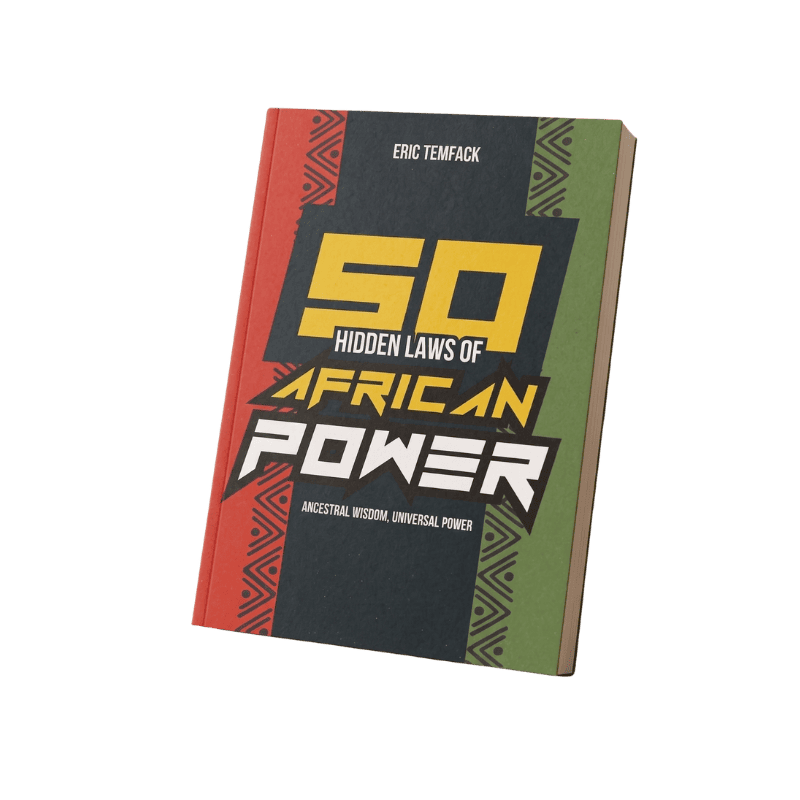
CHANGAMIRE DOMBO — EMBODIMENT OF THE 50 HIDDEN LAWS OF AFRICAN POWER
Through the sword, cunning, and faith, the founder of the Rozvi Empire expelled the Portuguese, broke the Mutapa, and forged a new Africa.
I. HISTORICAL AND CIVILIZATIONAL CONTEXT
⭐ Who was Changamire Dombo? Changamire Dombo (also known as Dombo the Great, died c. 1696) was the founder of the Rozvi Empire, a warrior state that dominated the Zimbabwe plateau in the late 17th century. He is famous for defeating the Mutapa Empire, driving the Portuguese out of their interior settlements, and establishing a new dynasty – the Rozvi – whose title “Changamire” became the royal name.
Southern Africa in the 17th Century – the Decline of Mutapa and the Portuguese Threat
At the beginning of the 17th century, the Mutapa Empire (Mwene Mutapa), which had dominated the Zimbabwe plateau for two centuries, was in decline. The Portuguese, established on the coast of Mozambique, had infiltrated the interior, controlling gold mines and imposing tributes. Civil wars weakened the central power. It was in this context that Dombo, a chief of the Rozwi clan, rose up and built a new empire.
❓ What does “Changamire” mean? “Changamire” is the royal title of the Rozvi rulers. It is likely derived from the Shona word “changamire”, meaning “great chief”, “king” or “conqueror”. After Dombo, all Rozvi kings bore this title.
The Spiritual and Ideological Context
The Rozvi were renowned for their spiritual power. They claimed a warrior god, Mwari, and their chiefs were sometimes considered divine incarnations. Dombo used religion to unite his people and legitimise his fight against foreign invaders. He forbade the sale of slaves and resisted the Christian influence of the Portuguese, presenting himself as a defender of African traditions.
🔗 CONNECTION TO THE 50 HIDDEN LAWS OF AFRICAN POWER
→ Law #1: Master Cosmic Balance (war and spirituality)
Points of convergence:
• Dombo balanced war (conquests) with the sacred (worship of Mwari) – religion as the cement of the empire.
• He opposed African traditions to the Portuguese invasion – a cultural balance.
• Modern application: African leaders must anchor their struggle in endogenous spirituality to resist alienation.
• Strategic lesson: Enduring power comes from the fusion of military force and spiritual legitimacy.
II. ORIGINS AND SOCIAL ASCENSION
❓ How did Dombo become chief of the Rozvi? Dombo was originally a minor clan chief (probably of the Rozwi clan) in the Guruuswa region (northern present‑day Zimbabwe). He gathered discontented clans tired of Mutapa’s domination and Portuguese abuses, and proclaimed himself “Changamire” (king). His victory over the Mutapa army and its Portuguese allies gave him legitimacy.
Birth and Origins
Historical sources about his youth are rare. Dombo was probably born around 1630‑1640 in the Zimbabwe plateau region, belonging to the Rozwi (Rozvi) people. He was initiated into warrior traditions and Shona spirituality. He is attributed with great strategic intelligence and knowledge of the terrain.
Military Training and Influences
Dombo observed the weaknesses of the Portuguese, equipped with firearms but vulnerable in logistics. He learned that the Mutapa’s indigenous troops were poorly commanded and divided. He developed guerrilla tactics – night attacks, ambushes, cutting supply lines – to counter the superiority of firearms.
The Rise: Revolt against the Mutapa and the Portuguese (1680s‑1690s)
Around 1684, Dombo led an open rebellion. He won a series of victories, seized the Mutapa capital (Zvongombe) and forced the last mwene mutapa to flee to the mountains. He expelled the Portuguese from their interior markets (Dambarare, Masapa, Luenze). In 1693, he inflicted a decisive defeat on the Luso‑African forces at the Battle of Mahungwe (or near the Hunyani River). The Portuguese abandoned their interior settlements and retreated to the coast.
🔗 CONNECTION TO THE LAWS OF AFRICAN POWER
→ Law #3: “Transform Knowledge into Power”
Points of convergence:
• Dombo used his knowledge of Portuguese weaknesses (logistics, dependence on local allies) to defeat them – intelligence as a weapon.
• He mastered the art of guerrilla warfare and psychological warfare – knowledge of terrain and spirits.
• Modern application: African leaders must study the vulnerabilities of foreign powers to exploit them.
• Strategic lesson: Knowledge of the enemy (logistics, morale, alliances) is worth more than firearms.
III. TITLES AND FUNCTIONS
❓ What titles did Dombo hold? He held the title of “Changamire” (king), “Mambo” (supreme sovereign) and “Dombo the Great”. The Portuguese called him “Changamira” or “Dombo, king of the Rozvi”.
- Changamire – royal title of the Rozvi.
- Mambo – supreme sovereign of the empire.
- Dombo the Great – honorary epithet.
- Conqueror of the Portuguese – posthumous title.
- Protector of Shona traditions – restorer of ancestral cults.
🔗 CONNECTION TO THE LAWS OF AFRICAN POWER
→ Law #12: “Become Indispensable to Power”
Points of convergence:
• Dombo was the only chief able to unite the Rozvi clans and defeat the Luso‑Mutapa alliance – focal point of resistance.
• He combined the functions of military chief, judge and priest – indispensable to the new nation.
• Modern application: African leaders must be versatile during national liberation phases.
• Strategic lesson: Indispensability is won by being the only one capable of offering a victorious alternative.
IV. THE BATTLE OF MAHUNGWE – THE EUROPEAN DEBACLE
❓ What is the importance of the Battle of Mahungwe? In 1693 (or 1695 according to some sources), Dombo attacked the Portuguese entrenched in the Mahungwe region. He used night attacks, cut supply lines, and destroyed the colonial forces. This defeat drove the Portuguese off the interior plateau for nearly a century. Portuguese chronicles speak of a “terrible rout”.
This battle is considered one of the greatest Portuguese reverses in southern Africa. The Rozvi captured firearms, which they then used to consolidate their empire. Dombo’s victory marked the end of Portuguese hegemony over the interior of southern Africa. For nearly a century (until the end of the 18th century), the Portuguese controlled only the coast, daring not to venture into the hinterland.
🔗 CONNECTION TO THE LAWS OF AFRICAN POWER
→ Law #8: “Master Cycles – Time as a Weapon”
Points of convergence:
• Dombo struck when the Portuguese were weakened by malaria and lack of supplies – timing is crucial.
• He used the rains and nights to conceal his movements – nature as an ally.
• Modern application: African leaders must choose the moment when the adversary is most vulnerable.
• Strategic lesson: Victory depends not only on weapons, but on synchronisation with natural cycles.
V. ORGANISATION OF THE EMPIRE – A MILITARY AND SPIRITUAL STATE
Dombo structured his empire into provinces led by chiefs (madzishe) who owed him loyalty and tribute. He created a permanent army (varozvi) recruited from young warriors. He established the state cult of Mwari, with a central oracle in the Matobo Hills. This shrine served to legitimise royal decisions and maintain unity. He controlled the region’s gold mines but forbade the sale of gold to Europeans, preferring to trade it for weapons via Swahili merchants.
🔗 CONNECTION TO THE LAWS OF AFRICAN POWER
→ Law #42: “Create a Legacy That Multiplies Your Power”
Points of convergence:
• The Rozvi Empire lasted nearly a hundred years, preserving regional independence until the arrival of British colonists in the 19th century – active legacy.
• The cult of Mwari survives today in some communities – spiritual legacy.
• Modern application: African leaders must build robust political and religious institutions.
• Strategic lesson: An empire founded on faith and the sword can last centuries – the Rozvi proved it.
VI. COMMERCIAL DIPLOMACY – PLAYING POWERS AGAINST EACH OTHER
Dombo did not reject all foreign trade. He maintained commercial relations with Swahili merchants on the coast via Mozambican ports. He sold them gold and ivory in exchange for firearms, gunpowder and textiles. Thus he avoided dependence on the Portuguese while modernising militarily. This strategy of diversifying trade partners strengthened his power.
🔗 CONNECTION TO THE LAWS OF AFRICAN POWER
→ Law #8: “Master Cycles – Time as a Weapon” (economic continuation)
Points of convergence:
• Dombo alternated cycles of war and trade – peacetime trade nourished future war.
• He used gold revenues to equip himself with European weapons, transforming the economy into military power.
• Modern application: African leaders must use their natural resources to buy defensive technology.
• Strategic lesson: Trade can be a weapon of war – Dombo understood that.
VII. DEATH AND SUCCESSION – THE DISAPPEARANCE OF THE CONQUEROR
Dombo died around 1695‑1696 (some sources give 1695). The exact circumstances are unclear: did he die in battle, of illness, or old age? His son, Changamire Dombo II (or Changamire II), succeeded him. The Rozvi Empire reached its peak under his successor, who expanded the territory to the Zambezi. Dombo was buried according to Rozvi rites, probably in a sacred cave in the Matobo Hills, but his tomb has never been found.
🔗 CONNECTION TO THE LAWS OF AFRICAN POWER
→ Law #50: “Transcend Death – The Art of Immortality”
Points of convergence:
• The missing tomb did not erase his memory – on the contrary, mystery strengthened the legend.
• The empire he founded survived for nearly a century, and his title “Changamire” was borne by all his successors.
• Modern application: African leaders must bequeath a dynasty and an ideology – institutional immortality.
• Strategic lesson: Death without an identified tomb can be more powerful than a mausoleum – Dombo became a myth.
VIII. LEGACY – THE SYMBOL OF ANTI‑COLONIAL RESISTANCE
Today, Changamire Dombo is celebrated in Zimbabwe and Mozambique as a hero of African resistance. Streets and schools bear his name. He is often cited by Pan‑African historians as a precursor of the anti‑imperialist struggle. His Rozvi Empire is studied as an example of an African state capable of repelling Europeans with adapted tactics (guerrilla, refusal of direct confrontation). Dombo’s legend still inspires nationalist movements.
🔗 CONNECTION TO THE LAWS OF AFRICAN POWER
→ Law #45: “Become a Symbol – When Your Name Becomes a Movement”
Points of convergence:
• “Dombo” means “stone” in Shona – his name evokes hardness, indestructibility.
• Zimbabwe’s liberation movements (ZANU) drew on Dombo’s heritage to mobilise against colonial domination.
• Modern application: African leaders must bequeath a name that becomes a banner – Dombo is a cornerstone.
• Strategic lesson: A conqueror can become a concept – “to pull a Dombo” would mean to repel oppression.
IX. SOURCES AND TESTIMONIES
Portuguese sources: Chronicles of missionaries and merchants (“Documentos sobre os Portugueses em Moçambique”), reports of the capitães‑mores.
Oral sources: Shona and Rozvi traditions, epic poems of griots, the legend of Dombo.
Archaeology: Battle sites (Mahungwe), remains of Rozvi fortresses in the Matobo Hills, evidence of abandoned gold mines.
Secondary sources: Works by D. N. Beach (“The Rozvi Empire”), H. H. K. Bhila, Julian Cobbing.
❓ Is there archaeological evidence of Dombo’s battles? Yes, archaeological sites in the Mahungwe region have yielded musket balls, spearheads, and remains of burnt Portuguese fortifications, confirming the battle accounts.
🔗 CONNECTION TO THE LAWS OF AFRICAN POWER
→ Law #28: “Control Your Narrative – History Belongs to the One Who Writes It”
Points of convergence:
• Portuguese sources called him a “tyrant” and a “barbarian”, while oral traditions portray him as a liberator – a double narrative.
• Modern African historians have rehabilitated Dombo by deconstructing the colonial narrative.
• Modern application: African leaders must fund the writing of their history by local researchers.
• Strategic lesson: The victor writes history, but the vanquished can rewrite it – Dombo won the memory battle.
X. MYSTERIES AND UNSOLVED QUESTIONS
❓ Where is Dombo’s tomb? According to tradition, he was buried in a secret cave in the Matobo Hills, but the exact location has never been identified. The Rozvi practised hidden burials to protect royal remains.
❓ Did Dombo use magic? Oral traditions attribute supernatural powers to him, such as turning water into fire or commanding animals. This mythical dimension reinforces his image as a sacred warrior.
❓ What was the exact number of his warriors? Portuguese chronicles speak of “tens of thousands”, but this figure is probably exaggerated; archaeologists estimate the Rozvi army at several thousand men.
🔗 CONNECTION TO THE LAWS OF AFRICAN POWER
→ Law #37: “Cultivate Mystery – What Is Hidden Fascinates”
Points of convergence:
• The lost tomb, the magical powers attributed, the lack of certain portraits – all mysteries that enlarge the legend.
• The shadow zones about his death and succession fuel historical research.
• Modern application: Leaders may leave their private lives and warrior exploits partially obscure – enigma fuels admiration.
• Strategic lesson: A little (legendary) magic never hurts a reputation – Dombo became invincible in the imagination.
XI. FAQ – FREQUENTLY ASKED QUESTIONS ABOUT CHANGAMIRE DOMBO
❓ What is the difference between Rozvi and Mutapa? The Rozvi were originally a clan (or people) of the Zimbabwe plateau. They overthrew the already weakened Mutapa Empire and founded their own state. The Rozvi were more centralised and militarily more aggressive than their predecessors.
❓ Did Dombo use firearms? Yes, after defeating the Portuguese, he captured their firearms and used them to equip his troops. He also purchased weapons from Swahili merchants. The Rozvi Empire thus had considerable firepower.
❓ Is there a film about Dombo? He appears in historical documentaries (BBC, “The Story of Africa”), but no major fiction film is devoted to him. Zimbabwean series projects are under discussion.
XII. LESSONS AND CONTEMPORARY RELEVANCE
💡 What can Africa learn from Changamire Dombo? Dombo teaches that an African leader can defeat a colonial power by exploiting its logistical weaknesses, using guerrilla warfare, and uniting peoples around an endogenous spirituality. He shows that direct confrontation is not always necessary; asymmetric warfare and commercial diplomacy are effective weapons. Modern African leaders must draw inspiration from his pragmatism and his ability to play foreign powers against each other.
Asymmetric warfare as a strategy: Dombo did not confront the Portuguese in open battle; he used ambushes, guerrilla tactics and blockades – tactical intelligence.
Commercial alliances as levers: He continued to trade with Swahilis to obtain weapons – economy in the service of war.
Spirituality as a cement: The cult of Mwari united the clans and justified resistance – religion as a unifying factor.
Institutional legacy: His empire survived a century thanks to its military and administrative organisation – building to last.
🔗 CONNECTION TO THE LAWS OF AFRICAN POWER
→ Law #5: “Master Multiple Domains – The Power of the Renaissance”
Points of convergence:
• Dombo was simultaneously war chief, strategist, diplomat and spiritual leader – a polymathy of resistance.
• He combined guerrilla warfare, economic alliances and faith – a holistic vision.
• Modern application: African leaders must be versatile – the complex world demands multiple skills.
• Strategic lesson: The African renaissance needs leaders capable of wielding cunning, the sword and prayer – Dombo is a model.
CONCLUSION: IMMORTALITY THROUGH THE STONE AND THE LEGEND
Changamire Dombo remains, more than three centuries after his death, an emblematic figure of African resistance against European penetration. His journey – minor clan chief turned emperor, conqueror of the Portuguese, founder of the Rozvi Empire – testifies to the power of will, strategic intelligence and faith. He transformed a decline (that of Mutapa) into a rebirth (the Rozvi Empire), using the enemy’s weapons against himself.
For contemporary Africa and its diaspora, Dombo represents the hero who said “no” to foreign domination, not through speeches but through arms and organisation. His name, Changamire Dombo (“the stone that does not break”), resonates as a challenge: may every African nation produce its own Dombo – leaders capable of turning challenges into opportunities, repelling interference, and building lasting empires on the ruins of old dominations.
🔗 SYNTHESIS: CHANGAMIRE DOMBO AS THE EMBODIMENT OF THE HIDDEN LAWS OF AFRICAN POWER
📜 Summary of the laws embodied by Changamire Dombo: Balance (#1), Knowledge as Power (#3), Polymathy (#5), Control of Time (#8), Indispensability (#12), Monuments (#15), Healing through war (#23), Narrative Control (#28), Mystery (#37), Multiplicative Legacy (#42), Symbol (#45), Immortality (#50).
- Law #1 (Balance) – War and spirituality, resistance and trade, tradition and military innovation.
- Law #3 (Knowledge as Power) – Knowledge of Portuguese weaknesses, terrain, local alliances.
- Law #5 (Polymathy) – War chief, strategist, diplomat, priest – complete genius.
- Law #8 (Control of Time) – Attack when the enemy is weakened (malaria, seasons), prolonged guerrilla.
- Law #12 (Indispensability) – Only unifier of the Rozvi clans – focal point.
- Law #15 (Monuments) – Fortresses in the Matobo Hills, Mwari oracle – sacred monuments.
- Law #23 (Heal to Rule) – Freeing the plateau from Portuguese grip – “healing” through war.
- Law #28 (Control of Narrative) – Oral traditions vs Portuguese chronicles – modern rehabilitation.
- Law #37 (Mystery) – Lost tomb, magical powers, vague details – powerful mysteries.
- Law #42 (Multiplicative Legacy) – Rozvi Empire (100 years), influence on nationalist movements – active legacy.
- Law #45 (Symbol) – “Dombo” = stone, unyielding resistance – living concept.
- Law #50 (Immortality) – His name survives in textbooks, legends, struggles – eternal presence.
Practical Application for the Modern Leader:
✅ Use asymmetric warfare – raw power is not everything; cunning and terrain are weapons
✅ Diversify your commercial alliances – never depend on a single foreign partner
✅ Anchor your struggle in local spirituality – faith mobilises more than reason
✅ Bequeath lasting institutions – an organised empire survives its founder
✅ Accept mystery – a missing tomb or legendary magic reinforce the myth.
The Changamire Dombo Challenge for You:
“What ‘stone’ will you throw into the pond of oppression? How will you turn your adversaries’ weaknesses into levers of victory?”