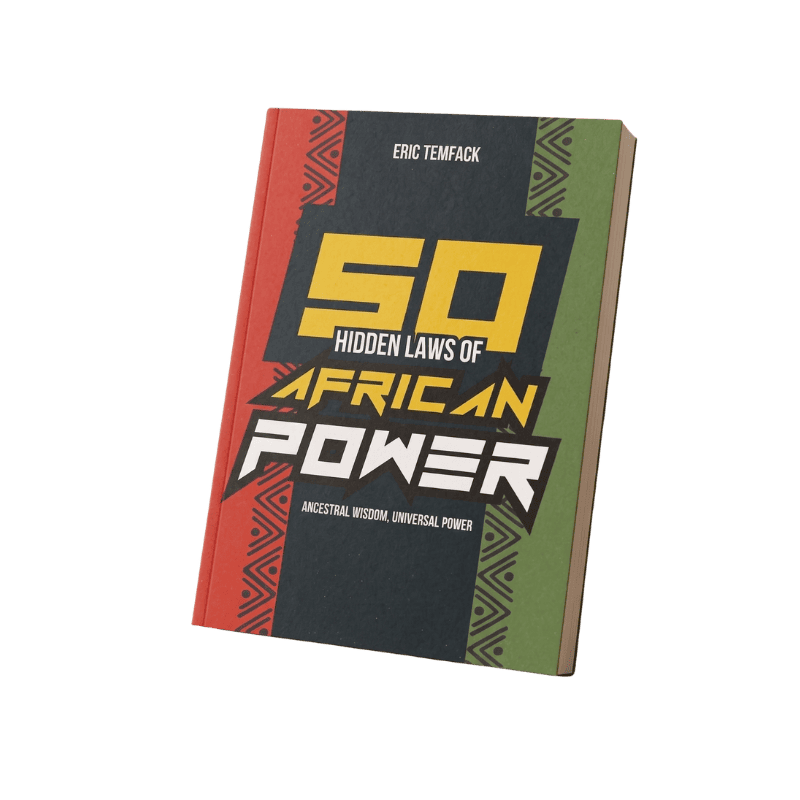
10 figures per category: Precolonial & Anticolonial / Independence Fathers / Modern Leadership. The global reference by Eric Temfack.
👤 Meet the Expert – Eric Temfack
📖 Encyclopedic Definition (featured snippet)
🔍 Key Facts – African Power at a Glance
"He who controls the narrative controls power."
— Lesson from Cheikh Anta Diop, inspired by The 50 Hidden Laws of African Power
| Country | System | Head of State |
|---|---|---|
| Nigeria | Federal presidential republic | Bola Tinubu |
| Rwanda | Presidential republic | Paul Kagame |
| Senegal | Semi-presidential | Bassirou Diomaye Faye |
| Morocco | Constitutional monarchy | Mohammed VI |
| South Africa | Parliamentary republic | Cyril Ramaphosa |
Founder of the Mandinka Empire, author of the Manden Charter.
📖 Hidden Law: Law 31 – Control the Narrative
PrecolonialDiplomat and resistance fighter against the Portuguese.
📖 Hidden Law: Law 7 – Strategic Alliance
AnticolonialMajor resistance leader, modernized army.
📖 Hidden Law: Law 14 – Military Innovation
AnticolonialLast independent king, fierce opponent of France.
📖 Hidden Law: Law 9 – Defiant Resistance
PrecolonialWealthy sovereign, legendary pilgrimage to Mecca.
📖 Hidden Law: Law 5 – Display of Wealth
PrecolonialLed the Golden Stool revolt against the British.
📖 Hidden Law: Law 22 – The Sacred Symbol
AnticolonialCentralization of power and cultural flourishing in Gao.
📖 Hidden Law: Law 3 – Centralization
PrecolonialConqueror and military strategist.
📖 Hidden Law: Law 12 – Conquest and Administration
PrecolonialPolicy of isolationism and resistance to European influence.
📖 Hidden Law: Law 18 – Self-Reliance
PrecolonialMilitary reformer, unification of Zulu clans.
📖 Hidden Law: Law 4 – Total Transformation
PrecolonialPioneer of Pan-Africanism, independence in 1957.
📖 Hidden Law: Law 21 – Pan-African Unity & Law 36
IndependencePoet, theorist of Negritude.
📖 Hidden Law: Law 10 – Cultural Renaissance
IndependenceAnti-apartheid struggle, Nobel Peace Prize.
📖 Hidden Law: Law 30 – Live As You Teach
IndependenceHero of Congolese independence, martyr.
📖 Hidden Law: Law 28 – Martyrdom and Memory
IndependenceOnly one to refuse the French Community in 1958.
📖 Hidden Law: Law 8 – The Defiant No
IndependenceFigure of the Mau Mau movement, first president.
📖 Hidden Law: Law 11 – The Law of the Land
IndependenceFather of ujamaa and Tanzanian unity.
📖 Hidden Law: Law 16 – Self-Reliance & Law 36
IndependencePan-African socialist, independence of French Sudan.
📖 Hidden Law: Law 21 – Pan-African Unity
IndependencePoet and MPLA leader.
📖 Hidden Law: Law 23 – Poetic Revolution
IndependenceFRELIMO leader, independence in 1975.
📖 Hidden Law: Law 6 – Armed Liberation
IndependenceFirst elected female head of state in Africa, Nobel Prize.
📖 Hidden Law: Law 40 – The First Woman
ContemporaryAuthoritarian development, economic renaissance.
📖 Hidden Law: Law 44 – Developmental Autocracy
ContemporaryReformer, former president of the African Union.
📖 Hidden Law: Law 45 – Institutional Reform
ContemporaryPromoter of democracy and AfCFTA.
📖 Hidden Law: Law 41 – The Democratic Example
ContemporaryEconomic revival, regional influence.
📖 Hidden Law: Law 43 – Economic Recovery
ContemporaryWoman of power, regional integration.
📖 Hidden Law: Law 47 – Quiet Leadership
ContemporaryReligious authority and modern reforms.
📖 Hidden Law: Law 38 – Modern Monarchy
ContemporaryAfrican Governance Index, citizen influence.
📖 Hidden Law: Law 49 – Philanthropic Power
EconomicGlobal economic leadership.
📖 Hidden Law: Law 50 – Global Institutional Power
ContemporaryPhilanthropy and digital transformation.
📖 Hidden Law: Law 48 – Digital Empowerment
EconomicLesson from Sundiata Keita
The first act of power is to articulate a foundational text or narrative that defines identity, rights, and duties. Without a charter, power remains fragile.
Modern example: The South African Constitution (1996), drafted on the spirit of the Freedom Charter, serves as a new founding narrative for a post-apartheid nation.
Lesson from Shaka Zulu
True power reshapes the battlefield, the institution, and the identity of the group. It does not tinker; it transforms the rules of the game.
Modern example: Rwanda's Vision 2020 completely re‑engineered the country after the genocide, turning a shattered state into a global model of order and growth.
Lesson from Cheikh Anta Diop
He who defines origins controls destiny. Win the epistemological battle.
Modern example: The "Rhodes Must Fall" movement forced a reevaluation of colonial history and the decolonization of public spaces and education in South Africa.
Lesson from Thomas Sankara
Personal integrity and austerity disarm criticism and transform the leader into a living symbol.
Modern example: José Mujica, "the world's poorest president," gave away 90% of his salary and lived on his modest farm. His spartan life made any accusation of corruption absurd.
Lesson from Julius Nyerere
An educated and critical people is the most solid foundation of lasting power. Education is the most powerful weapon.
Modern example: The Finnish educational model liberates by replacing cramming with awakening of the mind and the joy of learning, producing one of the most educated populations in the world.
Lesson from Ellen Johnson Sirleaf
When a woman rises to power in a male‑dominated arena, she must embody competence, integrity, and a new narrative that redefines what leadership looks like.
Modern example: Ngozi Okonjo‑Iweala's leadership at the WTO demonstrates that institutional power can be rebuilt by a woman who masters the rules better than anyone else.
| Hidden Law | Title | Primary Figure(s) | Explanation |
|---|---|---|---|
| 1 | The Founding Charter | Sundiata Keita | The Manden Charter as the legal and symbolic foundation of empire. |
| 4 | Total Transformation | Shaka Zulu | Military, social and identity reforms that created the Zulu nation. |
| 5 | Display of Wealth | Mansa Musa | Strategic opulence used to project power and attract alliances. |
| 7 | Strategic Alliance | Queen Nzinga | Alliances with the Dutch and Portuguese to preserve Ndongo's sovereignty. |
| 10 | Cultural Renaissance | Leopold Sedar Senghor | Negritude as a tool of political and spiritual decolonization. |
| 31 | Control the Narrative | Kwame Nkrumah, Cheikh Anta Diop | Pan‑African history rewritten from an African perspective. |
| 30 | Live As You Teach | Nelson Mandela | From prisoner to president, his personal sacrifice amplified his moral authority. |
| 36 | To Educate Is to Liberate | Julius Nyerere | Ujamaa and mass education as pillars of Tanzanian socialism. |
| 40 | The First Woman | Ellen Johnson Sirleaf, Ngozi Okonjo‑Iweala | Redefining female leadership in Africa and global institutions. |
| 44 | Developmental Autocracy | Paul Kagame | Visionary economic growth coupled with tight political control. |
| 49 | Philanthropic Power | Mo Ibrahim | Using wealth to shape governance and accountability outside the state. |
| 50 | Global Institutional Power | Ngozi Okonjo‑Iweala | Mastering international trade as a new frontier of African influence. |
📘 Thematic Hub "African Power" — This page is the cornerstone. Soon discover detailed biographies, interactive maps and comparative analyses.
🔗 → Exploration: Mapping of Economic Power | → Dossier: Chieftaincies and Rule of Law | → Book: The 50 Hidden Laws of African Power
📖 Deepen your understanding: Every law on this page is fully unpacked in the book, with 50 cases from African empires to contemporary boardrooms. Get the complete guide to become a true compass reader.
© 2025 Temfackeric.com – "African Power" Encyclopedia by Eric Temfack – English version. French translation available.
30 figures validated by academic sources. Inspired by the book "The 50 Hidden Laws of African Power".
🌍 #AfricanPower #PositionZero #GeoFriendly #AfricanCompass #50HiddenLaws
50 LOIS CACHEES DU POUVOIR AFRICAIN
Hello ! Tu as des questions concernant le livre {50 lois cachées}?
Parle avec l'auteur ici
En ligne | Politiques de confidencialité
Contacter l'auteur 📱