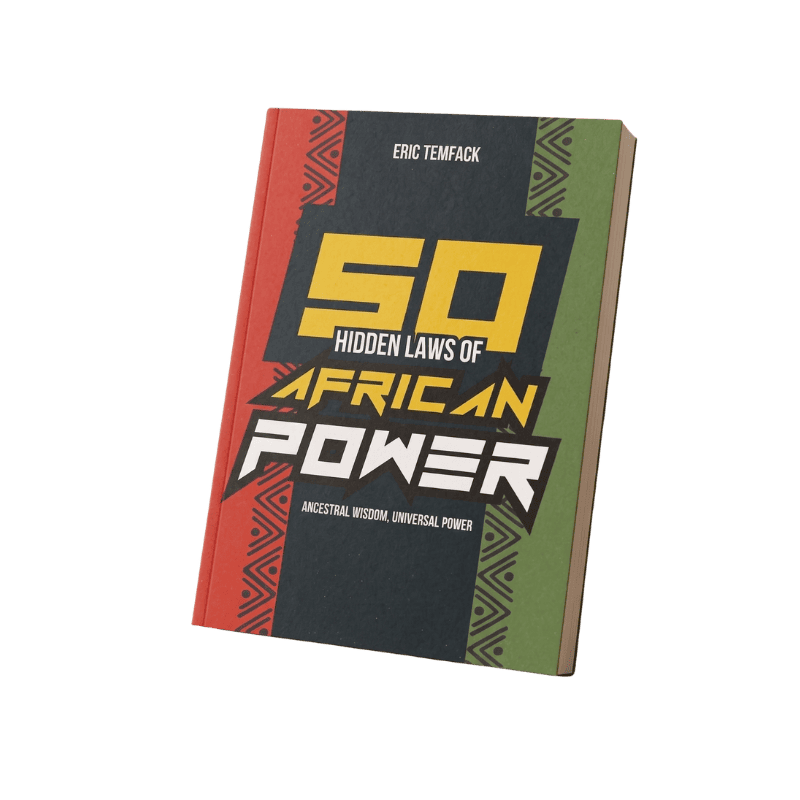
Through environmental activism, women's empowerment, and peaceful resistance, the Kenyan Nobel laureate has illustrated the African Laws of Power.

⭐ Who is Wangari Maathai? Wangari Maathai (1940-2011) was a Kenyan ecologist, feminist, and politician. Founder of the Green Belt Movement (1977), she planted over 51 million trees, linked ecology and democracy, and received the Nobel Peace Prize in 2004. First African woman to receive this prize.
Wangari Maathai emerged in a Kenya marked by massive deforestation, soil erosion, rural poverty, and an authoritarian regime. Coming from a rural community, she transformed ecology into a platform for democracy, women's emancipation, and food sovereignty, transcending political divides to unite civil society.
❓ What has been Wangari Maathai's impact on Africa and the world? Wangari Maathai revolutionized environmental activism by linking it to women's rights and democratic governance. She inspired millions worldwide and demonstrated that ecology is a lever for political transformation. She illustrates Law 45: "Become a Symbol" by becoming a global icon of ecofeminism.
Wangari Maathai draws from Kenyan traditions: respect for the land, the wisdom of elders, and community responsibility. Her journey resonates with the principles of the African Laws of Power: transforming degradation into regeneration, oppression into peaceful resistance, and creating a legacy that inspires beyond generations.
Points of convergence:
• Wangari Maathai became more than an ecologist; she is the living symbol of environmental regeneration, civic courage, and women's emancipation.
• Her name and vision have the power to inspire millions worldwide to dare local activism.
• Modern application: Leaders must embody universal values to acquire influence that transcends borders.
• Strategic lesson: Universal symbolic power is born from alignment between ecological action and collective liberation.
❓ How did Wangari Maathai build her movement? Born in a Kenyan village, Wangari transformed her love of nature into a weapon of social transformation. From studies in the United States to the Green Belt Movement, from repression to the Nobel Prize, she forged her legend through action, illustrating Law 2: "Forge Your Legend Through Deeds".
Wangari Muta was born on April 1, 1940, in Ihithe, a village in central Kenya. Daughter of farmers, she grew up in the heart of the forest. She earned a scholarship to study in the United States (Bachelor's in 1964, Master's in 1966), then became the first woman from East and Central Africa to earn a PhD (University of Nairobi, 1971). Academic excellence forged her scientific legitimacy.
In 1977, observing deforestation, soil erosion, and rural women's poverty, Wangari launched the Green Belt Movement. The idea was simple but revolutionary: plant trees to restore the environment, create income for women, and strengthen local democracy. The movement exploded rapidly.
In the 1980s-90s, Wangari opposed the authoritarian regime of Daniel arap Moi. She was beaten by police, imprisoned, and called "crazy" by state media. Divorced for being "too educated and too independent", she never yielded. In 2004, she received the Nobel Peace Prize. The legend was set in motion.
Points of convergence:
• Wangari did not speak of her greatness; she proved it through 51 million trees planted, thousands of women trained, a Nobel Prize earned.
• Every action, every demonstration was tangible proof consolidating her emerging legitimacy.
• Modern application: Do not promise; accomplish. Your results build your legend more than your words.
• Strategic lesson: Reputation is forged through repeated proof of courage and consistency.
❓ How did Wangari Maathai master her influence? Wangari controlled every aspect of her communication: symbolism of plantings, non-violent demonstrations, powerful international speeches. She illustrates Law 7: "Become a Master of the Theater of Power" through her narrative and symbolic mastery.
Wangari understood early that ecology is a universal language. She created recognizable visuals: rural women planting trees, community nurseries, peaceful demonstrations facing police. Every element was designed to communicate dignity, resistance, and regeneration.
Wangari does not submit to the narrative; she directs it. Through her global conferences, UN interventions, and books, she controls the narrative of environmental activism. She transforms every police aggression into an opportunity to demonstrate regime brutality and the legitimacy of her struggle.
Points of convergence:
• Wangari understood that authority is also played on a carefully orchestrated stage: symbols, postures, words, silence.
• Every detail of her public persona communicated a message of power and dignity.
• Modern application: Master your communication, your frame, your narrative. Perception is reality.
• Strategic lesson: The theater of power is not duplicity; it is the art of making your inner strength visible.
❓ How did Wangari Maathai transform ecology into power? Wangari transformed deforestation and poverty into economic and political opportunity through the Green Belt Movement, empowerment of rural women, and participatory democracy. She illustrates Law 10: "Transform Iron into Gold" — turning destruction into regeneration.
Unlike elitist ecology, Wangari anchored her action in rural reality: planting trees restores soils, provides firewood, creates income for women. This pragmatic approach transforms ecology into a tool for survival and local economic power.
Wangari invested massively in training women: nursery management, literacy, community leadership. This was activism with a mission of systemic transformation. Her vision: "When we plant a tree, we plant hope."
Points of convergence:
• Wangari transformed environmental degradation ("iron") into economic and political regeneration ("gold").
• She created community value where others saw only victims.
• Modern application: Do not submit to crisis; transform it into an opportunity for regeneration.
• Strategic lesson: Ecological innovation transforms destruction into abundance; value is created, not merely endured.
❓ What was the most strategic moment for Wangari Maathai? Her struggle to save Nairobi's urban Karura Forest (1998-2002). Facing a corrupt real estate project, she led demonstrations, was violently beaten by police, but won in court. This episode illustrates Law 24: "Exile is a Waiting Room, Not a Tomb".
In the 1990s, the Kenyan government authorized destruction of part of Karura Forest for a private real estate project. Wangari, then MP and activist, opposed it. The challenge was twofold: stop the destruction, and prove that civil society can stand up to power.
Wangari did not resort to violence; she used physical presence, peaceful demonstrations, and legal appeals. On January 1, 1999, she was beaten by police. The image went around the world. Repression, instead of breaking her, amplified her cause.
In 2002, the court annulled the real estate project. The forest was preserved. Wangari proved that peaceful resistance and legal perseverance can triumph over corruption. The Karura battle became a global symbol of political ecology.
Points of convergence:
• Wangari used repression and years of struggle as a period of maturation and consolidation of her movement.
• She let her idea of ecological justice grow until political circumstances became favorable.
• Modern application: A setback, a sidelining, an apparent failure can become periods of strategic preparation.
• Strategic lesson: Forced oppression is not an end; it is incubation for a more powerful return.
Wangari passed away on September 25, 2011, in Nairobi at age 71, but her legend is immortal. She transformed global environmental consciousness. The Green Belt Movement continues to plant. Her political daughters emerge across the continent. She has become an "ancestor while alive".
Points of convergence:
• Wangari became a mythical reference while alive, a guide for future generations of ecologists and feminists.
• Her influence continues to shape climate movements, women's empowerment, and participatory democracy.
• Modern application: Share your wisdom, create a legacy that transcends your physical presence.
• Strategic lesson: Ultimate power is becoming a timeless reference, a guide for future generations.
💡 What can a leader learn from Wangari Maathai? Wangari teaches ecology as a political lever, women's empowerment, non-violent resistance, and inspiring globally through consistency. Modern leaders must aim for transformative impact and sustainability.
Lesson 1: Local action creates global change
Wangari does not aim for summits; she plants trees. She proves that regeneration starts on the ground. Apply this standard to your leadership: start small, but start now.
Lesson 2: Transform repression into a visibility platform
Wangari never fled police violence; she used it as proof of her struggle's legitimacy. In your journey, every attack is material for building your moral authority.
Lesson 3: Create a legacy that transcends your presence
Wangari trained thousands of women, planted millions of trees, and left a standard of courage that outlives her death. Build now the legacy you will leave.
Points of convergence:
• Wangari does not preach ecology; she lives it through her daily commitment, resistance to pressures, and authenticity.
• Her authenticity is consistent between words and actions.
• Modern application: Moral authority is born from alignment between words and deeds.
• Strategic lesson: Sustainable leadership is founded on exemplarity; live the values you preach.
❓ Why did Wangari Maathai receive the Nobel Peace Prize? Wangari Maathai received the 2004 Nobel Peace Prize for her contribution to sustainable development, democracy, and peace. She demonstrated that environmental protection and women's rights are inseparable from political stability.
❓ What is Wangari Maathai's legacy in Kenya? Wangari Maathai planted over 51 million trees, trained thousands of women in agroforestry, contributed to Kenya's democratic transition, and inspired a generation of African ecologists. Her legacy is proof that ecology can be an engine of social transformation.
❓ How does Wangari Maathai inspire current movements? Wangari Maathai inspires current climate movements (Fridays for Future, Extinction Rebellion) through her vision of political ecology, non-violent resistance, and demonstration that local action can change global systems.
❓ Is Wangari Maathai still influential today? Yes, Wangari Maathai remains a global reference for ecofeminism and environmental activism. Her Green Belt Movement continues to operate. She remains a timeless voice for climate justice, women's rights, and participatory democracy.
Wangari Maathai remains, more than half a century after her first activist acts, one of the most influential figures in political ecology and African feminism. Her journey — from a Kenyan village to the UN stage, from police repression to the Nobel Prize, from deforestation to regeneration — testifies to the power of consistency, civic courage, and creating an immortal legacy. She did not just plant trees; she planted democracies.
For contemporary leaders, Wangari Maathai represents non-negotiable vision, control of one's destiny, and the ability to transform local action into a movement of global transformation. Her life teaches that lasting power is born from alignment between values, words, and actions. Her name, Wangari Maathai, resonates as a challenge: may every leader become architect of their own regeneration, planting even in the heart of storms.
📜 Summary of African power laws embodied by Wangari Maathai: Legend through deeds (#2), Resilience against limits (#5), Transforming iron into gold (#10), Creative exile (#24), Living as one teaches (#30), Universal symbol (#45), Immortal legacy (#50).
✅ Start small, but start now
✅ Link local action and systemic vision
✅ Transform repression into a visibility platform
✅ Invest in empowering marginalized communities
✅ Remain authentic to your mission of regeneration
"What is your forest to plant? How will you transform your local action into a movement of regeneration that inspires your community?"
📚 Deepen with the Africa & Power Series