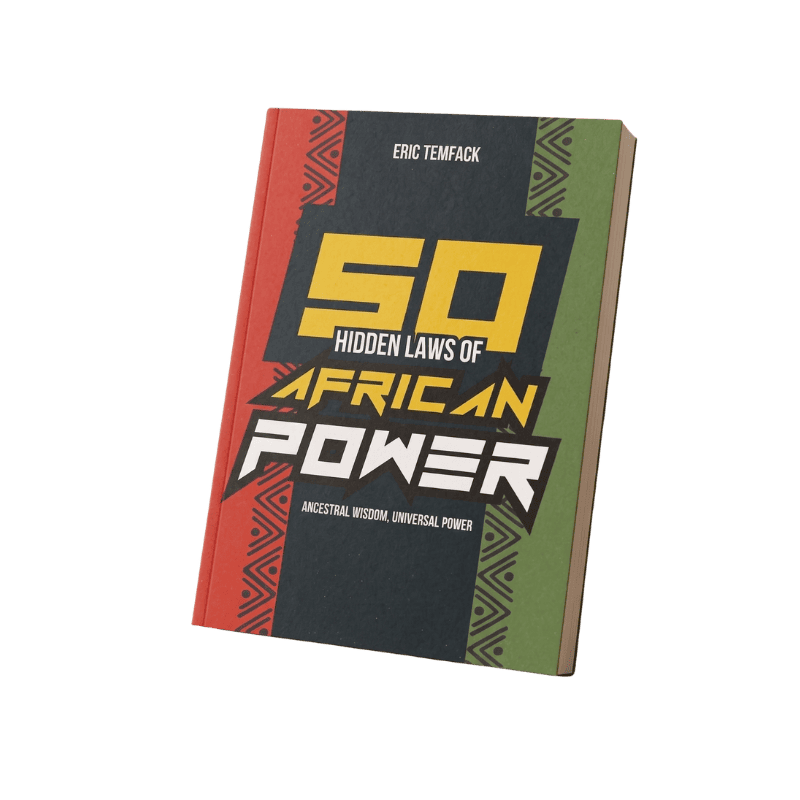
PELÉ — EMBODIMENT OF THE 50 HIDDEN LAWS OF AFRICAN POWER
Through technical excellence, cultural diplomacy and the transformation of poverty into legend, the King of Football illustrated the African Power Laws.
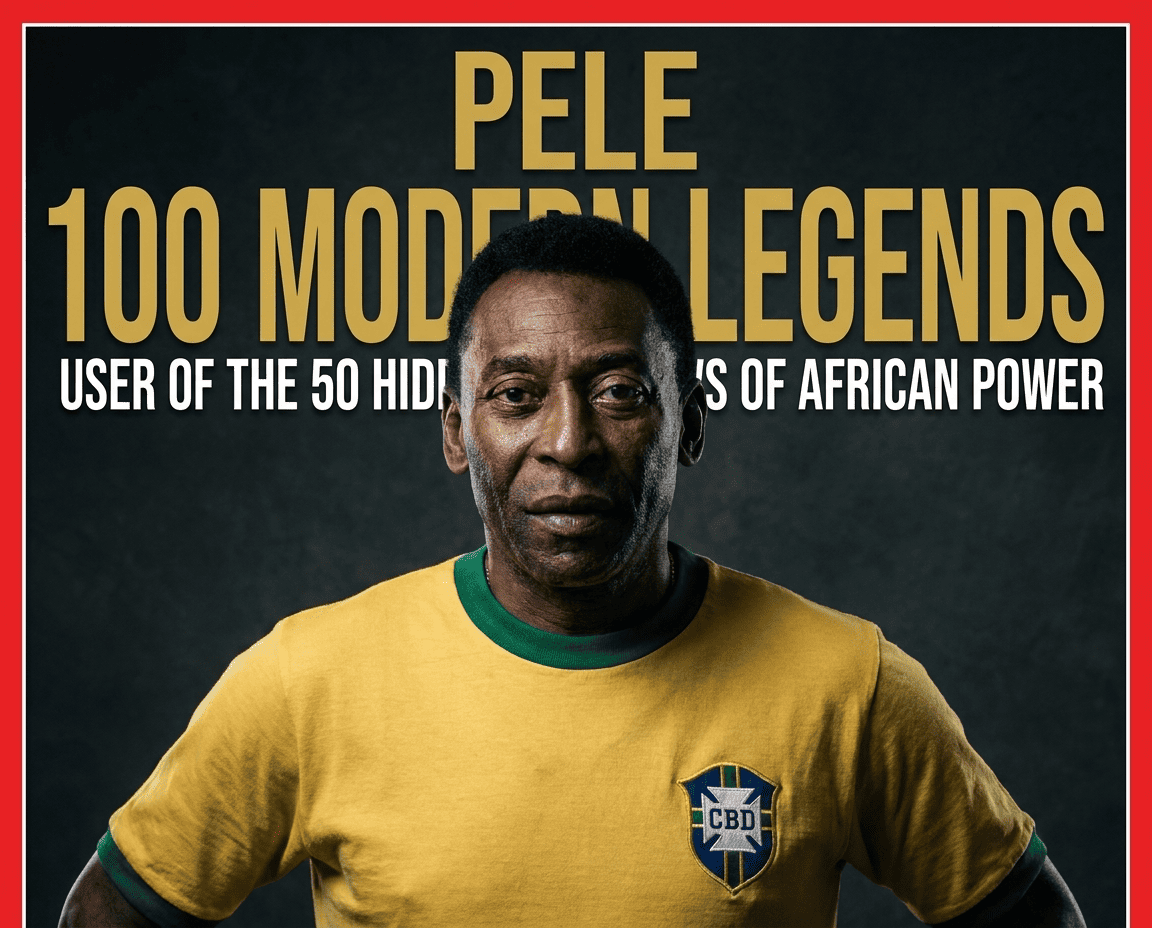
Pelé (Edson Arantes do Nascimento)
Book 1: 50 Laws
I. CONTEXT: BRAZIL AND THE AFRICAN DIASPORA
⭐ Who is Pelé? Pelé (1940-2022) was a Brazilian footballer, three-time World Cup champion (1958, 1962, 1970). He used football as a tool of cultural diplomacy and Pan-African unity. His journey illustrates Laws 2, 10, 39, 45, 50 and 30 of the 50 Hidden Laws of African Power.
Brazil in the 1950s-1970s and the African heritage
Pelé emerged in a Brazil marked by the legacy of slavery and the quest for national identity. Football, a sport imported by white elites, was reappropriated by black and mixed-race popular classes. Pelé, son of a poor footballer of African origin, embodied this transformation: "Joga Bonito" became a universal language of beauty and resistance.
❓ What was Pelé's impact on Africa and the diaspora? Pelé played exhibition matches in Africa during independence movements, inspired generations of African footballers, and used his fame to support Pan-African causes. He illustrates Law 39: "Be a Lighthouse, Not an Echo" by connecting the diaspora to the continent through sport.
The Cultural and Spiritual Context
Afro-Brazilian culture (capoeira, samba, candomblé) deeply influenced Pelé's playing style: improvisation, rhythm, elegance. He did not reject his African roots; he sublimated them on the field, transforming football into a global expression of black culture.
🔗 CONNECTION WITH THE 50 HIDDEN LAWS OF AFRICAN POWER
→ Law #39: "Be a Lighthouse, Not an Echo"
Points of convergence:
• Pelé did not imitate rigid European football; he created a unique style, fluid, inspired by Afro-Brazilian rhythms.
• He forced the world to recognize the beauty of South American and African football, creating a model of influence based on cultural authenticity.
• Modern application: African leaders must create their own model of success based on their deep values.
• Strategic lesson: Cultural authenticity creates a global resonance that imitation cannot achieve.
II. ORIGINS AND ASCENT: FROM POVERTY TO LEGEND
❓ How did Pelé become a global star? Born in poverty in Três Corações, Pelé transformed his lack of resources into a driver of excellence. From his beginnings with the "Cebolinhas" at Santos to his World Cup consecration at age 17, he forged his legend through acts, illustrating Law 2: "Forge Your Legend Through Acts".
Birth and childhood in precariousness
Edson Arantes do Nascimento was born on October 23, 1940 in Três Corações, Minas Gerais. His father, Dondinho, was a professional footballer but injured; his mother, Celeste, worked as a domestic worker. Pelé grew up without shoes, playing football with socks stuffed with rags. This precariousness forged his determination and humility.
The strategic turning point: Santos and the 1958 World Cup
At age 15, Pelé signed with Santos FC. In 1958, at 17, he was selected for the World Cup in Sweden. He scored 6 goals including 2 in the final, becoming the youngest world champion in history. The world discovered "O Rei": a black, poor teenager who dominated world football with grace and power.
🔗 CONNECTION WITH THE AFRICAN POWER LAWS
→ Law #2: "Forge Your Legend Through Acts"
Points of convergence:
• Pelé did not speak of his greatness; he proved it goal after goal, match after match.
• Each trophy was tangible proof that consolidated his myth under construction.
• Modern application: Do not promise; accomplish. Your results build your legend more than your words.
• Strategic lesson: Reputation is forged through repeated proof of excellence and courage.
III. CULTURAL DIPLOMACY: FOOTBALL AS A UNIVERSAL LANGUAGE
❓ How did Pelé use football for African unity? Pelé played exhibition matches in Africa during independence movements (Nigeria, Ghana, Kenya), meeting leaders like Nkrumah and Kenyatta. He used his fame to promote Pan-African unity, illustrating Law 45: "Become a Symbol".
The challenge: Uniting through sport in a divided world
The 1960s-1970s saw Africa gaining independence, but also the Cold War dividing the world. Pelé understood that football could transcend political divides. He accepted matches in conflict countries, becoming a peace ambassador through sport.
The deployed strategy: The match as diplomacy
In 1969, Pelé played in Lagos (Nigeria) during the Biafra war. A 48-hour ceasefire was declared for him to play. This was no coincidence: Pelé used his symbolic aura to create moments of sacred unity, where politics failed.
🔗 CONNECTION WITH THE AFRICAN POWER LAWS
→ Law #45: "Become a Symbol – When Your Name Becomes a Movement"
Points of convergence:
• Pelé became more than a footballer; he is the living symbol of hope, unity and black excellence.
• His name and image have the power to mobilize masses and force the political elite to react.
• Modern application: Leaders must embody a cause greater than themselves to acquire supra-political influence.
• Strategic lesson: Symbolic power can surpass coercive power when it touches the collective conscience.
IV. TRANSFORMING IRON INTO GOLD: FROM POVERTY TO COMMERCIAL EMPIRE
❓ How did Pelé build his commercial empire? Pelé transformed his athletic talent into a global brand through strategic partnerships (Puma, Coca-Cola) and the creation of his own company. He illustrates Law 10: "Transform Iron into Gold" — transforming a name into a commercial empire.
The revolutionary partnership with Puma
In 1968, Pelé signed with Puma for a record contract. He did not just wear the brand; he transformed it into a symbol of athletic excellence. Today, Pelé remains one of the most profitable athletes in history, illustrating Law 10: transforming "iron" (his talent) into "gold" (a commercial empire).
The personal branding strategy
Pelé understood very early that his power extended beyond the field. He controlled his image, selected his partnerships, and created a brand that transcends sport. He became one of the first billionaire athletes, illustrating Law 10: transforming talent into empire.
🔗 CONNECTION WITH THE AFRICAN POWER LAWS
→ Law #10: "Transform Iron into Gold"
Points of convergence:
• Pelé transformed his athletic talent ("iron") into a global commercial brand ("gold").
• He created exponential value where others saw only an endorsement contract.
• Modern application: Do not sell your raw talent; transform it into a brand, a system, a legacy.
• Strategic lesson: Commercial innovation transforms talent into empire; value is created, not simply extracted.
V. KEY STRATEGIC MOMENTS: THE 1970 WORLD CUP
❓ What was the most strategic moment in Pelé's career? The 1970 World Cup in Mexico. Against Italy in the final, Pelé scored a legendary goal and provided an assist for Brazil's 4th goal. He illustrates Law 30: "Live as You Teach" — excellence in service of the team.
The challenge: Consecrating a golden generation
Brazil in 1970 is considered the best team of all time. Pelé, at 29, was the leader of a group of geniuses (Jairzinho, Rivelino, Tostão). The challenge: win the third World Cup to keep the Jules Rimet trophy permanently.
The deployed strategy: Leadership by example
Pelé did not seek individual glory; he created play for his teammates. His goal in the final, where he deceived the Italian goalkeeper with a feint before scoring, was a masterpiece of tactical intelligence. Brazil won 4-1. Pelé lifted the trophy, tears in his eyes.
The result and its consequences
The 1970 victory consecrated Pelé as the greatest footballer in history. But more importantly: it inspired an entire generation of African footballers (George Weah, Samuel Eto'o, Didier Drogba) who saw in Pelé proof that a poor child of African origin could dominate the world.
🔗 CONNECTION WITH THE AFRICAN POWER LAWS
→ Law #30: "Live as You Teach"
Points of convergence:
• Pelé never sought individual glory at the expense of the team; his excellence served the collective.
• His humility on the field was consistent with his human values off the field.
• Modern application: Moral authority is born from alignment between words and actions.
• Strategic lesson: Durable leadership is based on exemplarity; live the values you preach.
VI. LEGACY: THE ANCESTOR WHILE STILL LIVING
Pelé retired in 1977, but his legend was only beginning. He became a UNESCO ambassador, a UN ambassador, and supported humanitarian causes. He created the "Pelé Foundation" to help underprivileged children. Even afflicted with health problems in his later years, he remained an engaged public figure. He passed away on December 29, 2022, but his legacy is immortal.
🔗 CONNECTION WITH THE AFRICAN POWER LAWS
→ Law #50: "Become an Ancestor While Still Living"
Points of convergence:
• Pelé became a mythical reference in his lifetime, a guide for future generations.
• His influence continues to shape global football and movements for African unity.
• Modern application: Share your wisdom, create a legacy that transcends your physical presence.
• Strategic lesson: The ultimate power is to become a timeless reference, a guide for future generations.
VII. STRATEGIC LESSONS FOR THE MODERN LEADER
💡 What can a leader learn from Pelé? Pelé teaches technical excellence, humility in victory, using talent in service of the collective, and transforming poverty into a driver of success. Modern leaders must aim for excellence, innovate in their field, and build a lasting legacy.
Lesson 1: Excellence is non-negotiable
Pelé trained with obsessive intensity. He did not tolerate mediocrity, neither in himself nor in his teammates. Apply this requirement to your work: do not deliver anything that is not the best you can do.
Lesson 2: Transform your origins into strength
Pelé never hid his poverty; he used it as fuel. In your journey, every obstacle is material to build your excellence.
Lesson 3: Create a legacy that transcends your presence
Pelé built a foundation, inspired generations, and left a standard of excellence that survive his career. Build now the legacy you will leave.
🔗 CONNECTION WITH THE AFRICAN POWER LAWS
→ Law #49: "Your Legacy is Your Last Act of Power"
Points of convergence:
• Pelé built a legacy that transcends sport: education, peace, human dignity.
• His influence continues to shape football and movements for African unity.
• Modern application: Build now the legacy you will leave, not just the success you accumulate.
• Strategic lesson: The ultimate power is to continue to influence after your departure, through the moral trace you leave.
VIII. FAQ – FREQUENTLY ASKED QUESTIONS ABOUT PELÉ
❓ How many goals did Pelé score? Pelé scored 1,281 goals in 1,363 official matches, a world record. He also holds the record for World Cup titles (3: 1958, 1962, 1970).
❓ Why is Pelé called "O Rei"? "O Rei" means "The King" in Portuguese. This nickname was given to him by the Brazilian press after his performance in the 1958 World Cup, at age 17. He became the symbol of Brazilian and world football.
❓ Did Pelé play in Africa? Yes. Pelé played exhibition matches in Nigeria, Ghana, Kenya and other African countries during the 1960s-1970s. These matches inspired an entire generation of African footballers and strengthened cultural ties between Brazil and Africa.
❓ What is Pelé's legacy? Pelé revolutionized football, set new standards of technical excellence, used sport as a tool of cultural diplomacy, and inspired generations of athletes. His cultural and humanitarian legacy is global and timeless.
CONCLUSION: PELÉ, THE ETERNAL KING
Pelé remains, nearly half a century after his retirement, the absolute reference of football excellence. His journey — from the poor child of Três Corações to the King of the World, from athlete to peace ambassador — testifies to the power of humility, excellence and the creation of an immortal legacy. He didn't just win matches; he won hearts.
For contemporary leaders, Pelé represents non-negotiable excellence, humility in victory, and the ability to transform individual talent into a collective movement. His life teaches that lasting power is born from alignment between values, words and actions. His name, Pelé, resonates as a challenge: may every leader find their "final goal" — the one where preparation, humility and excellence transform the impossible into legend.
🔗 SYNTHESIS: PELÉ AS EMBODIMENT OF THE HIDDEN LAWS OF AFRICAN POWER
📜 Summary of African power laws embodied by Pelé: Legend through acts (#2), Transforming iron into gold (#10), Lighthouse not echo (#39), Universal symbol (#45), Live as you teach (#30), Immortal legacy (#49, #50).
- Law #2 (Forge Your Legend Through Acts) – 1,281 goals, 3 World Cups, tangible proof of excellence.
- Law #10 (Transform Iron into Gold) – Transformation of athletic talent into global commercial empire.
- Law #39 (Be a Lighthouse) – Creation of a unique style, rooted in Afro-Brazilian roots.
- Law #45 (Become a Symbol) – Name, style and convictions became global banner of unity and excellence.
- Law #30 (Live as You Teach) – Humility on the field, humanitarian engagement off the field.
- Law #49/50 (Legacy & Ancestor) – Massive posthumous influence on football and movements for African unity.
Practical Application for the Modern Leader:
✅ Aim for absolute excellence in your field
✅ Transform your modest origins into a driver of success
✅ Use your talent in service of a cause greater than yourself
✅ Build a moral legacy, not just a material track record
✅ Remain humble in victory: humility strengthens authority
The Pelé Challenge for You:
"What is your 'final goal'? What act will you accomplish that will define your excellence and inspire future generations?"
📚 Deepen with the Africa & Power series