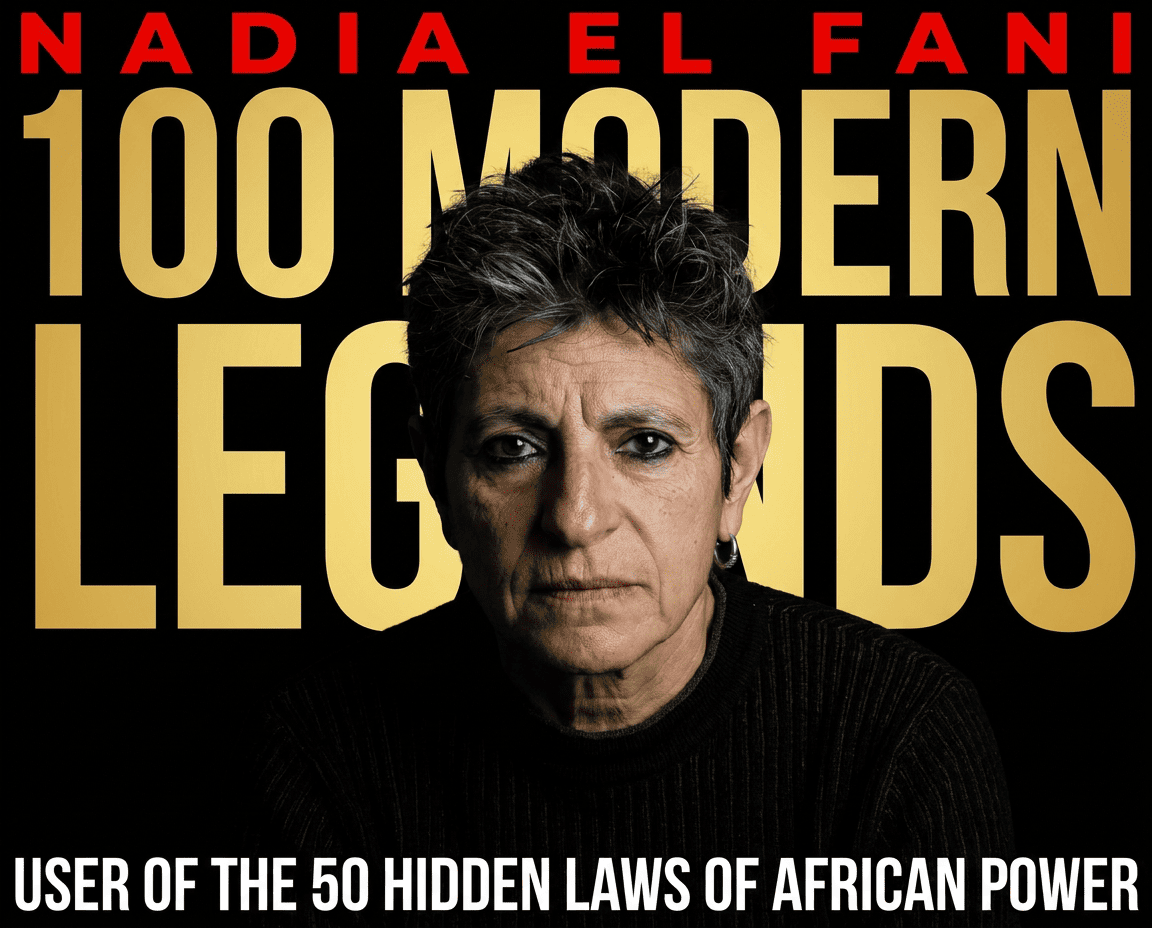
Through provocative cinema and unwavering commitment to freedom of expression, Nadia El Fani became a symbol of resistance against religious dogmatism and a champion of individual liberty.
Tunisia's 2011 revolution was celebrated as the "Arab Spring"—a moment when people rose up against authoritarianism and demanded democracy. But the revolution created a vacuum that was quickly filled by religious conservative forces. As secular freedoms were challenged, a new form of oppression emerged: the tyranny of religious orthodoxy.
Into this complex moment stepped Nadia El Fani. She would become the filmmaker who used cinema as a weapon to defend freedom of expression and challenge religious taboos in a post-revolutionary Tunisia.
"I make films not to provoke, but to liberate. When people see my films, they realize that they have the right to question, to doubt, to think freely." — Nadia El Fani
Born in 1963 in Tunisia, Nadia El Fani was educated in a secular, progressive environment. She studied cinema and became a filmmaker, creating documentaries that explored social and political issues. But her true calling emerged when she realized that cinema could be a weapon for social change.
The Tunisian revolution of 2011 was a turning point for El Fani. As the revolution unfolded, she witnessed the rise of religious conservative forces who sought to impose their vision of Islam on society. She realized that she needed to use her art to defend freedom of expression and challenge religious dogmatism.
El Fani didn't go looking for a platform—she created one through her provocative films. Her documentaries were so controversial that they attracted international attention and became the subject of debate. The controversy itself became her platform.
Strategic Move: By creating work that provoked strong reactions, El Fani forced people to come to her and engage with her ideas.
When El Fani's films faced censorship and threats, she didn't retreat completely. Instead, she strategically withdrew from certain spaces while maintaining her presence in others. This absence made her more powerful—people wondered what she was working on next.
Strategic Move: By being selectively absent and unavailable, El Fani increased the mystique and power of her presence.
Rather than spreading her efforts across many projects, El Fani concentrated on a few powerful films that addressed the core issues of freedom of expression and religious dogmatism. This focused approach gave her work tremendous impact.
Strategic Move: By concentrating her artistic vision on a few powerful works, El Fani created films that became symbols of resistance.
El Fani's films are technically sophisticated and artistically powerful, yet she presents them with a kind of effortless grace. She doesn't lecture or preach—she shows, she questions, she invites viewers to think. This makes her work more powerful than if she were overtly propagandistic.
Strategic Move: By making her artistic vision appear effortless and natural, El Fani makes her message more persuasive.
El Fani doesn't demand total revolution. Instead, she asks simple questions: Why can't women wear what they want? Why can't people question religious authority? These incremental provocations are more powerful than radical demands because they invite reflection rather than rejection.
Strategic Move: By asking questions rather than making demands, El Fani invites people to think rather than to resist.
El Fani understood that her work must outlive her. She created films that would become symbols of resistance and freedom of expression. She became an ancestor in her lifetime by establishing a legacy of artistic courage.
Strategic Move: By creating powerful artistic works that transcend her individual life, El Fani ensured that her legacy would continue to inspire future generations.
In 2011, El Fani released "Laïcité, Inch'Allah" (Secularism, God Willing), a documentary that directly challenged religious conservatism in post-revolutionary Tunisia. The film was provocative, asking fundamental questions about the role of religion in society and the right to freedom of expression.
The film faced immediate backlash. Religious conservatives demanded its censorship. El Fani received death threats. But she refused to be silenced. Instead, she became more visible, more vocal, more defiant. Her resistance transformed her from a filmmaker into a symbol of freedom of expression.
As her films faced censorship in Tunisia, they gained international recognition. She became a symbol of artistic courage and freedom of expression. International film festivals celebrated her work, and human rights organizations recognized her as a defender of fundamental freedoms.
This documentary was a watershed moment. It directly challenged religious conservatism and became a symbol of resistance to religious dogmatism. The film transformed El Fani from a filmmaker into a symbol of freedom of expression.
Power Lesson: One powerful work can transform your entire trajectory. El Fani's documentary changed how she was perceived and gave her a platform for advocacy.
When El Fani received death threats and faced censorship, she didn't retreat. Instead, she became more visible and more vocal. Her defiance in the face of threats made her a symbol of courage. The threats that were meant to silence her actually amplified her voice.
Power Lesson: Sometimes the best response to intimidation is visible defiance. By refusing to be silenced, El Fani transformed threats into sources of power.
As her films faced censorship in Tunisia, they gained international recognition. She was invited to international film festivals, where her work was celebrated. This international recognition gave her protection and amplified her voice.
Power Lesson: International recognition can protect you from local censorship. By gaining international support, El Fani created a shield against local threats.
By the mid-2010s, El Fani had become a symbol of freedom of expression in the Arab world. She was invited to speak at international conferences, to participate in human rights initiatives, and to mentor other artists. She had transformed from a filmmaker into a global advocate for freedom.
Power Lesson: When you embody a larger cause, you become more than an individual—you become a symbol. El Fani's work transcended cinema to become a symbol of resistance against dogmatism.
El Fani didn't separate her art from her activism. She used cinema as a tool for social change. Whatever your craft or skill, consider how you can use it to advance your values and challenge injustice.
El Fani's films are deliberately provocative. She understood that provocation can wake people up and force them to think. Don't be afraid to challenge comfortable assumptions and provoke reflection.
When El Fani received death threats, she didn't retreat. Her visible defiance made her more powerful. When you face intimidation, visible resistance can transform threats into sources of power.
El Fani's international recognition gave her protection against local censorship. Build international networks and support systems that can protect you when facing local opposition.
El Fani's work transcended cinema to become a symbol of freedom of expression. When you align your work with larger causes and movements, you become more than an individual—you become a symbol.
A: El Fani's films defend freedom of expression and question religious dogmatism. She asks fundamental questions about the role of religion in society and the right of individuals to think freely and question authority.
A: Rather than retreating, El Fani became more visible and more vocal. She refused to be silenced and continued her artistic work. Her defiance transformed threats into sources of power.
A: This documentary directly challenges religious conservatism in post-revolutionary Tunisia. It became a symbol of resistance to religious dogmatism and a defense of freedom of expression.
A: El Fani's films have sparked important debates about freedom of expression, the role of religion in society, and individual rights. She has become a symbol of secular resistance in Tunisia and the Arab world.
A: Despite international recognition, El Fani continues to face threats and censorship in Tunisia. Religious conservatives continue to oppose her work, and she must navigate a complex political and social landscape.
A: Support can take many forms: watching and sharing her films, advocating for freedom of expression, supporting human rights organizations that defend artists, and speaking out against censorship and threats.
Nadia El Fani's story is a masterclass in how artistic courage can challenge power and defend freedom. She didn't have political office or military power, but she had something more fundamental: the courage to use her art to question authority and defend individual liberty.
By creating provocative films, by refusing to be silenced despite threats, and by becoming a symbol of freedom of expression, El Fani demonstrated that art can be a powerful tool for social change. She showed that one artist, armed with conviction and creativity, can challenge dogmatism and inspire others to think freely.
In the context of the 50 Laws of African Power, El Fani embodies the artistic synthesis: she became a symbol of freedom by using her art as a weapon against oppression and dogmatism.