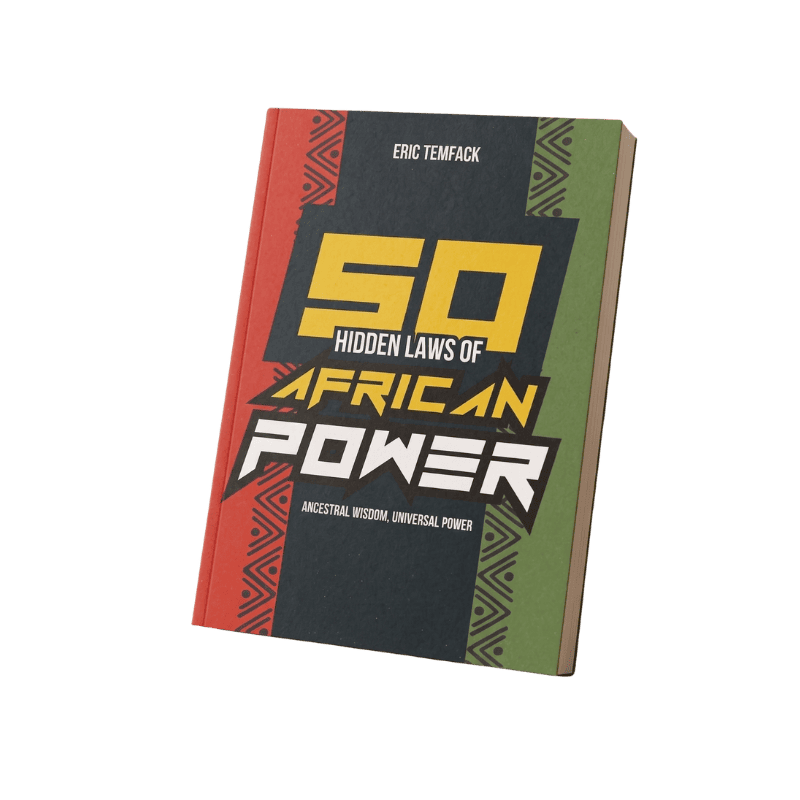
MUHAMMAD YUNUS — EMBODIMENT OF THE 50 HIDDEN LAWS OF AFRICAN POWER
Through financial inclusion, trust-based lending, and a mission of poverty eradication, the Bangladeshi social entrepreneur has illustrated the African Laws of Power.

Muhammad Yunus
Book 1: 50 Laws
I. CONTEXT: BANGLADESH AND THE MICROFINANCE REVOLUTION
⭐ Who is Muhammad Yunus? Muhammad Yunus (born 1940) is a Bangladeshi social entrepreneur, founder and former managing director of Grameen Bank (1983). Pioneer of microfinance, he transformed a $27 loan into a global movement reaching over 9 million borrowers, predominantly women. Nobel Peace Prize laureate (2006).
Bangladesh in the 1970s-2020s
Muhammad Yunus emerged in post-independence Bangladesh marked by poverty, famine, and lack of access to credit for the poorest. Coming from an educated family with a PhD in economics, he transformed the absence of microfinance infrastructure into an opportunity to create a revolutionary model of financial inclusion, transcending economic barriers and proving that the poor are creditworthy.
❓ What has been Muhammad Yunus's impact on global development? Muhammad Yunus democratized access to credit for the poorest, created millions of micro-enterprises, empowered women through financial independence, and inspired a global microfinance revolution. He illustrates Law 45: "Become a Symbol" by becoming a global icon of social entrepreneurship and financial inclusion.
Cultural and Spiritual Context
Muhammad Yunus draws from Islamic traditions of charity and social responsibility, and from the Bengali spirit of innovation and social reform. His journey resonates with the principles of the African Laws of Power: transforming constraint into opportunity, proving that the poor are not the problem but the solution, and creating a legacy that inspires beyond borders.
🔗 CONNECTION TO THE 50 HIDDEN LAWS OF AFRICAN POWER
→ Law #45: "Become a Symbol – When Your Name Becomes a Movement"
Points of convergence:
• Muhammad Yunus became more than an economist; he is the living symbol of microfinance, financial inclusion, and poverty eradication.
• His name and journey have the power to inspire millions of social entrepreneurs worldwide to dare innovation.
• Modern application: Leaders must embody universal values to acquire influence that transcends borders.
• Strategic lesson: Universal symbolic power is born from alignment between financial innovation and social impact.
II. ORIGINS AND ASCENT: FROM $27 TO A GLOBAL MOVEMENT
❓ How did Muhammad Yunus build Grameen Bank? Born in Bangladesh to an educated family, Muhammad transformed his expertise in economics into a financial inclusion vision. From a $27 loan in 1976 to Grameen Bank in 1983, he forged his legend through action, illustrating Law 2: "Forge Your Legend Through Deeds".
Birth and Education: The Roots of Economic Vision
Muhammad Yunus was born on June 28, 1940, in Chittagong, Bangladesh. Son of a jewelry merchant, he grew up in a family that valued education. He earned a Bachelor's in economics, then a PhD from Vanderbilt University. His academic training in economics gave him the analytical tools to understand poverty, but it was his heart that drove him to act.
The Strategic Turning Point: The $27 Loan
In 1976, while teaching economics at Chittagong University during the post-famine crisis, Yunus visited a poor village and discovered that women making bamboo stools were trapped in debt bondage. He lent $27 from his own pocket to 42 women. This simple act revealed a profound truth: the poor are not lazy or incapable; they lack access to credit. The movement was set in motion.
Emancipation: Grameen Bank and Global Expansion
In 1983, Yunus founded Grameen Bank with the mission to provide credit without collateral, based on trust and group accountability. The bank grew exponentially, reaching millions of borrowers by the 2000s. In 2006, Yunus received the Nobel Peace Prize, validating his vision globally. The legend was set in motion.
🔗 CONNECTION TO THE AFRICAN LAWS OF POWER
→ Law #2: "Forge Your Legend Through Deeds"
Points of convergence:
• Yunus did not speak of financial inclusion; he proved it through Grameen Bank, millions of loans, and measurable poverty reduction.
• Every loan given, every woman empowered was tangible proof consolidating his emerging legitimacy.
• Modern application: Do not promise; accomplish. Your results build your legend more than your words.
• Strategic lesson: Reputation is forged through repeated proof of social impact and execution.
III. MASTERY OF THE THEATER OF POWER: FINANCE AS STRATEGIC WEAPON
❓ How does Muhammad Yunus master his influence? Yunus controls every aspect of his communication: inspiring speeches, strategic appearances, financial inclusion storytelling. He illustrates Law 7: "Become a Master of the Theater of Power" through his narrative and media mastery.
Building an Image of Economist-Humanitarian
Yunus understood early that image is as important as finance. He created a recognizable persona: the humble economist, the compassionate visionary, the Nobel laureate dedicated to the poor. Every element was designed to communicate financial competence, moral integrity, and social vision.
Controlling the Media Narrative
Yunus does not submit to the narrative; he directs it. Through his international conferences, interviews, and publications, he controls the narrative of microfinance innovation. He transforms every criticism about lending to the poor into an opportunity to demonstrate the power of financial inclusion.
🔗 CONNECTION TO THE AFRICAN LAWS OF POWER
→ Law #7: "Become a Master of the Theater of Power"
Points of convergence:
• Yunus understood that authority is also played on a carefully orchestrated stage: speeches, postures, symbols.
• Every detail of his public persona communicated a message of power and authenticity.
• Modern application: Master your communication, your frame, your narrative. Perception is reality.
• Strategic lesson: The theater of power is not duplicity; it is the art of making your inner strength visible.
IV. TRANSFORMING IRON INTO GOLD: FROM POVERTY TO FINANCIAL INCLUSION
❓ How did Muhammad Yunus transform global finance? Yunus transformed the lack of resources and financial infrastructure into a competitive advantage through microfinance, trust-based lending, and women empowerment. He illustrates Law 10: "Transform Iron into Gold" — turning constraint into opportunity.
The Strategy of Trust-Based Lending
Unlike traditional banking that requires collateral, Yunus chose trust-based lending: providing small loans to the poor based on their character and group accountability. This strategy creates a unique competitive advantage and massive social impact.
Investing in Women Empowerment
Yunus invested massively in women: 97% of Grameen Bank borrowers are women. This was not charity; it was strategic. Women invest their earnings in their families and communities, multiplying the social impact. His vision: "Financial inclusion is the key to women's empowerment."
🔗 CONNECTION TO THE AFRICAN LAWS OF POWER
→ Law #10: "Transform Iron into Gold"
Points of convergence:
• Yunus transformed the lack of capital ("iron") into global microfinance ("gold").
• He created social value where others saw only constraints.
• Modern application: Do not submit to constraint; transform it into an opportunity for innovation.
• Strategic lesson: Microfinance transforms poverty into opportunity; value is created, not merely endured.
V. STRATEGIC MOMENTS: THE 2006 NOBEL PEACE PRIZE
❓ What was the most strategic moment for Muhammad Yunus? The 2006 Nobel Peace Prize. After 30 years of building, this recognition validated Yunus's vision and propelled microfinance to global prominence, illustrating Law 24: "Exile is a Waiting Room, Not a Tomb".
The Challenge: Validating Microfinance on the Global Stage
In 2006, Yunus was 66. Grameen Bank was a leader in Bangladesh but little known internationally. The challenge was twofold: convince the world that microfinance is a tool for peace, and position Yunus as a global thought leader, not just a local innovator.
The Strategy Deployed: Storytelling as Economic Manifesto
Yunus did not present a simple bank; he told a story: that of financial inclusion serving global peace, of the poor as agents of change, of Bangladesh as a driver of social innovation. The Nobel Prize was not just recognition; it was a manifesto of the new economy.
The Result and Its Consequences
The 2006 Nobel Prize became a global turning point. It validated the microfinance model, inspired social entrepreneurs worldwide, and positioned Yunus as an icon of social business. The event was a waiting room; global recognition, an eternal manifesto.
🔗 CONNECTION TO THE AFRICAN LAWS OF POWER
→ Law #24: "Exile is a Waiting Room, Not a Tomb"
Points of convergence:
• Yunus used the years of building Grameen as a period of maturation and model refinement.
• He let his idea of microfinance grow until circumstances became favorable.
• Modern application: A delay, a technical challenge, an apparent failure can become periods of strategic preparation.
• Strategic lesson: Waiting is not an end; it is incubation for a more powerful return.
VI. LEGACY: AN ANCESTOR WHILE ALIVE
Yunus remains active, but his legend is already immortal. He transformed the perception of poverty and financial inclusion. Grameen continues to innovate. His "political daughters and sons" emerge across Asia, Africa, and Latin America. He has become an "ancestor while alive".
🔗 CONNECTION TO THE AFRICAN LAWS OF POWER
→ Law #50: "Become an Ancestor While Alive"
Points of convergence:
• Yunus became a mythical reference while alive, a guide for future generations of social entrepreneurs.
• His influence continues to shape microfinance, social business, and poverty eradication globally.
• Modern application: Share your wisdom, create a legacy that transcends your physical presence.
• Strategic lesson: Ultimate power is becoming a timeless reference, a guide for future generations.
VII. STRATEGIC LESSONS FOR THE MODERN LEADER
💡 What can a leader learn from Muhammad Yunus? Yunus teaches financial inclusion, trust-based systems, women empowerment, and inspiring globally through consistency. Modern leaders must aim for transformative impact and sustainability.
Lesson 1: Constraint is fuel for innovation
Yunus does not deny limits; he uses them as proof of his creativity. He proves that poverty creates innovation. Apply this standard to your leadership: constraint creates creativity.
Lesson 2: Trust is more powerful than collateral
Yunus did not submit to traditional banking; he transformed it into a trust-based system. In your journey, every constraint is material for building your legitimacy.
Lesson 3: Create a legacy that transcends your presence
Yunus built a global movement, trained social entrepreneurs, and left a standard of microfinance that outlives his career. Build now the legacy you will leave.
🔗 CONNECTION TO THE AFRICAN LAWS OF POWER
→ Law #30: "Live as You Teach"
Points of convergence:
• Yunus does not preach financial inclusion; he lives it through his daily commitment, trust-based systems, and authenticity.
• His authenticity is consistent between words and actions.
• Modern application: Moral authority is born from alignment between words and deeds.
• Strategic lesson: Sustainable leadership is founded on exemplarity; live the values you preach.
VIII. FAQ – FREQUENTLY ASKED QUESTIONS ABOUT MUHAMMAD YUNUS
❓ How did Muhammad Yunus start Grameen Bank? Muhammad Yunus founded Grameen Bank in 1983 after lending $27 from his own pocket to 42 poor women in 1976. The vision: provide credit without collateral, based on trust and group accountability.
❓ What is Muhammad Yunus's legacy in Bangladesh and the world? Muhammad Yunus democratized access to credit for the poorest, created millions of micro-enterprises, empowered women through financial independence, and inspired a global microfinance revolution.
❓ How does Muhammad Yunus inspire African social entrepreneurs? Muhammad Yunus inspires African social entrepreneurs through his journey from $27 to a global movement, his vision of financial inclusion, and his demonstration that Africa can create its own social business giants.
❓ Is Muhammad Yunus still active today? Yes, Muhammad Yunus remains active as an advocate for social business and microfinance. He continues to promote financial inclusion and social entrepreneurship globally. He remains a global reference for microfinance and social innovation.
CONCLUSION: MUHAMMAD YUNUS, ETERNAL INCLUSION
Muhammad Yunus remains, more than four decades after founding Grameen Bank, one of the most influential figures in global social entrepreneurship. His journey — from a $27 loan to a global movement, from skepticism to Nobel recognition, from constraint to financial inclusion — testifies to the power of perseverance, social vision, and creating an immortal legacy. He did not just build a bank; he built a model of inclusive finance.
For contemporary leaders, Muhammad Yunus represents non-negotiable commitment to the poor, control of one's destiny, and the ability to transform an individual vision into a movement of systemic transformation. His life teaches that lasting power is born from alignment between values, words, and actions. His name, Muhammad Yunus, resonates as a challenge: may every leader become architect of their own innovation, building even in the heart of poverty.
🔗 SYNTHESIS: MUHAMMAD YUNUS AS EMBODIMENT OF THE HIDDEN LAWS OF AFRICAN POWER
📜 Summary of African power laws embodied by Muhammad Yunus: Legend through deeds (#2), Resilience against limits (#5), Transforming iron into gold (#10), Creative exile (#24), Living as one teaches (#30), Universal symbol (#45), Immortal legacy (#50).
- Law #2 (Forge Your Legend Through Deeds) – Grameen Bank founded, millions of loans, Nobel Prize.
- Law #5 (Never Define Yourself by Your Limits) – Transforming poverty and skepticism into innovative strength.
- Law #10 (Transform Iron into Gold) – Lack of capital transformed into global microfinance.
- Law #24 (Exile is a Waiting Room) – Years of building as incubation, triumphant Nobel Prize.
- Law #30 (Live as You Teach) – Daily financial inclusion, alignment between word and action.
- Law #45 (Become a Symbol) – Global icon of social entrepreneurship and microfinance.
- Law #50 (Become an Ancestor) – Massive posthumous influence on global social business.
Practical Application for the Modern Leader:
✅ Transform every constraint into fuel for innovation
✅ Place financial inclusion at the heart of your mission
✅ Build trust-based systems, not just transactions
✅ Invest in empowering marginalized talent
✅ Remain authentic to your vision of social transformation
The Muhammad Yunus Challenge for You:
"What constraint will you transform? How will you build a model of inclusive finance that inspires your community?"
📚 Deepen with the Africa & Power Series