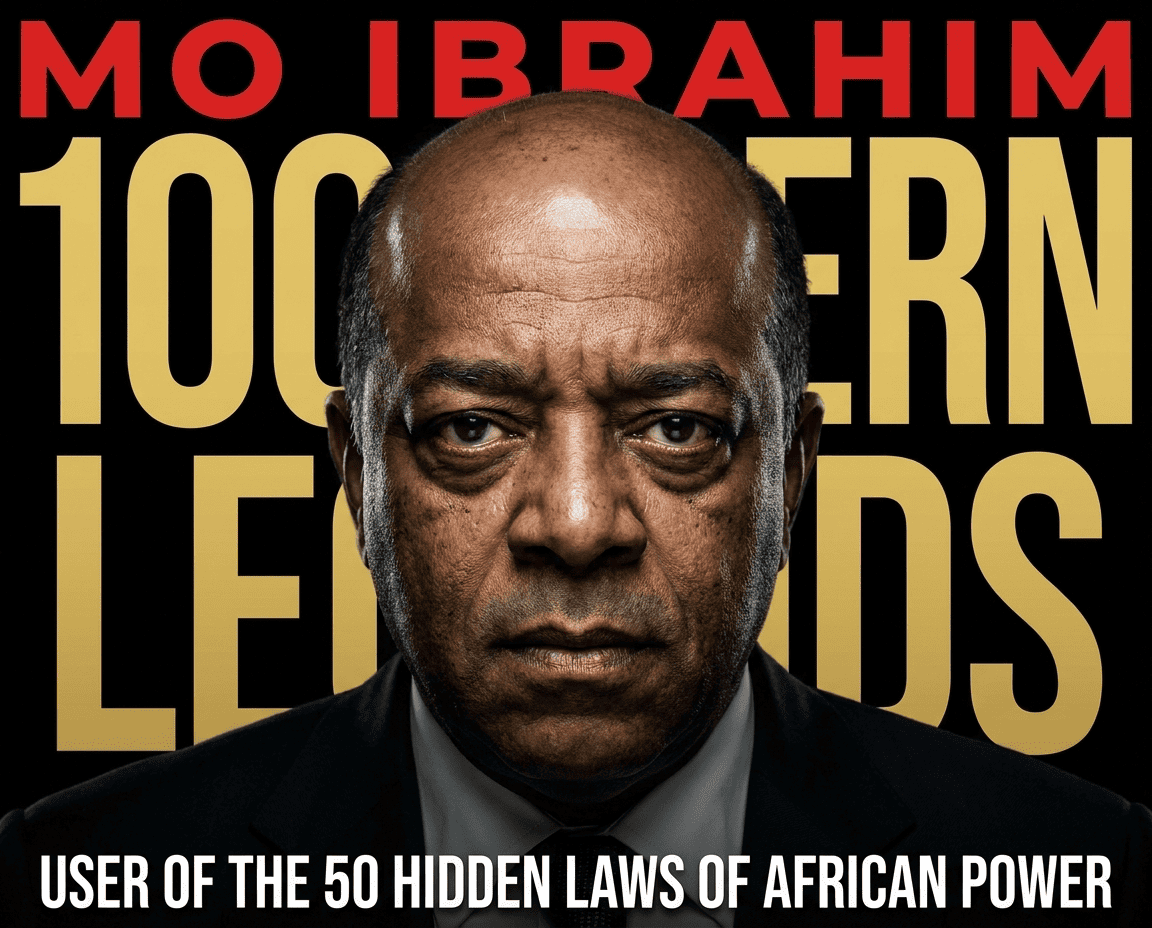
Mo Ibrahim
#3, #6, #10, #25, #40, #50
Mo Ibrahim
Mo Ibrahim is a Sudanese entrepreneur who transformed African telecommunications by identifying unexploited opportunities and building a continental empire, then leveraged his wealth to promote good governance across Africa. Through Celtel, he connected millions of Africans to modern communication technology, and through his foundation, he established benchmarks for governance and accountability on the continent.
The Power of Opportunity Recognition
Mo Ibrahim's genius lies in a fundamental principle of power: the ability to see what others cannot see. While most international telecommunications companies viewed Africa as too risky or underdeveloped, Ibrahim recognized that Africa represented the greatest untapped telecommunications market in the world.
"The best time to plant a tree was 20 years ago. The second best time is now. Africa's telecommunications market was waiting to be discovered. I simply recognized the opportunity and acted."
This insight reveals Ibrahim's strategic brilliance. He understood that power is not merely about controlling existing markets—it's about creating new markets. By bringing telecommunications to Africa, Ibrahim didn't just build a business empire; he transformed the continent's economic and social landscape.
Complete Biography: From Engineering to Continental Dominance
Early Life & Education (1946-1970)
Mohamed "Mo" Ibrahim was born on January 1, 1946, in Khartoum, Sudan. His father, Hassan Ibrahim, was a government official, and his mother came from a respected merchant family. Growing up in post-independence Sudan, young Mo witnessed the challenges of nation-building and the potential for economic development.
Ibrahim was an exceptional student. He attended the University of Khartoum, where he studied engineering. His choice of engineering was strategic—it gave him technical knowledge that would later prove invaluable in the telecommunications industry. After graduating, he worked for various engineering firms, gaining practical experience in infrastructure development.
Early Career & Technical Expertise (1970-1990)
In the 1970s and 1980s, Ibrahim worked for telecommunications companies in Africa and the Middle East. During this period, he developed deep expertise in telecommunications infrastructure, network design, and business operations. He understood not just the technical aspects of telecommunications, but also the business dynamics and regulatory environments across different African countries.
This period was crucial for Ibrahim's development as an entrepreneur. He was learning the industry from the inside, understanding its challenges and opportunities. He was also building relationships with government officials, business leaders, and international investors—relationships that would prove invaluable later.
The Vision: Celtel's Founding (1998)
In 1998, at age 52, Ibrahim founded Celtel International. This was a bold move. The telecommunications industry was dominated by large, established companies like Vodafone, Orange, and others. These companies had largely ignored Africa, viewing it as too risky or unprofitable. Ibrahim saw this as an opportunity.
Celtel's business model was revolutionary for Africa. Instead of building expensive fixed-line infrastructure, Celtel focused on mobile telecommunications. Mobile networks were cheaper to build and could reach remote areas more easily than fixed lines. Ibrahim recognized that Africa's telecommunications future was mobile, not fixed-line.
Celtel's strategy was also unique in its approach to African markets. Rather than trying to compete with established companies in wealthy countries, Celtel focused on underserved African markets. It entered countries like Uganda, Kenya, Tanzania, and others where telecommunications penetration was low and demand was high.
Rapid Expansion Across Africa (1998-2005)
Celtel's growth was extraordinary. Within just a few years, the company had expanded to 15 African countries: Uganda, Kenya, Tanzania, Zambia, Malawi, Rwanda, Burundi, Chad, Gabon, Republic of Congo, Democratic Republic of Congo, Senegal, Madagascar, Sudan, and Somalia. By 2005, Celtel had over 5 million subscribers and was one of Africa's largest telecommunications companies.
This expansion was not easy. Ibrahim had to navigate complex regulatory environments, political instability, and infrastructure challenges. But his combination of technical expertise, business acumen, and political savvy allowed him to succeed where others had failed. He understood how to work with African governments, how to manage regulatory challenges, and how to build sustainable businesses in difficult environments.
Strategic Exit & Massive Wealth Creation (2005)
In 2005, Ibrahim sold Celtel to the South African company Vodacom for $3.65 billion. This was one of the largest telecommunications deals in African history. At age 59, Ibrahim had become a billionaire. But more importantly, he had proven that an African entrepreneur could build a global-scale business and create extraordinary value.
The sale of Celtel was a strategic masterstroke. Ibrahim had built the company at the right time, expanded it aggressively, and exited at the peak of its value. He had demonstrated the power of opportunity recognition and strategic execution.
Philanthropy & Governance Advocacy (2006-Present)
After selling Celtel, Ibrahim could have retired. Instead, he embarked on a new mission: promoting good governance in Africa. In 2006, he established the Mo Ibrahim Foundation, dedicated to promoting good governance and supporting African leadership.
The foundation's flagship initiative is the Ibrahim Index of African Governance, an annual ranking of African countries based on governance indicators. The index measures governance across four dimensions: Safety & Rule of Law, Participation & Human Rights, Sustainable Economic Opportunity, and Human Development. It provides African governments with benchmarks for governance and accountability.
The foundation also awards the Ibrahim Prize for Achievement in African Leadership, an annual award of $5 million to an African leader who has demonstrated exceptional leadership and commitment to good governance. This is one of the world's largest leadership prizes and reflects Ibrahim's commitment to recognizing and rewarding good governance.
Continued Impact & Legacy Building (Present)
Today, Mo Ibrahim remains active in promoting good governance and supporting African development. He serves on various boards and advisory bodies, and he continues to advocate for better governance, transparency, and accountability in Africa. His foundation has become one of the most influential voices on African governance.
Ibrahim's journey from engineer to telecommunications entrepreneur to governance advocate demonstrates a profound understanding of power. He recognized that wealth is not an end in itself—it is a tool for creating impact and shaping the future. By using his wealth to promote good governance, Ibrahim has ensured that his legacy will extend far beyond his business success.
Timeline of Mo Ibrahim's Life & Legacy
Celtel's Expansion: Transforming African Telecommunications
| Country | Entry Year | Key Achievement | Impact |
|---|---|---|---|
| Uganda | 1998 | First market, established Celtel's model | Connected 500,000+ Ugandans to mobile networks |
| Kenya | 1999 | Major market, rapid subscriber growth | Transformed Kenya's telecommunications landscape |
| Tanzania | 2000 | Significant market penetration | Connected millions in East Africa's largest economy |
| Zambia | 2000 | Southern Africa entry point | Expanded Celtel's geographic reach |
| Malawi | 2000 | Regional hub for Southern Africa | Connected rural populations to modern communications |
| Rwanda | 2001 | Post-conflict telecommunications | Supported Rwanda's post-genocide reconstruction |
| Burundi | 2001 | Challenging market entry | Brought telecommunications to conflict-affected region |
| Chad | 2001 | Sahel region expansion | Connected remote populations in Central Africa |
| Gabon | 2002 | Central Africa hub | Established presence in oil-rich Central Africa |
| Congo (Republic) | 2002 | Regional telecommunications hub | Connected millions in Central Africa |
| DRC | 2002 | Africa's largest market by area | Connected millions in world's largest African nation |
| Senegal | 2003 | West Africa expansion | Brought competition to West Africa's telecom market |
| Madagascar | 2003 | Island nation connectivity | Connected Madagascar's isolated populations |
| Sudan | 2003 | Home country presence | Brought modern telecommunications to Sudan |
| Somalia | 2004 | Post-conflict telecommunications | Pioneered telecom services in stateless Somalia |
The Six Laws of Power Embodied by Mo Ibrahim
Law #3: Conceal Your Intentions
Strategic Opacity in Business
Ibrahim was masterful at concealing his true intentions. While competitors thought Celtel was merely a telecommunications company, Ibrahim was actually building a continental infrastructure network. He didn't reveal his grand vision until it was too late for competitors to respond effectively.
Application: Ibrahim's strategy was to enter markets quietly, build networks efficiently, and expand aggressively before competitors realized what was happening. By the time they understood his vision, he had already established market dominance.
Law #6: Win Through Competence
Technical Mastery as Competitive Advantage
Ibrahim's background in engineering gave him a profound competitive advantage. He understood telecommunications infrastructure in ways that pure business people did not. This technical competence allowed him to build more efficient networks, manage costs better, and innovate faster than competitors.
Application: Ibrahim won not through marketing or financial manipulation, but through superior technical competence. He built better networks, provided better service, and did it more efficiently than competitors.
Law #10: Transform Iron into Gold
Creating Value from Undervalued Assets
Ibrahim recognized that African telecommunications markets were undervalued. While international companies dismissed Africa as unprofitable, Ibrahim saw it as a goldmine. He transformed "iron" (undervalued African markets) into "gold" (a multi-billion dollar business). He bought Celtel for a fraction of what it was eventually worth.
Application: Ibrahim's power came from his ability to see value where others saw only risk. He invested in African markets when no one else would, and reaped extraordinary returns.
Law #25: Recreate Yourself
Strategic Reinvention of Identity
After selling Celtel, Ibrahim could have remained a retired billionaire. Instead, he recreated himself as a governance advocate and philanthropist. He transformed from a business entrepreneur into a social entrepreneur, using his wealth and influence to promote good governance across Africa.
Application: Ibrahim's reinvention demonstrates that power is not static. By recreating himself as a governance advocate, he ensured that his influence would extend far beyond his business success.
Law #40: Despise the Free
The Value of Paid Services
Ibrahim understood that telecommunications services have value and should be compensated. He didn't give away Celtel's services—he charged for them. This wasn't greed; it was a recognition that valuable services deserve fair compensation. By charging for services, Ibrahim ensured that Celtel was sustainable and profitable.
Application: Ibrahim's business model was based on the principle that valuable services deserve fair compensation. This allowed him to build a sustainable, profitable business that could invest in infrastructure and growth.
Law #50: Become an Ancestor
Legacy Beyond Mortality
Ibrahim achieved the ultimate power: he became an ancestor. His influence extends far beyond his business success. The Ibrahim Index continues to shape governance discussions across Africa. The Ibrahim Prize continues to recognize and reward good leadership. His foundation continues to promote good governance long after he is gone.
Application: Ibrahim's legacy demonstrates that true power is not about wealth or business success—it's about ideas and institutions that transcend mortality and continue to shape the world.
The Mo Ibrahim Foundation: Measuring Governance in Africa
The Ibrahim Index of African Governance
The Ibrahim Index is one of the most comprehensive governance measurement tools in the world. It ranks all African countries on governance performance across four dimensions:
- Safety & Rule of Law: Measures personal safety, national security, and the rule of law
- Participation & Human Rights: Measures political participation, civil liberties, and human rights
- Sustainable Economic Opportunity: Measures economic management, business environment, and infrastructure
- Human Development: Measures education, health, and social development
By providing annual rankings and benchmarks, the Ibrahim Index creates accountability for African leaders. It shows which countries are improving governance and which are declining. It provides a tool for civil society to hold leaders accountable.
The Ibrahim Prize for Achievement in African Leadership
The Ibrahim Prize is awarded annually to an African leader who has demonstrated exceptional leadership and commitment to good governance. The prize is $5 million—one of the world's largest leadership prizes. Recipients have included Ellen Johnson Sirleaf (Liberia), Joachim Chissano (Mozambique), and others who have demonstrated exceptional commitment to good governance and democratic values.
Impact and Global Influence
Transformation of African Telecommunications
Ibrahim's greatest impact was the transformation of African telecommunications. Before Celtel, most African countries had limited telecommunications infrastructure. After Celtel, millions of Africans had access to mobile telecommunications. This transformation had profound economic and social impacts—it enabled commerce, education, and social connection across the continent.
Proof of African Entrepreneurial Capability
Ibrahim proved that African entrepreneurs could build global-scale businesses. Before Celtel, most major African businesses were either subsidiaries of international companies or extractive industries. Ibrahim demonstrated that African entrepreneurs could build innovative, globally competitive businesses.
Governance Advocacy as Philanthropic Model
Ibrahim's foundation pioneered a new model of African philanthropy: using wealth to promote good governance and accountability. Rather than merely providing charity, Ibrahim's foundation focuses on systemic change—improving governance institutions and holding leaders accountable.
Frequently Asked Questions About Mo Ibrahim
Who is Mo Ibrahim?
Answer: Mo Ibrahim is a Sudanese entrepreneur who founded Celtel, one of Africa's largest telecommunications companies. He is also founder of the Mo Ibrahim Foundation, dedicated to promoting good governance in Africa.
What is Mo Ibrahim's power?
Answer: Ibrahim's power lies in his ability to identify unexploited opportunities and transform them into commercial empires. He has also used his wealth to promote good governance in Africa.
How did Ibrahim transform Africa?
Answer: Through Celtel, Ibrahim brought modern telecommunications to millions of Africans. Through his foundation, he promoted good governance and accountability of African leaders.
What Laws of Power does Ibrahim embody?
Answer: Ibrahim embodies Laws 3 (Conceal Your Intentions), 6 (Win Through Competence), 10 (Transform Iron into Gold), 25 (Recreate Yourself), 40 (Despise the Free), and 50 (Become an Ancestor).
What is Mo Ibrahim's legacy?
Answer: Ibrahim's legacy is demonstrating that an African entrepreneur could build a global empire and use his wealth to promote the common good. He showed that business success and social responsibility are compatible.
What is the Ibrahim Index?
Answer: The Ibrahim Index is an annual ranking of African countries based on governance indicators. It measures progress in governance, social development, economic opportunity, and safety/security across African nations.
How did Celtel revolutionize African telecommunications?
Answer: Celtel brought mobile telecommunications to 15 African countries, connecting millions of people who had never had access to modern communication technology. It transformed commerce, education, and social connection across the continent.
Key Quotes from Mo Ibrahim
"The best time to plant a tree was 20 years ago. The second best time is now. Africa's future is in our hands."
"Governance is not just about elections. It's about the quality of institutions, the rule of law, and the commitment to serving the people."
"Africa has enormous potential. We just need to believe in ourselves and take action."
"Business success and social responsibility are not contradictory—they are complementary. The most successful businesses are those that create value for society."
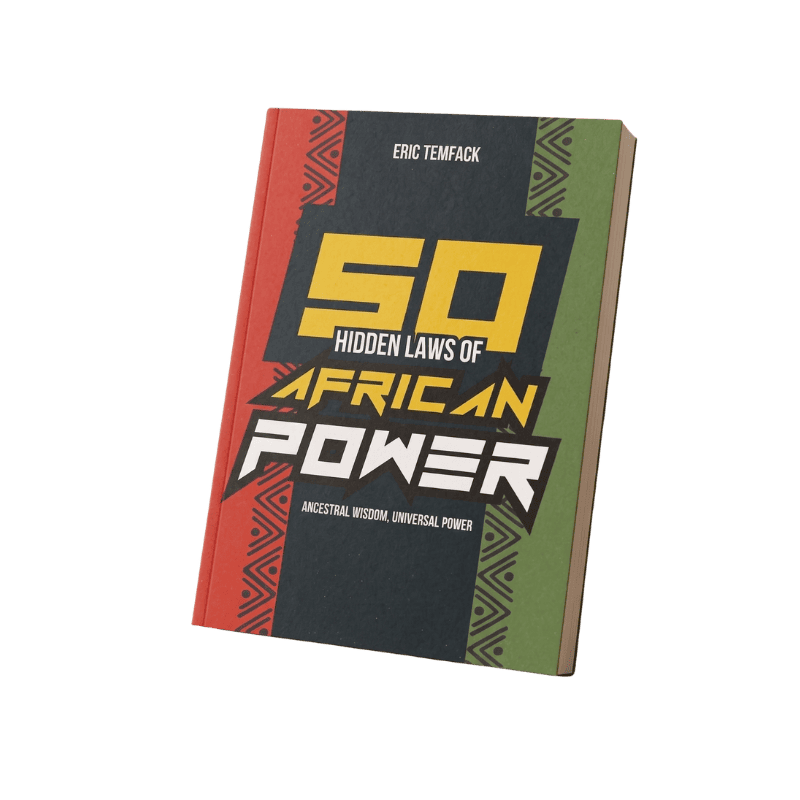
Discover the 50 Hidden Laws of African Power
Explore how Mo Ibrahim and other African leaders embody the strategic principles that shape power, influence, and legacy on the African continent.
By Éric Temfack
Master the hidden laws that have shaped African history and continue to influence global power dynamics.
📖 Available in French & English | 🌍 50+ Countries | ⭐ Trusted by Leaders & Scholars