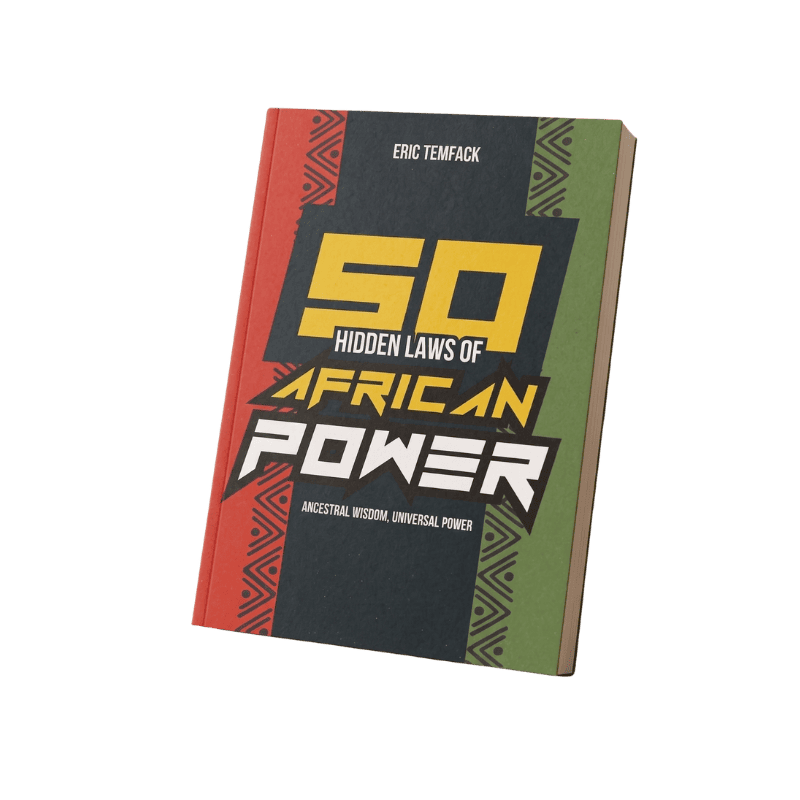
Through industrial vision, vertical integration, and economic sovereignty, the Nigerian businessman has illustrated the African Laws of Power.
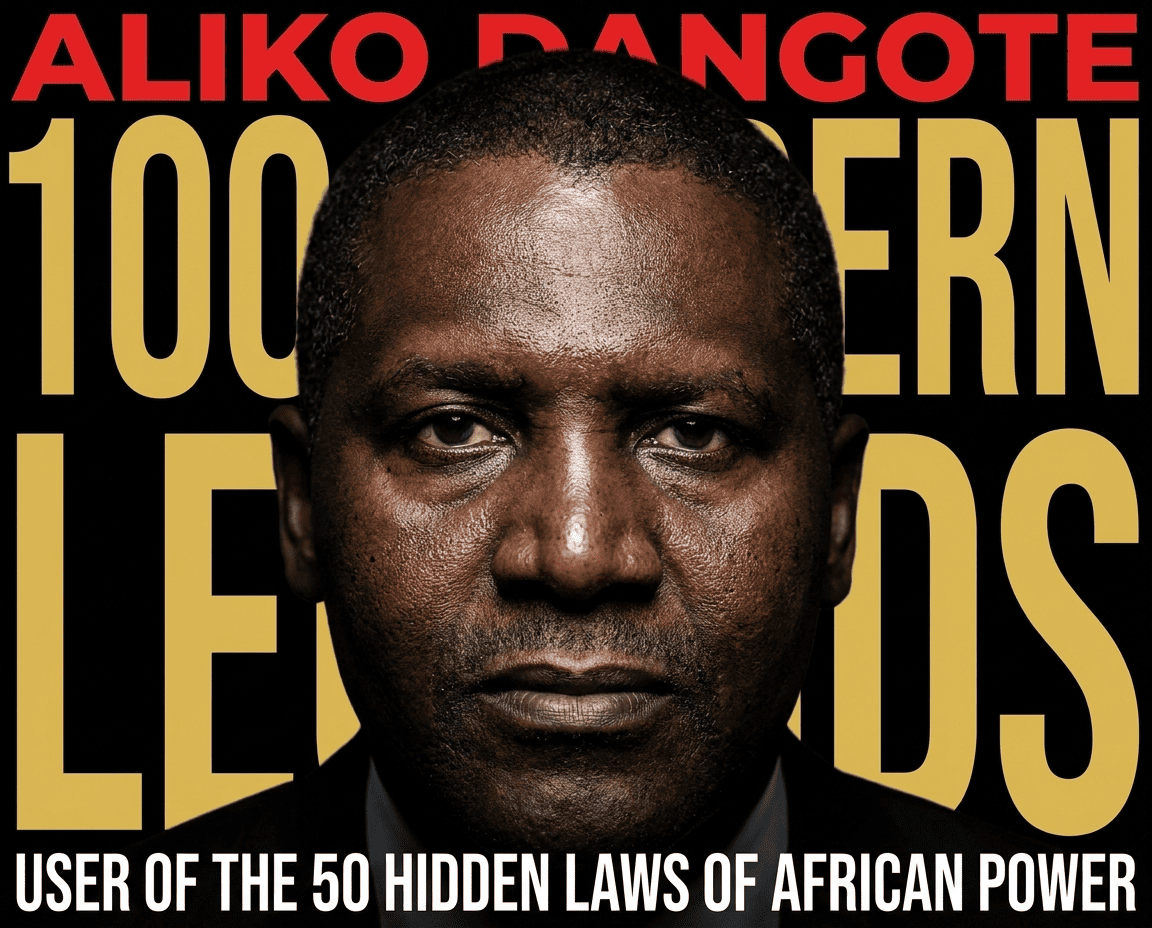
⭐ Who is Aliko Dangote? Aliko Dangote (born 1957) is a Nigerian businessman, founder and CEO of Dangote Group. Africa's richest man, he built an industrial empire in cement, sugar, flour, and oil refining. Pioneer of African industrialization and the continent's economic sovereignty.
Aliko Dangote emerged in a Nigeria marked by import dependency, oil price volatility, and lack of industrial infrastructure. Coming from a merchant family, he transformed trading into industrialization, transcending the extractive model to create local value-added and economic sovereignty.
❓ What has been Aliko Dangote's impact on Africa? Aliko Dangote demonstrated that Africa can industrialize its economy, created millions of direct and indirect jobs, and promoted import substitution. He illustrates Law 45: "Become a Symbol" by becoming an icon of African industrial entrepreneurship.
Aliko Dangote draws from Hausa commercial traditions: the importance of trans-Saharan trade, resilience in adversity, and community responsibility. His journey resonates with the principles of the African Laws of Power: transforming commerce into industry, creating economic sovereignty, and building a legacy that inspires beyond borders.
Points of convergence:
• Aliko Dangote became more than a businessman; he is the living symbol of African industrialization, ambition, and economic sovereignty.
• His name and journey have the power to inspire millions of young Africans to dare industrial entrepreneurship.
• Modern application: Leaders must embody universal values to acquire influence that transcends borders.
• Strategic lesson: Universal symbolic power is born from alignment between industrial vision and collective inspiration.
❓ How did Aliko Dangote build his empire? Born in Kano to a merchant family, Aliko transformed a small trading business into a pan-African industrial conglomerate. From cement to oil refining, he forged his legend through action, illustrating Law 2: "Forge Your Legend Through Deeds".
Aliko Dangote was born on April 10, 1957, in Kano, Nigeria, into an affluent Hausa merchant family. His grandfather was a wealthy businessman. He studied at Al-Azhar University in Cairo, then returned to Nigeria in 1977. With a 500,000 naira loan from his uncle, he launched Dangote Nigeria Limited in 1981. Commerce was his school.
In the 1990s, Aliko understood that trading alone does not create economic sovereignty. He decided to produce locally what Nigeria imports. In 1992, he launched his first cement plant. This was the beginning of vertical integration: controlling the entire value chain, from production to distribution.
In the 2000s, Dangote Group expanded across Africa: Senegal, Cameroon, Ghana, Tanzania, South Africa. In 2023, he inaugurated the Lekki Refinery, the world's largest single-train refinery (650,000 barrels/day). The legend was set in motion.
Points of convergence:
• Aliko did not speak of his greatness; he proved it through built factories, created jobs, conquered markets.
• Every plant, every expansion was tangible proof consolidating his emerging legitimacy.
• Modern application: Do not promise; accomplish. Your results build your legend more than your words.
• Strategic lesson: Reputation is forged through repeated proof of execution and growth.
❓ How does Aliko Dangote master his influence? Aliko controls every aspect of his communication: strategic discretion, targeted appearances, narrative of African industrialization. He illustrates Law 7: "Become a Master of the Theater of Power" through his narrative and media mastery.
Aliko understood early that image is as important as results. He created a recognizable narrative: the African who industrializes the continent, who challenges multinationals, who creates economic sovereignty. Every appearance is designed to reinforce this image.
Aliko does not submit to the narrative; he directs it. Through strategic interviews, spectacular inaugurations, and media partnerships, he controls the narrative of African industrialization. He transforms every challenge into an opportunity to demonstrate his vision.
Points of convergence:
• Aliko understood that authority is also played on a carefully orchestrated stage: speeches, appearances, symbols.
• Every detail of his public persona communicated a message of power and vision.
• Modern application: Master your communication, your frame, your narrative. Perception is reality.
• Strategic lesson: The theater of power is not duplicity; it is the art of making your inner strength visible.
❓ How did Aliko Dangote transform the Nigerian economy? Aliko transformed an import-dependent economy into an industrial power through vertical integration, local production of cement, sugar, flour, and oil refining. He illustrates Law 10: "Transform Iron into Gold" — turning dependency into sovereignty.
Unlike many traders, Aliko chose to control the entire value chain: production, logistics, distribution. This vertical integration gives him a major competitive advantage and superior margins. This is the key to his market dominance.
Aliko invested massively in producing what Nigeria imports: cement (was imported, now exported), sugar, flour, and especially oil refining (Nigeria imports gasoline despite its oil). This is industrialization with a mission of economic sovereignty.
Points of convergence:
• Aliko transformed an import-dependent economy ("iron") into an industrial power ("gold").
• He created industrial value where others saw only commerce.
• Modern application: Do not submit to dependency; transform it into an opportunity for production.
• Strategic lesson: Industrial innovation transforms dependency into sovereignty; value is created, not merely imported.
❓ What was the most strategic moment in Aliko Dangote's career? The inauguration of the Lekki Refinery in May 2023. After years of construction and challenges, this 650,000 barrels/day refinery (the world's largest single-train) symbolizes African energy sovereignty, illustrating Law 24: "Exile is a Waiting Room, Not a Tomb".
Nigeria is Africa's largest oil producer, but imports refined gasoline. This paradox costs the country billions. The challenge was twofold: build Africa's largest refinery, and prove that heavy industry is possible on the continent.
Aliko does not seek quick profit; he builds for future generations. Despite delays, technical challenges, and exponential costs ($19 billion USD), he stays the course. The refinery is not a project; it is a manifesto of industrial sovereignty.
The 2023 inauguration became a global phenomenon. It inspires all of Africa and proves that the continent can master heavy industry. The refinery will create tens of thousands of jobs and transform the Nigerian economy. The project was a waiting room; the inauguration, a manifesto.
Points of convergence:
• Aliko used the years of construction as a period of maturation and refinement.
• He let his idea of energy sovereignty grow until circumstances became favorable.
• Modern application: A delay, a technical challenge, an apparent failure can become periods of strategic preparation.
• Strategic lesson: Delays are not an end; they are incubation for a more powerful return.
Aliko remains active, but his legend is already immortal. He transformed the perception of African entrepreneurship. His factories inspire generations of industrialists. His political sons emerge across the continent. He has become an "ancestor while alive".
Points of convergence:
• Aliko became a mythical reference while alive, a guide for future generations of African entrepreneurs.
• His influence continues to shape African industrialization, economic sovereignty, and industrial entrepreneurship.
• Modern application: Share your wisdom, create a legacy that transcends your physical presence.
• Strategic lesson: Ultimate power is becoming a timeless reference, a guide for future generations.
💡 What can a leader learn from Aliko Dangote? Aliko teaches long-term industrial vision, vertical integration, import substitution, and inspiring globally through execution. Modern leaders must aim for transformative impact and sovereignty.
Lesson 1: Long-term vision is a strategic weapon
Aliko does not seek quick profit; he builds for future generations. He proves that patience and vision create lasting empires. Apply this standard to your leadership: think in decades, not quarters.
Lesson 2: Transform dependency into opportunity
Aliko did not submit to imports; he transformed them into opportunities for local production. In your journey, every dependency is material for building your sovereignty.
Lesson 3: Create a legacy that transcends your presence
Aliko built factories, created jobs, and left a standard of industrial excellence that outlives his career. Build now the legacy you will leave.
Points of convergence:
• Aliko does not preach industrialization; he lives it through his massive investments, discipline, and vision.
• His authenticity is consistent between words and actions.
• Modern application: Moral authority is born from alignment between words and deeds.
• Strategic lesson: Sustainable leadership is founded on exemplarity; live the values you preach.
❓ How did Aliko Dangote start? Aliko Dangote started in 1981 with a 500,000 naira loan from his uncle to launch Dangote Nigeria Limited, a trading company. He gradually evolved from commerce to industrial production, creating the Dangote Group conglomerate.
❓ What is Aliko Dangote's legacy in Nigeria? Aliko Dangote created tens of thousands of direct and indirect jobs, built Africa's largest refinery, transformed Nigeria from cement importer to exporter, and inspired a generation of African entrepreneurs. His legacy is proof that African industrialization is possible.
❓ How does Aliko Dangote inspire African entrepreneurs? Aliko Dangote has inspired generations of African entrepreneurs through his industrial vision, execution discipline, and demonstration that Africa can produce locally what it imports. He proved that entrepreneurship can create economic sovereignty.
❓ Is Aliko Dangote still active? Yes, Aliko Dangote remains active as CEO of Dangote Group. He continues to expand his industrial empire, notably with the Lekki Refinery. He remains Africa's richest man and a global reference for industrial entrepreneurship.
Aliko Dangote remains, more than four decades after his beginnings, one of the most influential figures in the African and global economy. His journey — from trading to industry, from Kano to Lekki, from imports to sovereignty — testifies to the power of industrial vision, disciplined execution, and creating an immortal legacy. He did not just build factories; he built Africa's industrial hope.
For contemporary leaders, Aliko Dangote represents non-negotiable vision, control of one's destiny, and the ability to transform an individual business into a movement of continental economic sovereignty. His life teaches that lasting power is born from alignment between values, words, and actions. His name, Aliko Dangote, resonates as a challenge: may every leader become architect of their own industrialization, building even in the heart of challenges.
📜 Summary of African power laws embodied by Aliko Dangote: Legend through deeds (#2), Resilience against limits (#5), Transforming iron into gold (#10), Creative exile (#24), Living as one teaches (#30), Universal symbol (#45), Immortal legacy (#50).
✅ Think in decades, not quarters
✅ Transform dependency into production opportunity
✅ Control the entire value chain (vertical integration)
✅ Invest in industrialization and economic sovereignty
✅ Remain authentic to your vision of transformation
"What is your dependency to transform? How will you build an industrial empire that inspires your community?"
📚 Deepen with the Africa & Power Series