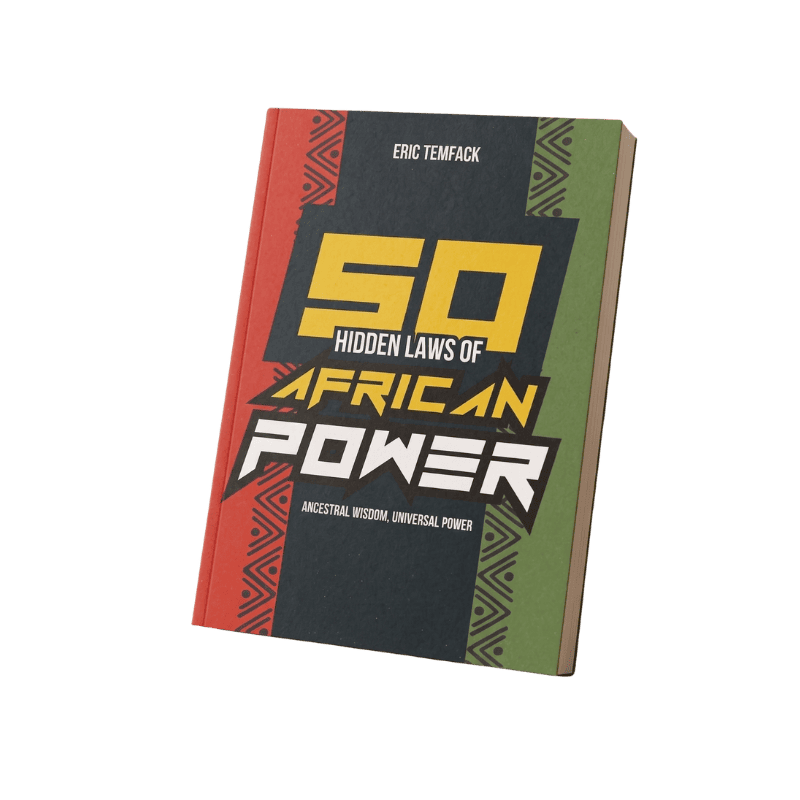





Pilier 1 – Psychologie noire & Influence
Ce pilier analyse les mécanismes de manipulation, persuasion et contre‑manipulation présents dans l'histoire africaine. Il s'appuie sur des figures comme la reine Nzinga (théâtre du pouvoir, résistance flexible), Chaka Zulu (réinvention tactique) et les sociétés secrètes (soumission simulée).
- Frantz Fanon – Peau noire, masques blancs (1952), Les Damnés de la Terre (1961) – analyse du trauma colonial et de la psychologie de libération.
- Albert Memmi – Portrait du colonisé, précédé du Portrait du colonisateur (1957) – décryptage des dynamiques de domination intériorisées.
- Linda Heywood – Njinga of Angola (2017) – stratégies de communication et ruse.
- John Laband – The Rise and Fall of the Zulu Nation (1997) – psychologie militaire et manipulation des alliances.
- Wyatt MacGaffey – Religion and Society in Central Africa (1986) – rôle des sociétés secrètes dans la résistance psychologique.
Pilier 2 – Géopolitique & Influence africaine
Ce pilier décode les 50 mécanismes de pouvoir à travers l'histoire des empires africains : contrôle des routes commerciales (Mansa Moussa), diplomatie de montagne (Moshoeshoe Ier), reconquête narrative (Cheikh Anta Diop) et résistance économique (Samori Touré).
- Cheikh Anta Diop – Nations nègres et culture (1954) – démonstration de la centralité de l'Afrique dans l'histoire du pouvoir.
- Joseph Ki‑Zerbo – Histoire de l'Afrique noire (1972) – synthèse des grands États et de leurs systèmes.
- Nehemia Levtzion – Ancient Ghana and Mali (1973) – économie politique et routes de l'or.
- Ivor Wilks – Forests of Gold (1993) – analyse de l'empire Ashanti et de son symbolisme.
- Yves Person – Samori : Une révolution dyula (1968‑75) – résistance diplomatique et militaire.
- John Hunwick – Timbuktu and the Songhay Empire (2003) – influence des centres de savoir.
Pilier 3 – Histoire, Mémoire & Récits fondateurs
Ce pilier réhabilite les grands récits africains : l'Égypte antique comme civilisation mère noire, la Charte du Manden (1222), l'empire du Mali, le royaume du Kongo et les résistances anti‑coloniales. Il vise à déconstruire le « trou de mémoire » imposé par la colonisation.
- Cheikh Anta Diop – The African Origin of Civilization (1967) – preuves linguistiques et anthropologiques.
- Théophile Obenga – La Géométrie égyptienne (1990) – apports scientifiques de l'Afrique ancienne.
- Elikia M'Bokolo – Afrique noire : histoire et civilisations (2004) – approche globale.
- Djibril Tamsir Niane – Soundjata ou l'Épopée mandingue (1960) – transmission orale et constitutionnalisme.
- Amadou Hampâté Bâ – L'Étrange Destin de Wangrin (1972) – mémoire et éthique du pouvoir.
- Basil Davidson – The African Genius (1969) – réhabilitation des civilisations oubliées.
Références des 50 Lois
Fondations du Trône intérieur (Lois 1 à 10)
Affirmez votre Origine divine
Kebra Nagast (La Gloire des Rois), XIVe s.
Kyerematen, A.A.Y. Panoply of Ghana. 1964, pp. 45‑58.
Forgez votre Légende par vos Actes
Niane, Djibril Tamsir. Soundjata ou l'Épopée mandingue. 1960, pp. 38‑42.
Conrad, David C. Empires of Medieval West Africa. 2010, pp. 23‑45.
Le Quellec, Jean‑Loïc. Histoire et pouvoir en Afrique. 2020, pp. 75‑90.
Maîtrisez les Routes de l'Or et du Savoir
Levtzion, Nehemia. Ancient Ghana and Mali. 1973, pp. 112‑130.
Hunwick, John. Timbuktu and the Songhay Empire. 2003, pp. 25‑47.
Incarnez un Symbole plus grand que vous
Rattray, Robert Sutherland. Ashanti. 1927, pp. 260‑278.
Wilks, Ivor. Forests of Gold: Essays on the Ancient Akan. 1993, pp. 89‑105.
Ne vous définissez jamais par vos limites
Ritter, E.A. Shaka Zulu: The Rise of the Zulu Empire. 1955, pp. 98‑112.
Laband, John. The Rise and Fall of the Zulu Nation. 1997, pp. 84‑101.
Tenez-vous au sommet de la Montagne
Sanders, Peter. Moshoeshoe, Chief of the Sotho. 1975, pp. 130‑145.
Thompson, Leonard. Survival in Two Worlds: Moshoeshoe of Lesotho. 1975, pp. 156‑167.
Devenez un maître du Théâtre du pouvoir
Heywood, Linda. Njinga of Angola: Africa's Warrior Queen. 2017, pp. 78‑95.
Cadornega, António de Oliveira. História Geral das Guerras Angolanas (1680). Rééd. 1972, pp. 210‑225.
Cultivez la Patience du Baobab
Pankhurst, Richard. The Ethiopians: A History. 2001, pp. 150‑165.
Marcus, Harold G. A History of Ethiopia. 1994, pp. 112‑125.
Pratiquez l'Art du Détour
Abrahams, Roger D. African Folktales. 1983.
Pelton, Robert D. The Trickster in West Africa. 1980.
Appiah, Peggy. Ananse the Spider: Tales from an Ashanti Village. 1967.
Transformez le Fer en Or
Ben‑Amos, Paula. Art, Innovation, and Politics in Eighteenth‑Century Benin. 1995, pp. 40‑58.
Connah, Graham. African Civilizations: An Archaeological Perspective. 2001, pp. 145‑160.
Stratégies de l'Expansion (Lois 11 à 20)
Unifiez par les Symboles, gouvernez par les Institutions
Al‑Bakri, Abu Ubayd. Kitab al‑Masalik wa'l‑Mamalik (1068).
Levtzion, Nehemia. Ancient Ghana and Mali. 1973, pp. 22‑45.
Sachez quand être Lion et Renard
Tarikh al‑Soudan (XVIIe s.).
Hunwick, John O. Timbuktu and the Songhay Empire. 1999, pp. 89‑105.
Réinventez les Règles du Jeu
Laband, John. The Rise and Fall of the Zulu Nation. 1997, pp. 75‑90.
Edgerton, Robert B. Like Lions They Fought: The Zulu War and the Last Black Empire in South Africa. 1988.
Contrôlez le Fleuve, pas les Poissons
Ibn Battuta. Rihla (1354).
Pearson, Michael N. Port Cities and Intruders: The Swahili Coast, India, and Portugal in the Early Modern Era. 1998, pp. 28‑46.
Faites de l'Ennemi un Élève
Person, Yves. Samori : Une révolution dyula. 1968‑75, pp. 745‑780.
Boahen, A. Adu. African Perspectives on Colonialism. 1987.
Gouvernez par le Mystère organisé
Al‑Bakri (1068).
Conrad, David C. & Fisher, Humphrey J. "The Conquest that Never Was: Ghana and the Almoravids, 1076". History in Africa, Vol. 9, 1982, pp. 21‑59.
Utilisez la Foi comme Ciment impérial
Munro‑Hay, Stuart. Aksum: An African Civilization of Late Antiquity. 1991.
Phillipson, David W. Foundations of an African Civilisation: Aksum & the Northern Horn. 2012, pp. 190‑212.
L'isolationnisme est une arme à double tranchant
Campbell, Gwyn. An Economic History of Imperial Madagascar, 1750‑1895. 1991.
Cohen, Ronald. "The Making of Ethnicity". In Tonkin et al. (eds.), History and Ethnicity. 1995.
La Logistique est la Reine des batailles
Beauchesne, A. Les sources de l'histoire du Congo : les documents portugais. 1985.
Newitt, Malyn. Portuguese Settlement on the Zambesi. 1973, pp. 112‑130.
Ne conquérez pas – Absorbez
Levtzion, Nehemia. Ancient Ghana and Mali. 1973, pp. 180‑200.
Conrad, David C. Empires of Medieval West Africa. 2010.
Arts de la Résistance (Lois 21 à 30)
Pratiquez la Résistance flexible
Heywood, Linda. Njinga of Angola: Africa's Warrior Queen. 2017, pp. 150‑180.
Miller, Joseph C. Kings and Kinsmen: Early Mbundu States in Angola. 1975, pp. 210‑230.
Choisissez votre Mort
Barry, Boubacar. Senegambia and the Atlantic Slave Trade. 1985.
Robinson, David. Muslim Societies in African History. 2000.
Résistez par l'Esprit
Babou, Cheikh Anta. Fighting the Greater Jihad: Amadu Bamba and the Founding of the Muridiyya of Senegal. 2007.
Cruise O'Brien, Donal. The Mourides of Senegal: The Political and Economic Organization of an Islamic Brotherhood. 1971.
L'exil est une salle d'attente
De Witte, Ludo. The Assassination of Lumumba. 2000.
Nzongola‑Ntalaja, Georges. The Congo from Leopold to Kabila: A People's History. 2002.
Soyez insaisissable comme l'Eau
Campbell, Gwyn. "The Structure of Slavery in S.E. Africa". Journal of African History, 1988.
Price, Richard. Maroon Societies: Rebel Slave Communities in the Americas. 1979.
Parlez la langue du Pouvoir, pensez dans la vôtre
Achebe, Chinua. Things Fall Apart (Le Monde s'effondre). 1958.
Irele, Abiola. The African Experience in Literature and Ideology. 1981.
La soumission feinte est une forme de guerre
MacGaffey, Wyatt. Religion and Society in Central Africa. 1986.
Thornton, John K. The Kongolese Saint Anthony: Dona Beatriz Kimpa Vita and the Antonian Movement, 1684‑1706. 1998.
Mobilisez les exclus
Boahen, A. Adu. Africa and the Colonial Challenge. Vol. VII de l'Histoire générale de l'Afrique (UNESCO), 2003.
Wilks, Ivor. Asante in the Nineteenth Century. 1975.
Lancez un Appel qui résonne
Lumumba, Patrice. Discours à la cérémonie de la proclamation de l'indépendance du Congo (1960).
De Witte, Ludo. The Assassination of Lumumba. 2000.
Vivez comme vous enseignez
Jaffré, Bruno. Biographie de Thomas Sankara: La patrie ou la mort. 2007.
Harsch, Ernest. Thomas Sankara: An African Revolutionary. 2014.
Ziegler, Jean. La victoire des vaincus. 2005.
Le pouvoir dans l'arène moderne (Lois 31 à 40)
Contrôlez le Récit
Diop, Cheikh Anta. Nations nègres et culture (1954) ; The African Origin of Civilization (1967).
L'Idée doit survivre à l'Homme
Birmingham, David. Kwame Nkrumah: The Father of African Independence. 1998.
Davidson, Basil. Black Star: A View of the Life and Times of Kwame Nkrumah. 1973.
L'emprisonnement peut être une tribune
Mandela, Nelson. Un long chemin vers la liberté. 1994.
Carlin, John. Playing the Enemy: Nelson Mandela and the Game That Made a Nation. 2008.
Lodge, Tom. Mandela: A Critical Life. 2006.
Maîtrisez de nouveaux Territoires
Adesina, Akinwumi. "Africa's Agricultural Revolution". Foreign Affairs, 2017.
Mwangi, Esther. "Digital Agriculture in Africa". Banque mondiale, 2019.
Construisez des murs économiques
Financial Times, "Africa's New Trading Powerhouse", 2023.
Bloomberg, "African Continental Free Trade Area", 2022.
Éduquer, c'est libérer
Nyerere, Julius. Ujamaa: Essays on Socialism. 1968.
Muli, Joseph. "Education for Liberation in Africa". 2015.
Réinventez la Tradition
Senghor, Léopold Sédar. Liberté 1: Négritude et humanisme. 1964.
Kesteloot, Lilyan. Histoire de la littérature négro-africaine. 2001.
Le Réseau est le nouveau Royaume
Gilroy, Paul. The Black Atlantic: Modernity and Double Consciousness. 1993.
Mbembe, Achille. Sortir de la grande nuit. 2010.
Soyez un Phare, pas un Écho
Maathai, Wangari. Unbowed: A Memoir. 2006.
PNUE, "The Green Belt Movement", 2009.
Utilisez le Système pour changer le Système
Brossier, Marie. "Senegalese Democratic Transition". 2016.
Pièges du pouvoir et Lois du déclin (Lois 41 à 50)
Ne confondez pas le Masque avec le Visage
Braeckman, Colette. Le dinosaure: Le Zaïre de Mobutu. 1992.
Young, Crawford. The Postcolonial State in Africa: Fifty Years of Independence, 1960–2010. 2015.
Méfiez-vous de la malédiction de la richesse facile
Sala‑i‑Martin, Xavier. "The curse of aid". 2003.
Omotola, J. Shola. "Oil and the crisis of governance in Nigeria". 2009.
Ross, Michael L. The Oil Curse: How Petroleum Wealth Shapes the Development of Nations. 2012.
Le Peuple est le gardien de votre légitimité
Achcar, Gilbert. The People Want: A Radical Exploration of the Arab Uprising. 2013.
El‑Mahdi, Rabab. "Egypt's Failed Transition". 2011.
L'Ami étranger est un créancier caché
Mbembe, Achille. De la postcolonie. 2000.
Chabal, Patrick & Daloz, Jean‑Pascal. Africa Works: Disorder as Political Instrument. 1999.
La paranoïa est une prison
Kyemba, Henry. A State of Blood: The Inside Story of Idi Amin. 1977.
Rice, Andrew. The Teeth May Smile But the Heart Does Not Forget: Murder and Memory in Uganda. 2009.
La splendeur insensée annonce la fin
Titi, Noko. "Le faste des dirigeants africains". 1987.
Bancel, Nicolas. "La fin des présidences à vie". 2014.
Négliger la succession, c'est semer la guerre
Young, Crawford. The African Colonial State in Comparative Perspective. 2012.
Englebert, Pierre. Africa: Unity, Sovereignty, and Sorrow. 2009.
Oubliez le Passé à vos risques et périls
Diop, Cheikh Anta. Berceau de l'humanité. 1987.
Shinnie, P.L. Ancient Nubia. 1996.
Votre héritage est votre dernier acte de pouvoir
Hampâté Bâ, Amadou. L'Étrange Destin de Wangrin. 1972.
Mandela, Nelson. Un long chemin vers la liberté. 1994.
Devenez ancêtre de votre vivant
Gyekye, Kwame. An Essay on African Philosophical Thought: The Akan Conceptual Scheme. 1995.
Mbiti, John S. African Religions and Philosophy. 1969.
Bibliographie sélective – Auteurs phares
- Cheikh Anta Diop – Nations nègres et culture, The African Origin of Civilization
- Joseph Ki-Zerbo – Histoire de l'Afrique noire
- Linda Heywood – Njinga of Angola
- Djibril Tamsir Niane – Soundjata ou l'Épopée mandingue
- Nehemia Levtzion – Ancient Ghana and Mali
- Ivor Wilks – Forests of Gold
- John Laband – The Rise and Fall of the Zulu Nation
- Peter Sanders – Moshoeshoe, Chief of the Sotho
- Bruno Jaffré / Ernest Harsch – Thomas Sankara
- Kwame Nkrumah – Le néo-colonialisme
- Frantz Fanon – Les Damnés de la Terre
- Achille Mbembe – De la postcolonie, Sortir de la grande nuit
- Nelson Mandela – Un long chemin vers la liberté
- Wangari Maathai – Unbowed (Racines du ciel)
- Amadou Hampâté Bâ – L'Étrange Destin de Wangrin
- John S. Mbiti – Religions et philosophie africaines
Plongez dans l'ouvrage
Les 50 lois, leurs études historiques et leurs applications pratiques vous attendent.
📖 Commander le livre