
MIRIAM MAKEBA
⚡ The embodiment of the 50 hidden laws of African power ⚡
“Mama Africa”, cultural ambassador, voice of the anti‑apartheid struggle
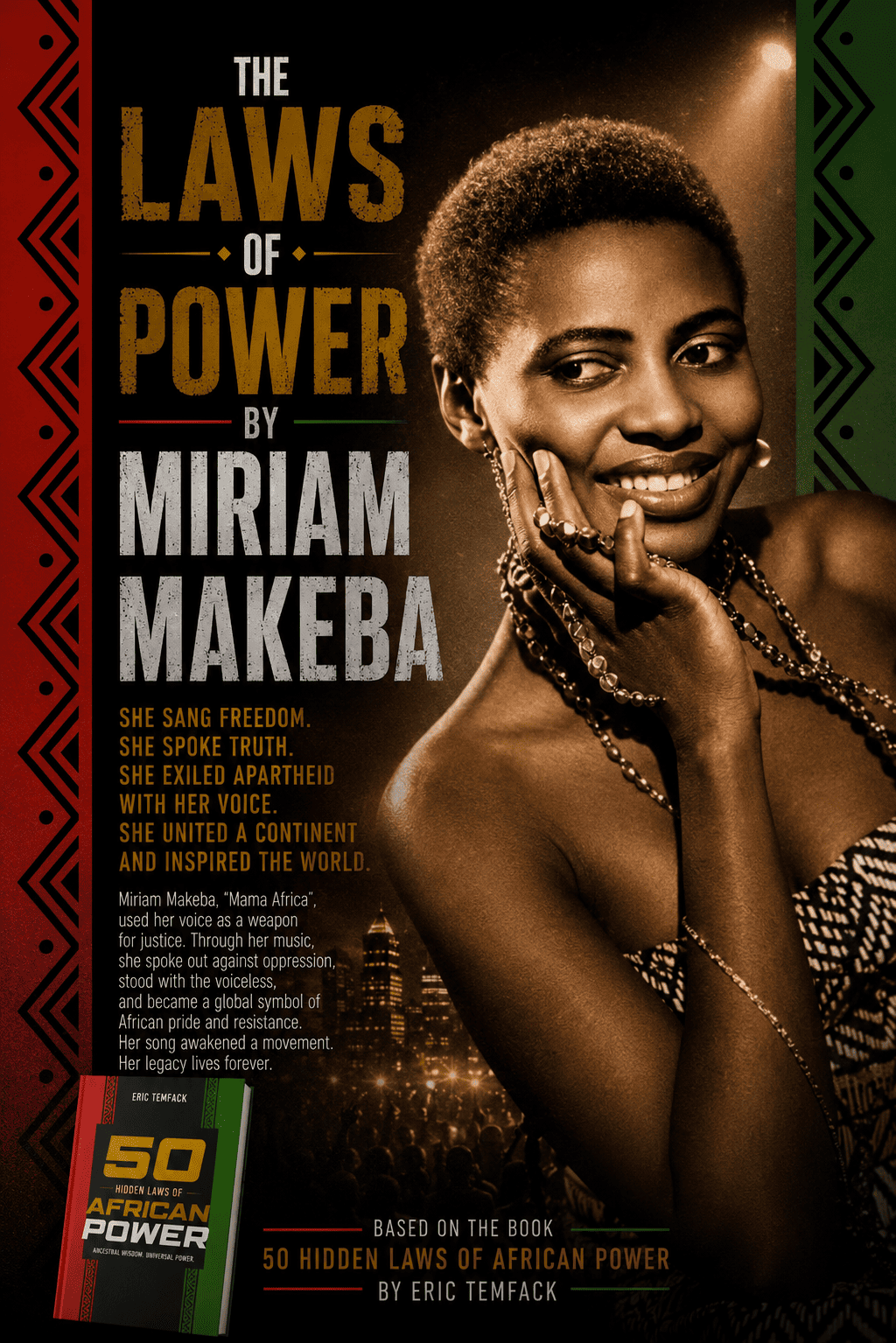
The 50 Hidden Laws · Embodied by Miriam Makeba
Each law below illustrates an aspect of her struggle: exile as a platform, music as a diplomatic weapon, pan‑Africanism, triumphant return.
50/50 laws embodied – a voice that carried Africa to every stage of the world.
Fundamental laws: the strategic DNA of Miriam Makeba
Law #29 – Launch a call that resonates for centuries (“Pata Pata”)
“Pata Pata”, composed in 1957, became a worldwide hit (1967). It remains one of the most famous African songs. Makeba blended Xhosa and English, making South African culture accessible to all. The song is an invitation to dance, but also a cry of joy despite oppression.
Law #24 – Exile as a platform
After denouncing apartheid on British television, the South African government revoked her citizenship. She spent thirty years in exile (1959-1990), using every concert and interview to bear witness to the reality of apartheid and mobilise international opinion.
Law #31 – Control the narrative through art and speech
She sang in Xhosa, Zulu, Swahili, English. She popularised traditional songs like “Qongqothwane” (The Click Song). In 1963 she testified before the UN General Assembly, becoming the first South African woman to address the UN. Her art was a diplomatic weapon.
Law #4 – Embody a symbol greater than yourself (“Mama Africa”)
Nicknamed “Mama Africa”, she became the embodiment of the entire continent’s struggle for freedom. She sang with leaders like Nelson Mandela, fought against segregation in the United States, and supported African independence movements. She was Africa’s musical conscience.

Journey of an ambassador of Africa
Legend in pictures


Major achievements and legacy
Law #49 – Your legacy is your final act of power: Statues, streets and schools bear her name in South Africa and elsewhere. Her songs continue to inspire social movements.
Law #37 – Cultivate organised mystery
Despite her fame, Makeba protected her private life. She rarely commented on her tumultuous relationships (with Hugh Masekela, Stokely Carmichael). Her discretion kept the spotlight on her art, reinforcing the image of an artist entirely devoted to her cause.
Synthesis · Miriam Makeba and the 50 laws
Miriam Makeba proved that music could tear down walls and shake regimes. She turned every stage into a platform, every song into a manifesto. Her exile was not a weakness but a strength: she carried Africa to the world and brought freedom back home on the tip of her tongue. She remains the eternal voice of African resistance.