BERTINA LOPES
⚡ The embodiment of the 50 hidden laws of African power ⚡
Plastic artist, pioneer of modern African art, engaged feminist
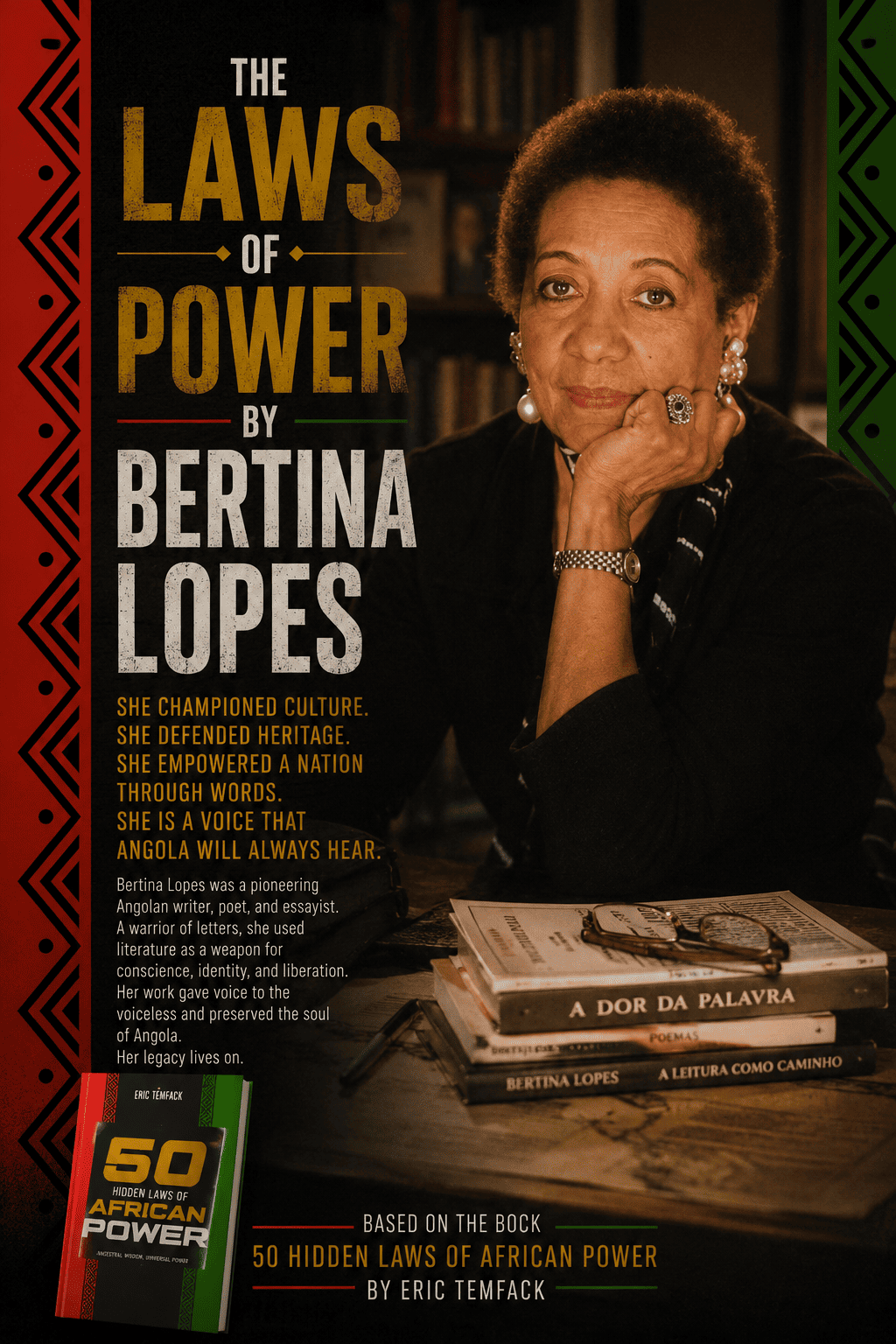
The 50 Hidden Laws · Embodied by Bertina Lopes
Each law below illustrates an aspect of her committed art: affirmation of identity, denunciation of injustice, exaltation of Black femininity.
50/50 laws embodied – an artist who made the canvas a battlefield for dignity.
Fundamental laws: the strategic DNA of Bertina Lopes
Law #31 – Control the narrative through art
Bertina Lopes used painting and sculpture to counterbalance colonial discourse. Her works celebrate African masks, ancestors, and symbols of resistance. They contributed to building a proud post‑colonial identity.
Law #28 – Mobilise the excluded (women artists)
In a male‑dominated art world, she paved the way for generations of African women plastic artists. She taught, exhibited and encouraged young girls to speak out through creation.
Law #17 – Use faith as an imperial cement
Her works incorporate ritual motifs, traditional beliefs and a syncretic spirituality. She believed in art as a liberating force, capable of healing the wounds of the past.
Law #49 – Your legacy is your final act of power
Today, her paintings are exhibited in museums worldwide (Lisbon, Rome, Maputo, São Paulo). The Bertina Lopes Foundation perpetuates her memory and supports young African artists.

Journey of a revolutionary artist
Legend in pictures


Major achievements and legacy
Law #49 – Your legacy is your final act of power: Streets, schools and an art prize bear her name in Mozambique. Her childhood home in Maputo has been turned into a cultural centre.
Law #37 – Cultivate organised mystery
Very few video or written interviews of Bertina Lopes survive. She deliberately avoided the media spotlight. This silence has reinforced the power of her work, which speaks for itself. Art historians still wonder about certain periods of her career (especially her years in Italy).
Synthesis · Bertina Lopes and the 50 laws
Bertina Lopes proved that art is a political act. Her colourful canvases are manifestos for freedom, Black pride and women’s emancipation. She opened a path that many African artists continue to walk.