LUÍSA MAHIN
⚡ The embodiment of the 50 hidden laws of African power ⚡
Afro‑Brazilian resistance fighter, mother of the Malês Revolt (1835)
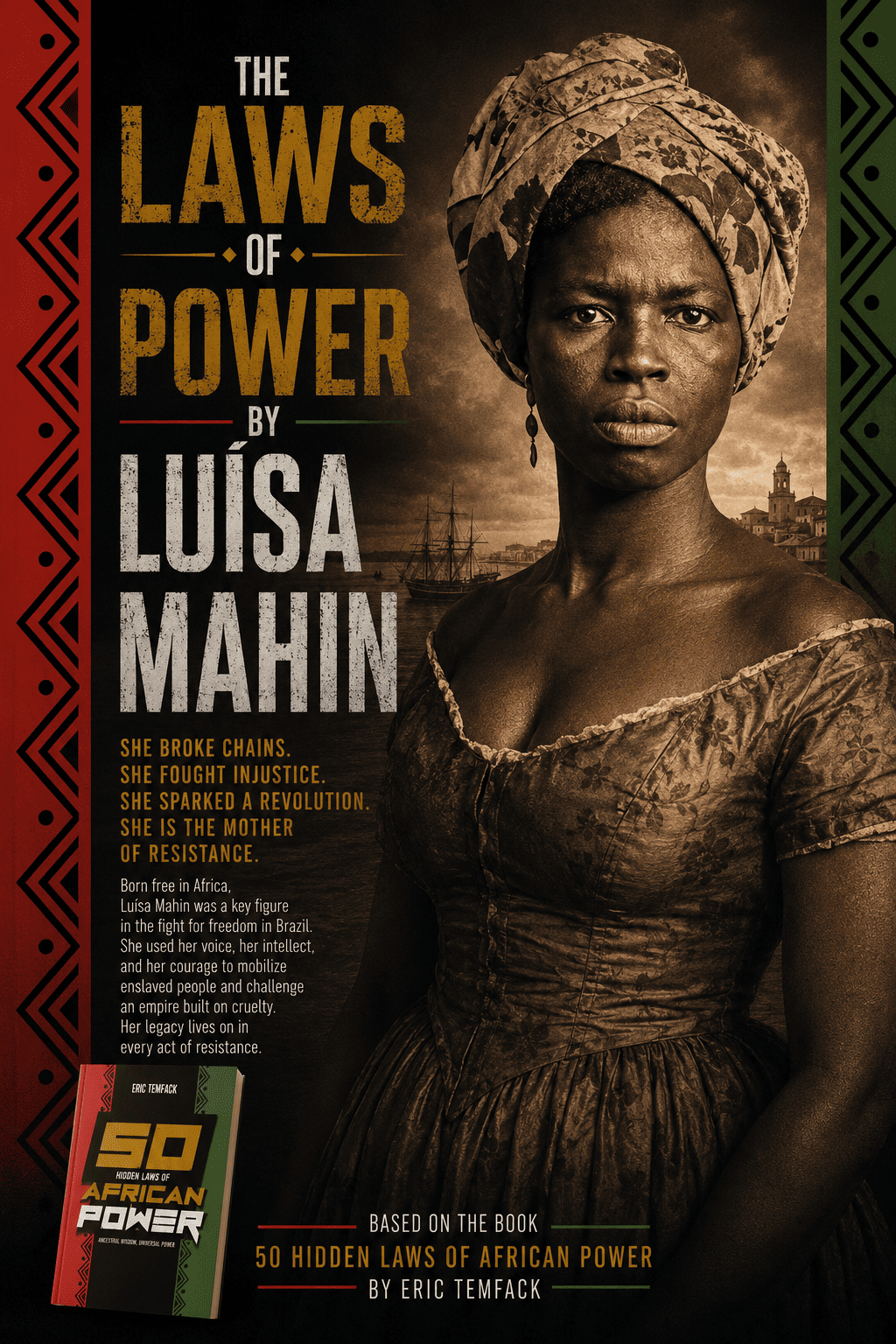
The 50 Hidden Laws · Embodied by Luísa Mahin
Each law below illustrates an aspect of her commitment: organised resistance, cultural transmission, struggle against slavery and oppression.
50/50 laws embodied – a woman whose name remained in the shadows, but whose impact was immense.
Fundamental laws: the strategic DNA of Luísa Mahin
Law #28 – Mobilise the excluded (the Malês Revolt)
In January 1835, in Salvador da Bahia, Muslim slaves of Nagô (Yoruba) origin rose up. Luísa Mahin, herself of Islamic tradition, is suspected of being one of the organisers and strategists of this insurrection. The revolt was bloodily repressed, but it revealed the power of Afro‑Brazilian clandestine organisation.
Law #17 – Use faith as an imperial cement
Luísa Mahin was a practitioner of Islam (like many Malês). She used religious networks to coordinate the revolt, with collective prayers serving as cover for secret meetings. Faith united the insurgents across ethnic differences.
Law #10 – Turn iron into gold
Though her life is poorly documented, her son Luís Gama, born to a white slave owner, became a famous abolitionist lawyer and poet. She passed on to him her thirst for freedom, making him “the principal architect of abolition in Brazil.”
Law #37 – Cultivate organised mystery
Her date of birth, exact place of origin (probably Ghana or Benin) and date of death are unknown. The judicial archives of the time mention her as a “free African”, but with no details. This forced silence has made her a mysterious heroine, reclaimed by Brazil’s Black movements.

Journey of an Afro‑Brazilian resistance fighter
Legend in pictures


Major achievements and legacy
Law #49 – Your legacy is your final act of power: Today, Luísa Mahin is celebrated as a national heroine of Black Brazil. Her name is inscribed in the Book of Heroes and Heroines of the Fatherland since 2014. Every July 25 (National Day of Latin American and Caribbean Black Women) her example is recalled.
Law #37 – Cultivate organised mystery
The Brazilian authorities destroyed most documents concerning the Malês Revolt. Luísa Mahin appears only in indirect testimonies. The absence of archives has allowed Afro‑Brazilians to appropriate her as a tutelary figure, free from colonial stigmas.
Synthesis · Luísa Mahin and the 50 laws
Luísa Mahin sacrificed her freedom for collective freedom. Her struggle, though almost erased from official archives, enabled her son Luís Gama to become one of Brazil’s greatest abolitionists. She embodies the strength of silent resistance, of transmission, and of faith as weapons of liberation.