
LA MULÂTRESSE SOLITUDE
⚡ The embodiment of the 50 hidden laws of African power ⚡
Heroine of the anti‑slavery struggle in Guadeloupe, martyr of freedom
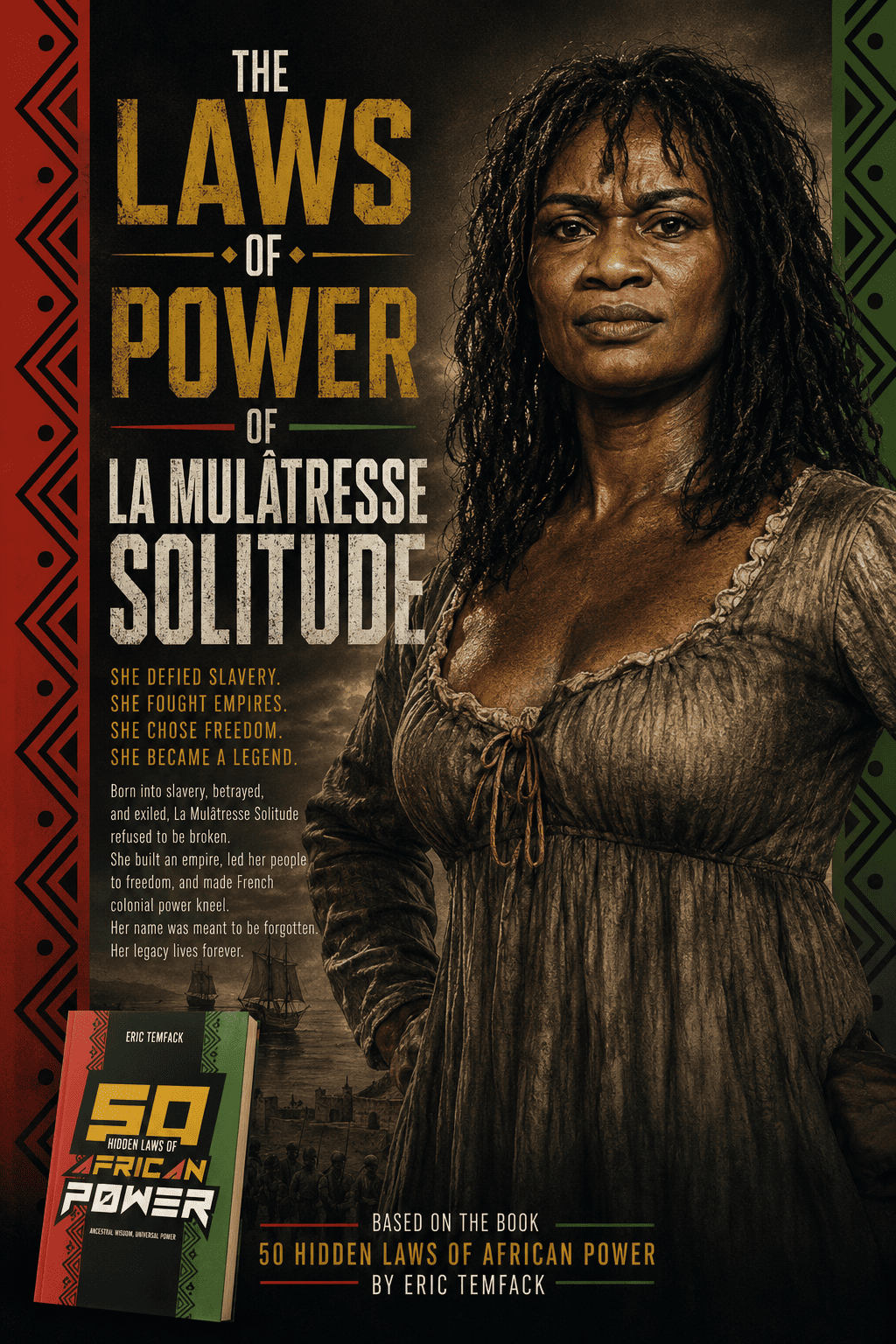
The 50 Hidden Laws · Embodied by La Mulâtresse Solitude
Each law below illustrates an aspect of her commitment: armed resistance, refusal of submission, sacrifice for freedom and dignity.
50/50 laws embodied – a pregnant woman facing Napoleon’s army, symbol of absolute freedom.
Fundamental laws: the strategic DNA of Solitude
Law #28 – Mobilise the excluded (the rebels against reestablishment)
In May 1802, when General Richepance arrived in Guadeloupe to reestablish slavery, Solitude immediately joined Louis Delgrès and Joseph Ignace. She fought in the street battles of Pointe‑à‑Pitre and took part in the strategic retreat to the Danglemont sugar plantation.
Law #22 – Choose your death (the sacrifice for freedom)
After the defeat of Delgrès’ column, Solitude was captured while pregnant. She was tried, sentenced to death and executed on November 29, 1802, after having given birth. Her child was confiscated and raised in servitude. Yet her sacrifice sealed her legend.
Law #23 – Resist with the spirit (memory as a weapon)
Few written documents detail her actions, but oral tradition and annual commemorations (May 10, the French national day for the memory of the slave trade, slavery and their abolition) keep her memory alive. She has become the embodiment of female resistance.
Law #30 – Live as you teach (pregnant woman at the front)
Solitude did not hide behind her pregnancy. She fought in the front lines, showing that freedom is not a matter of gender or physical condition. Her conduct inspired fighters and historians alike.

Journey of a Guadeloupean heroine
Legend in pictures


Major achievements and legacy
Law #49 – Your legacy is your final act of power: Every May 10, France commemorates the abolition of slavery, and Solitude’s name is invoked. She has become a global icon of black women’s struggle against oppression.
Law #37 – Cultivate organised mystery
There is no authentic portrait of Solitude, nor any document signed by her. The court records of her trial have disappeared. Oral tradition and fictional narratives built her myth, giving her a quasi‑legendary dimension that enhances her emotional impact.
Synthesis · La Mulâtresse Solitude and the 50 laws
La Mulâtresse Solitude embodies the absolute refusal of slavery, even at the cost of death. Her pregnancy did not weaken her; it made her even more determined. She showed that freedom is not negotiated: it is taken or died for. Her image resonates in all struggles for dignity and equality.