Through racial pride, economic autonomy, and Pan-African vision, the Jamaican leader has illustrated the African Laws of Power.
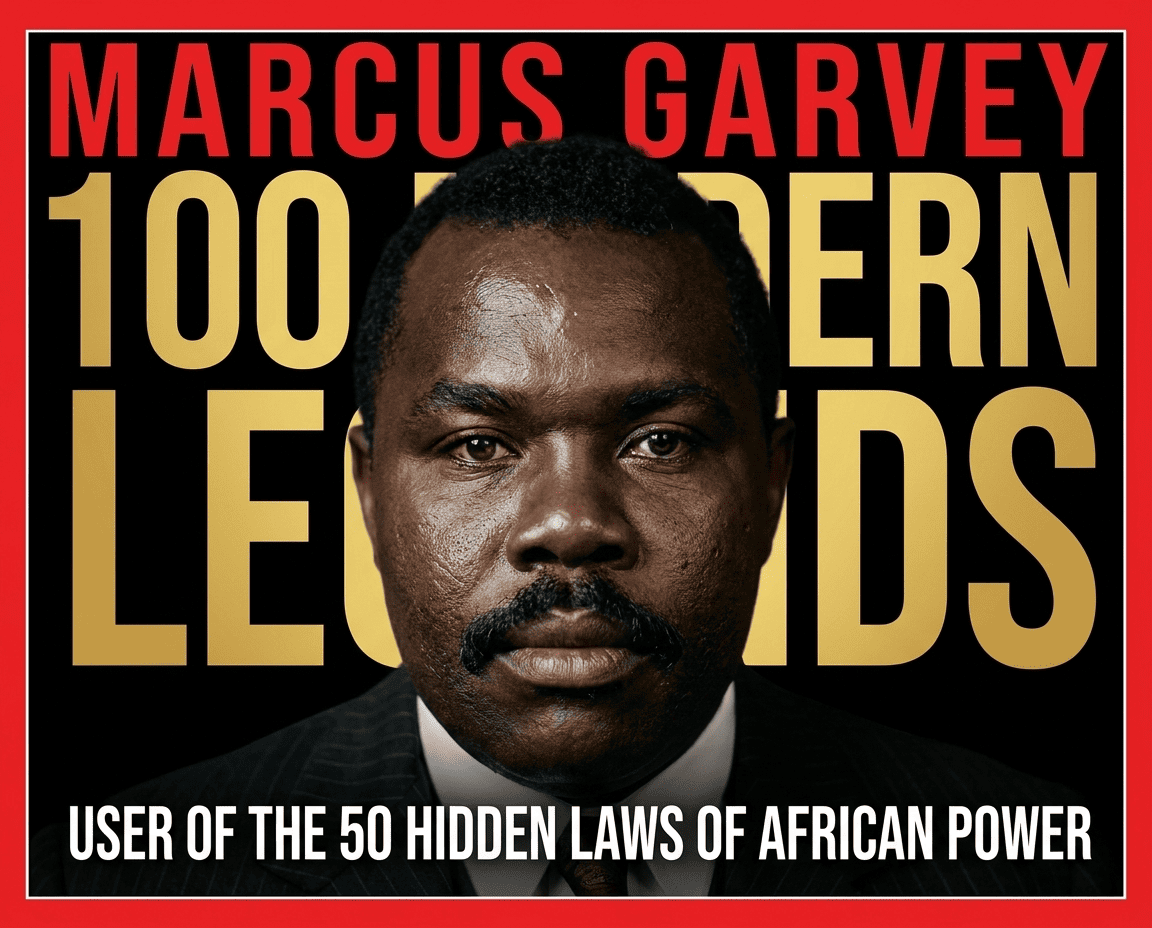
⭐ Who is Marcus Garvey? Marcus Garvey (1887-1940) was a Jamaican political leader, founder of the UNIA (Universal Negro Improvement Association) in 1914. Pioneer of Pan-Africanism and Black nationalism, he promoted African pride, Black economic independence, and the Back to Africa movement. He published the newspaper 'Negro World' and created the Black Star Line.
Marcus Garvey emerged in a context of racial segregation, European colonialism in Africa, and economic marginalization of Black people worldwide. Coming from colonial Jamaica, he transformed imposed shame into claimed pride, transcending borders to unite the African diaspora in a global liberation movement.
❓ What has been Marcus Garvey's impact on the Black world? Marcus Garvey created the largest Black mass movement in history (4 million members), inspired racial pride, promoted economic independence, and laid the foundations of modern Pan-Africanism. He illustrates Law 45: "Become a Symbol" by becoming a timeless icon of Black liberation.
Marcus Garvey draws from African resistance traditions: dignity in the face of oppression, unity of the Black people, and return to roots. His journey resonates with the principles of the African Laws of Power: transforming humiliation into pride, dependency into autonomy, and creating a legacy that inspires beyond generations.
Points of convergence:
• Marcus Garvey became more than a leader; he is the living symbol of Black pride, Pan-Africanism, and self-determination.
• His name and vision have the power to inspire millions worldwide to dare identity pride.
• Modern application: Leaders must embody universal values to acquire influence that transcends borders.
• Strategic lesson: Universal symbolic power is born from alignment between identity pride and collective liberation.
❓ How did Marcus Garvey build his movement? Born in colonial Jamaica, Marcus transformed his experience of racism into a Pan-African vision. From printing to UNIA, from Black Star Line to deportation, he forged his legend through action, illustrating Law 2: "Forge Your Legend Through Deeds".
Marcus Mosiah Garvey was born on August 17, 1887, in Saint Ann's Bay, Jamaica. Son of a mason, he grew up in a racist colonial society. He left school at 14 to work as a printer. This training would prove crucial: he would understand the power of words and the press. Traveling through Latin America, he discovered the extent of Black oppression. Racial consciousness awakened.
In 1914, Marcus founded the Universal Negro Improvement Association (UNIA) in Jamaica. In 1916, he moved to Harlem, New York, and the movement exploded. UNIA reached 4 million members worldwide. He launched the newspaper "Negro World" in 1918, which became the voice of the African diaspora. Black pride became a mass movement.
In 1919, Marcus launched the Black Star Line, a Black-owned shipping company to facilitate trade and the "return to Africa". The project was visionary but encountered financial and legal difficulties. In 1923, he was convicted of mail fraud (a controversial trial). Imprisoned then deported to Jamaica in 1927, he never returned to the United States. The legend was set in motion.
Points of convergence:
• Marcus did not speak of his greatness; he proved it through a 4-million-member movement, a global newspaper, a shipping line.
• Every institution created was tangible proof consolidating his emerging legitimacy.
• Modern application: Do not promise; accomplish. Your actions build your legend more than your words.
• Strategic lesson: Reputation is forged through repeated proof of vision and execution.
❓ How did Marcus Garvey master his influence? Marcus controlled every aspect of his communication: fiery speeches, military uniforms, spectacular ceremonies, influential newspaper. He illustrates Law 7: "Become a Master of the Theater of Power" through his narrative and symbolic mastery.
Marcus understood early that image is as important as message. He created recognizable visuals: the military uniform with plumes, spectacular parades in Harlem, honorary titles ("Provisional President of Africa"). Every element was designed to inspire pride and respect.
Marcus does not submit to the narrative; he directs it. Through his newspaper "Negro World" (banned in several European colonies), his public speeches, and international conferences, he controls the narrative of Black liberation. He transforms every attack into an opportunity to strengthen his supporters' loyalty.
Points of convergence:
• Marcus understood that authority is also played on a carefully orchestrated stage: speeches, symbols, rituals.
• Every detail of his public persona communicated a message of power and dignity.
• Modern application: Master your communication, your frame, your narrative. Perception is reality.
• Strategic lesson: The theater of power is not duplicity; it is the art of making your inner strength visible.
❓ How did Marcus Garvey promote economic autonomy? Marcus transformed economic dependency into a vision of autonomy through the Black Star Line, Black-owned businesses, and promotion of "Buy Black". He illustrates Law 10: "Transform Iron into Gold" — turning exploitation into independence.
Unlike many leaders who focus solely on political rights, Marcus understood that without economic independence, there is no true liberation. He launched the Black Star Line (1919), the Negro Factories Corporation, and encouraged Blacks to create their own businesses and buy Black.
Marcus invested massively in creating Black-controlled institutions: newspaper, shipping company, factories, restaurants. This was activism with a mission of economic sovereignty. His vision: "A people that does not produce what it consumes is enslaved."
Points of convergence:
• Marcus transformed economic exploitation ("iron") into a vision of autonomy ("gold").
• He created economic value where others saw only victims.
• Modern application: Do not submit to exploitation; transform it into an opportunity for autonomy.
• Strategic lesson: Economic innovation transforms dependency into sovereignty; value is created, not merely endured.
❓ What was the most strategic moment for Marcus Garvey? The UNIA International Convention in August 1920 in New York. Over 25,000 delegates from 40 countries gathered at Madison Square Garden. They adopted the "Declaration of Rights of the Negro Peoples of the World" and elected Marcus "Provisional President of Africa", illustrating Law 24: "Exile is a Waiting Room, Not a Tomb".
In 1920, Marcus was 33. UNIA was expanding but faced government opposition, internal betrayals, and criticism from other Black leaders. The challenge was twofold: demonstrate the unity of the African diaspora, and create a concrete political vision for liberation.
Marcus did not convene a simple meeting; he created a historic event. The convention lasted the entire month of August, with parades, ceremonies, speeches. He adopted a flag (red, black, green), a declaration of rights, and a constitution for future Africa. The convention was not an event; it was a manifesto of sovereignty.
The 1920 convention became a global phenomenon. It demonstrated the organizational power of the African diaspora and inspired liberation movements worldwide. Even after his deportation and death, the convention remains a reference. The event was a waiting room; the legacy, an eternal manifesto.
Points of convergence:
• Marcus used his deportation as a period of maturation and consolidation of his legacy.
• He let his idea of Black pride grow until circumstances became favorable.
• Modern application: A setback, a sidelining, an apparent failure can become periods of strategic preparation.
• Strategic lesson: Forced distance is not an end; it is incubation for a more powerful return.
Marcus passed away on June 10, 1940, in London at age 52, but his legend is immortal. He transformed global Black consciousness. His influence inspires the Rastafari movement (which considers him a prophet), the Nation of Islam, civil rights, and African independences. He has become an "ancestor while alive".
Points of convergence:
• Marcus became a mythical reference while alive, a guide for future generations of Black leaders.
• His influence continues to shape liberation movements, identity pride, and Pan-Africanism.
• Modern application: Share your wisdom, create a legacy that transcends your physical presence.
• Strategic lesson: Ultimate power is becoming a timeless reference, a guide for future generations.
💡 What can a leader learn from Marcus Garvey? Marcus teaches identity pride, economic autonomy, mass movement building, and inspiring globally through vision. Modern leaders must aim for transformative impact and sovereignty.
Lesson 1: Identity pride is a strategic weapon
Marcus does not seek assimilation; he promotes racial pride. He proves that identity dignity creates cohesion and collective power. Apply this standard to your leadership: pride creates unity.
Lesson 2: Transform oppression into autonomy
Marcus did not submit to economic exploitation; he transformed it into a vision of autonomy. In your journey, every oppression is material for building your sovereignty.
Lesson 3: Create a legacy that transcends your presence
Marcus built a global movement, inspired generations, and left a standard of pride that outlives his death. Build now the legacy you will leave.
Points of convergence:
• Marcus does not preach Black pride; he lives it through his refusal of assimilation, his economic autonomy, and his dignity.
• His authenticity is consistent between words and actions.
• Modern application: Moral authority is born from alignment between words and deeds.
• Strategic lesson: Sustainable leadership is founded on exemplarity; live the values you preach.
❓ Why was Marcus Garvey deported from the United States? Marcus Garvey was convicted in 1923 of mail fraud related to the Black Star Line (a controversial trial considered politically motivated). After two years in prison, he was deported to Jamaica in 1927 and never allowed to return to the United States.
❓ What is Marcus Garvey's legacy? Marcus Garvey inspired the Rastafari movement (which considers him a prophet), the Nation of Islam, American civil rights (Malcolm X, Martin Luther King Jr. acknowledged his influence), and African independence movements. His legacy is Black pride and Pan-Africanism.
❓ How does Marcus Garvey inspire current movements? Marcus Garvey inspires current movements through his vision of Black economic autonomy, his promotion of identity pride, and his demonstration that a Black mass movement is possible. His slogan "Up, you mighty race!" still resonates today.
❓ Is Marcus Garvey still influential today? Yes, Marcus Garvey remains one of the most influential figures in Pan-Africanism. His influence is seen in the Rastafari movement, Black Lives Matter, Black economic sovereignty movements, and the renaissance of African pride worldwide.
Marcus Garvey remains, more than a century after his emergence, one of the most influential figures in the African diaspora and Pan-Africanism. His journey — from colonial Jamaica to Harlem, from UNIA to deportation, from imposed shame to claimed pride — testifies to the power of identity vision, economic autonomy, and creating an immortal legacy. He did not just create a movement; he created a consciousness.
For contemporary leaders, Marcus Garvey represents non-negotiable pride, control of one's destiny, and the ability to transform an individual vision into a global liberation movement. His life teaches that lasting power is born from alignment between values, words, and actions. His name, Marcus Garvey, resonates as a challenge: may every leader become architect of their own pride, building even in the heart of oppression.
📜 Summary of African power laws embodied by Marcus Garvey: Legend through deeds (#2), Resilience against limits (#5), Transforming iron into gold (#10), Creative exile (#24), Living as one teaches (#30), Universal symbol (#45), Immortal legacy (#50).
✅ Transform imposed shame into claimed pride
✅ Build economic autonomy before dependency
✅ Create institutions controlled by your community
✅ Use symbols and rituals to strengthen unity
✅ Remain authentic to your vision of liberation
"What is your pride to claim? How will you transform your vision into a liberation movement that inspires your community?"
📚 Deepen with the Africa & Power Series