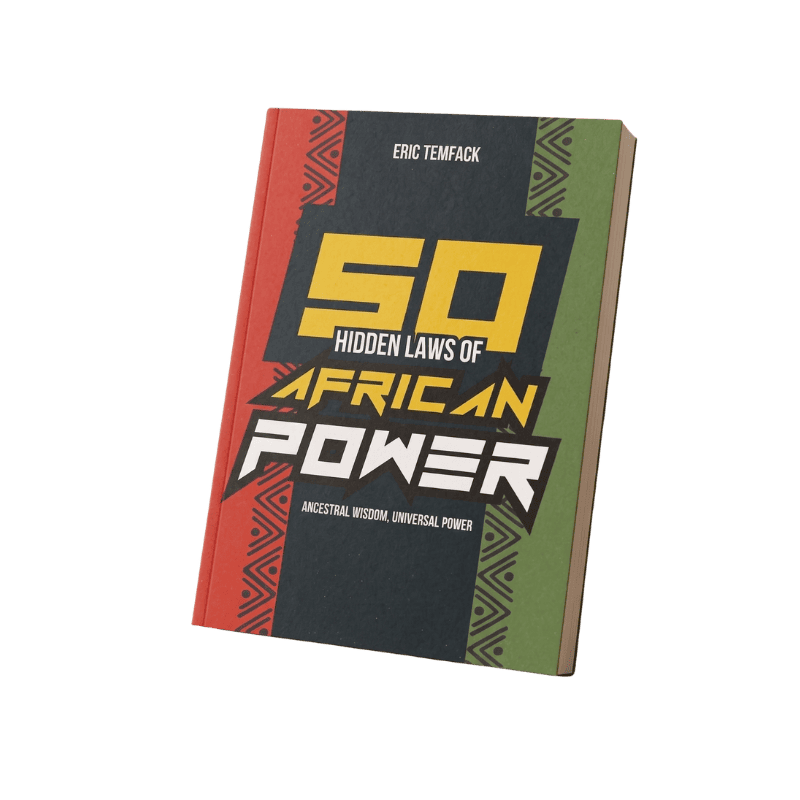
Through technocratic excellence, unshakeable integrity, and global negotiation, the first woman to lead the WTO has illustrated the African Laws of Power.
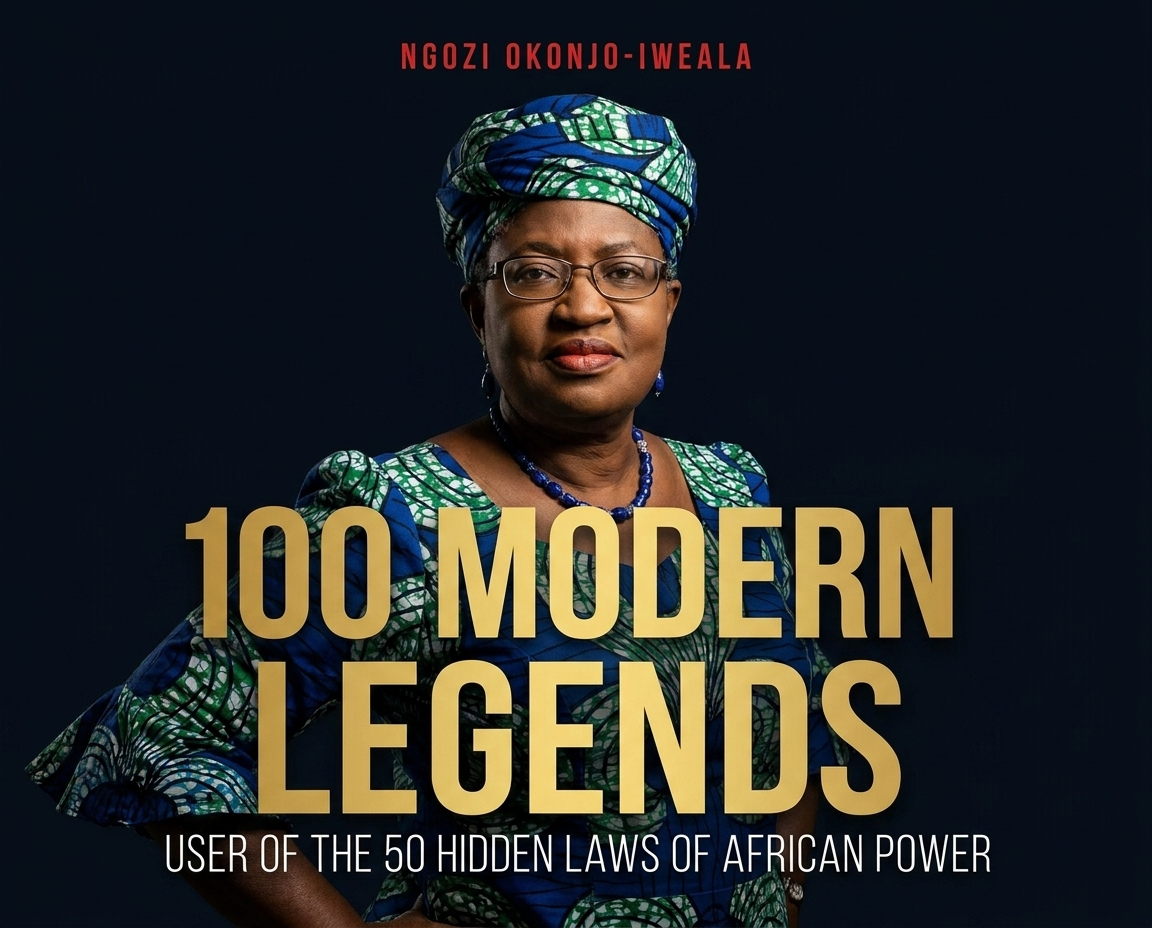
⭐ Who is Ngozi Okonjo-Iweala? Ngozi Okonjo-Iweala (born 1954) is a Nigerian economist, the first woman and first African to lead the World Trade Organization (since 2021). Former Finance Minister of Nigeria and Managing Director of the World Bank, she embodies African technocratic excellence.
Ngozi Okonjo-Iweala emerged in a context where Africa, despite its wealth in resources and demographic potential, remains marginalized in global economic institutions. Coming from Nigeria's intellectual elite, she transformed technical competence into a lever of global influence, transcending geopolitical barriers and institutional prejudices.
❓ What has been Ngozi Okonjo-Iweala's impact on the global economy? Ngozi Okonjo-Iweala broke the glass ceiling of international institutions, negotiated the cancellation of $30 billion in debt for Nigeria, and promoted the inclusion of developing countries in global trade. She illustrates Law 45: "Become a Symbol" by becoming an icon of African excellence.
Ngozi Okonjo-Iweala draws from Igbo values: the importance of education, courage in adversity ("Onye aghana nwanne ya" – Do not leave your brother behind), and community responsibility. Her journey resonates with the principles of the African Laws of Power: transforming expertise into influence, resisting pressures, and creating a legacy that inspires beyond borders.
Points of convergence:
• Ngozi Okonjo-Iweala became more than a technocrat; she is the living symbol of African excellence, integrity, and global female leadership.
• Her name and journey have the power to inspire millions of young Africans to aim for academic and professional excellence.
• Modern application: Leaders must embody universal values to acquire influence that transcends borders.
• Strategic lesson: Universal symbolic power is born from alignment between technical competence and collective inspiration.
❓ How did Ngozi Okonjo-Iweala become a global leader? Born in Ogwashi-Uku to an Igbo royal family, Ngozi transformed her elite education into a weapon of economic transformation. From MIT to the World Bank, from Finance Minister to the WTO, she forged her legend through action, illustrating Law 2: "Forge Your Legend Through Deeds".
Ngozi Okonjo was born on June 13, 1954, in Ogwashi-Uku, Delta State, Nigeria. Daughter of King Chukwuka Okonjo, she grew up in a family that valued education. She earned a Bachelor's in economics from Harvard (1976), then a PhD in regional economics and development from MIT (1981). Academic excellence forged her technical legitimacy.
In 1982, Ngozi joined the World Bank. Over 25 years, she climbed the ranks: economist, advisor, Director of Operations for Africa, then Managing Director (2007-2011). This period forged her international credibility and global network — strategic assets for her return to Nigeria.
In 2003, Ngozi returned to Nigeria as Finance Minister. Facing corruption and unsustainable debt, she negotiated the cancellation of $30 billion in debt with the Paris Club in 2005. In 2021, she became the first woman and first African to lead the WTO. The legend was set in motion.
Points of convergence:
• Ngozi did not speak of her greatness; she proved it through tangible results: debt cancellation, economic reforms, WTO leadership.
• Every negotiation, every reform was tangible proof consolidating her emerging legitimacy.
• Modern application: Do not promise; accomplish. Your results build your legend more than your words.
• Strategic lesson: Reputation is forged through repeated proof of competence and integrity.
❓ How does Ngozi Okonjo-Iweala master her authority? Ngozi controls every aspect of her communication: elegance of traditional Igbo attire, measured speeches, diplomatic presence. Nicknamed "Okonjo-Wahala" (Woman of Trouble) for her firmness, she illustrates Law 7: "Become a Master of the Theater of Power".
Ngozi understood early that image is as important as competence. She created recognizable visuals: vibrant Igbo attire, signature headwrap, dignified posture. Every element was designed to communicate both technical authority and cultural rootedness.
Ngozi does not submit to the narrative; she directs it. Through her WTO speeches, strategic interviews, and publications, she controls the narrative of African economic reform. She transforms every criticism into an opportunity to demonstrate her resilience and vision.
Points of convergence:
• Ngozi understood that authority is also played on a carefully orchestrated stage: glances, posture, words, silence.
• Every detail of her public persona communicated a message of power and legitimacy.
• Modern application: Master your non-verbal communication, your frame, your narrative. Perception is reality.
• Strategic lesson: The theater of power is not duplicity; it is the art of making your inner strength visible.
❓ How did Ngozi Okonjo-Iweala transform the Nigerian economy? Ngozi transformed a debt-burdened economy into a nation in reconstruction through the cancellation of $30 billion in debt, budget transparency, and economic diversification. She illustrates Law 10: "Transform Iron into Gold" — turning crisis into opportunity.
Unlike many politicians, Ngozi used her technical credibility (MIT, World Bank) to negotiate with international creditors. She secured the cancellation of $30 billion in debt in 2005 — a historic achievement. This relative economic independence was key to Nigeria's political freedom.
Ngozi invested massively in budget transparency (publishing oil revenues), anti-corruption efforts, and economic empowerment of women and youth. This was reform with a mission of inclusion and social transformation.
Points of convergence:
• Ngozi transformed a debt-burdened economy ("iron") into a nation in reconstruction ("gold").
• She created institutional value where others saw only constraints.
• Modern application: Do not submit to crisis; transform it into an opportunity for reform and innovation.
• Strategic lesson: Institutional innovation transforms constraint into opportunity; value is created, not merely restored.
❓ What was the most strategic moment in Ngozi Okonjo-Iweala's career? Her election as Director-General of the WTO in 2021. After an intense global campaign and an initial US veto, her historic victory broke the glass ceiling of multilateral institutions, illustrating Law 24: "Exile is a Waiting Room, Not a Tomb".
In 2021, Ngozi was 66. The WTO was in crisis: trade blockages, US-China tensions, global pandemic. The challenge was twofold: prove that Africa can lead global institutions, and reform the WTO for developing country inclusion.
Ngozi did not seek confrontation; she built coalitions. With support from the African Union, the EU, and many developing countries, she transformed her candidacy into a movement for inclusion. The initial US veto became a catalyst for global solidarity.
Ngozi's election in March 2021 became a global phenomenon. She inspired generations of African leaders and proved that competence, perseverance, and coalition-building can triumph over institutional prejudices. The victory was not an end; it was a manifesto for Africa.
Points of convergence:
• Ngozi used her periods at the World Bank as incubation for international credibility.
• She let her idea of African leadership grow until circumstances became favorable.
• Modern application: A setback, a sidelining, a public failure can become periods of strategic preparation.
• Strategic lesson: Forced distance is not an end; it is incubation for a more powerful return.
Ngozi remains in office at the WTO, but her legend is already immortal. She transformed the perception of African leadership in global institutions. Her reforms inspire generations of technocrats. Her political daughters emerge across the continent. She has become an "ancestor while alive".
Points of convergence:
• Ngozi became a mythical reference while alive, a guide for future generations of African leaders.
• Her influence continues to shape global economic governance, developing country inclusion, and female leadership.
• Modern application: Share your wisdom, create a legacy that transcends your physical presence.
• Strategic lesson: Ultimate power is becoming a timeless reference, a guide for future generations.
💡 What can a leader learn from Ngozi Okonjo-Iweala? Ngozi teaches technical excellence, integrity against corruption, international negotiation, and inspiring globally through competence. Modern leaders must aim for expertise and lasting impact.
Lesson 1: Competence is a strategic weapon
Ngozi owes her legitimacy neither to force nor to populism, but to her exceptional technical competence (MIT, World Bank). She proves that academic and professional excellence is a political asset. Apply this standard to your leadership: competence creates credibility.
Lesson 2: Transform attacks into proof of legitimacy
Ngozi never fled threats, her mother's kidnapping, or criticism; she used them as proof of her integrity. In your journey, every attack is material for building your legitimacy.
Lesson 3: Create a legacy that transcends your presence
Ngozi trained African technocrats, strengthened economic institutions, and left a standard of integrity that outlives her term. Build now the legacy you will leave.
Points of convergence:
• Ngozi does not preach transparency; she lives it through publishing oil revenues, fighting corruption, and accountability.
• Her authenticity is consistent between words and actions.
• Modern application: Moral authority is born from alignment between words and deeds.
• Strategic lesson: Sustainable leadership is founded on exemplarity; live the values you preach.
❓ Why was Ngozi Okonjo-Iweala elected to lead the WTO? Ngozi Okonjo-Iweala was elected Director-General of the WTO in 2021 thanks to her exceptional technical competence, her experience at the World Bank, and her leadership in African economic reform. Her historic victory broke the glass ceiling of multilateral institutions.
❓ What is Ngozi Okonjo-Iweala's legacy in Nigeria? Ngozi Okonjo-Iweala secured the cancellation of $30 billion in debt, instituted budget transparency, promoted economic diversification, and trained a generation of integrous technocrats. Her legacy is proof that economic reform is possible in Africa.
❓ How does Ngozi Okonjo-Iweala inspire African women? Ngozi Okonjo-Iweala has inspired generations of African female leaders by breaking glass ceilings: first female Finance Minister of Nigeria, first female WTO DG. She proved that women can lead global institutions.
❓ Is Ngozi Okonjo-Iweala still in office? Yes, Ngozi Okonjo-Iweala has been Director-General of the WTO since March 2021, for a renewable 4-year term. She continues to shape global trade rules and promote developing country inclusion. She remains a respected voice for global economic equity.
Ngozi Okonjo-Iweala remains, more than four decades after her beginnings, one of the most influential figures in global economic governance. Her journey — from Ogwashi-Uku to Geneva, from debt to prosperity, from threats to WTO leadership — testifies to the power of competence, integrity, and creating an immortal legacy. She did not just reform economies; she reformed perceptions.
For contemporary leaders, Ngozi Okonjo-Iweala represents non-negotiable excellence, control of one's destiny, and the ability to transform individual expertise into a movement of global transformation. Her life teaches that lasting power is born from alignment between values, words, and actions. Her name, Ngozi Okonjo-Iweala, resonates as a challenge: may every leader become architect of their own excellence, negotiating even in the heart of storms.
📜 Summary of African power laws embodied by Ngozi Okonjo-Iweala: Legend through deeds (#2), Resilience against limits (#5), Transforming iron into gold (#10), Creative exile (#24), Living as one teaches (#30), Universal symbol (#45), Immortal legacy (#50).
✅ Transform expertise into a lever of influence
✅ Invest in transparency and integrity
✅ Use your technical credibility as a strategic weapon
✅ Build coalitions rather than seeking confrontation
✅ Remain authentic to your foundational values
"What is your expertise? How will you transform your competence into a lever of transformation that inspires your community?"
📚 Deepen with the Africa & Power Series