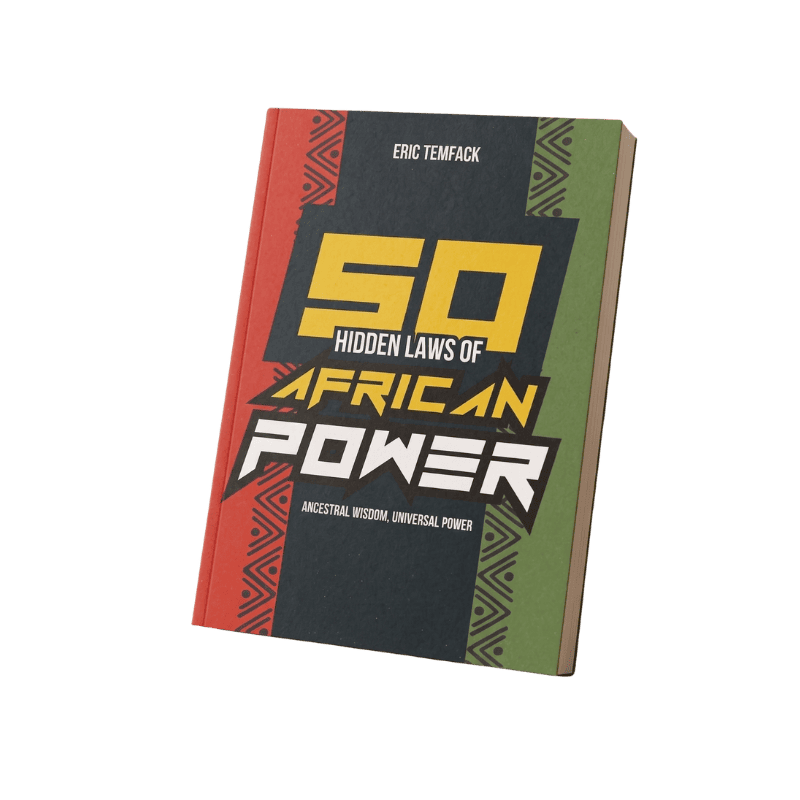
Through affirmation of origin, sporting excellence and commitment to social justice, the seven-time Formula 1 World Champion illustrated the African Power Laws.
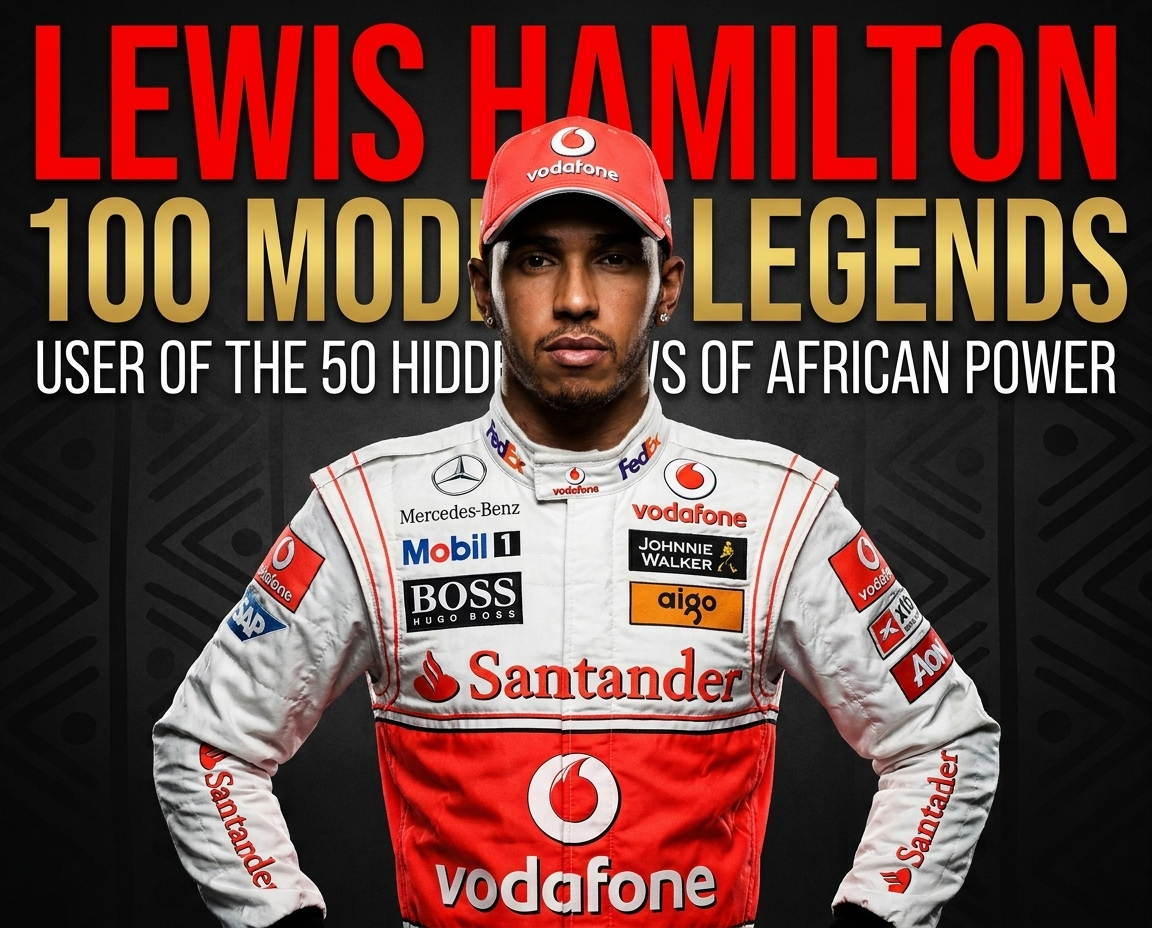
⭐ Who is Lewis Hamilton? Lewis Hamilton (born 1985) is a British Formula 1 driver, seven-time World Champion. He transformed sporting excellence into a weapon of social justice and global inspiration. His journey illustrates Laws 1, 5, 23, 28, 29, 31 and 39 of the 50 Hidden Laws of African Power.
Lewis Hamilton emerged in a Formula 1 marked by its European heritage, elitism and lack of diversity. Son of a black British father of Grenadian origin and a white mother, he transformed his multicultural heritage into a platform of global transformation, transcending cultural and sporting boundaries.
❓ What was Lewis Hamilton's impact on diversity in motorsport? Lewis Hamilton globalized the message of diversity and inclusion, created the Hamilton Commission, carried the Black Lives Matter movement in F1, and inspired generations of young people from minorities. He illustrates Law 28: "Mobilize the Excluded".
Lewis Hamilton draws from the heritage of the African diaspora: resilience in the face of adversity, importance of identity, spirituality as a weapon of transformation. He does not reject his roots; he sublimates them into a universal message of justice and excellence.
Points of convergence:
• Lewis Hamilton did not seek to assimilate into the dominant F1 model; he mobilized the excluded (young blacks, women, working classes) to transform the sport.
• The Hamilton Commission produced concrete recommendations to increase diversity in British motorsport.
• Modern application: Leaders must aim to mobilize marginalized voices to create systemic change.
• Strategic lesson: The power of the excluded, once mobilized, can transform the most established institutions.
❓ How did Lewis Hamilton become World Champion? Born in the working class of Stevenage, Lewis transformed his lack of resources into a driver of excellence. From his beginnings in karting to his first World title in 2008, he forged his legend through acts, illustrating Law 5: "Never Define Yourself by Your Limits".
Lewis Carl Davidson Hamilton was born on January 7, 1985 in Stevenage, Hertfordshire. His father, Anthony, is an IT professional of Grenadian origin; his mother, Carmen, is a white homemaker. The family lived modestly; Lewis started karting at age 8 with second-hand equipment. This precariousness forged his determination and humility.
At 10, Lewis dominated British karting championships. At 13, he signed with McLaren, becoming the youngest driver to obtain an F1 contract. This period of "strategic training" became an incubation for his triumphant return as champion.
In 2008, at 23, Lewis won his first World title in dramatic circumstances (last corner of the last lap). This victory propelled him onto the global stage. The legend was underway.
Points of convergence:
• Lewis refused to let himself be defined by his modest origin, his minority status in F1, or racial stigmas; he transformed them into motivation.
• He transformed the limits imposed by the sport into a source of excellence and innovation.
• Modern application: A disability, a modest origin, a criticism can become sources of innovation and power.
• Strategic lesson: Turn the stigma around; transform adversity into fuel for excellence.
❓ How does Lewis Hamilton master his image and message? Lewis controls every aspect of his communication: calculated authenticity, strategic appearances, visible social engagement. He illustrates Law 31: "Control the Narrative" through his mastery of media narration while maintaining a radical commitment to justice.
Lewis understood very early that authenticity was more important than conformity. He created a recognizable image: assertive style, visible engagement, measured speech. Each element was designed to communicate power, dignity and refusal of submission.
Lewis uses social media, interviews, and public appearances to control his narrative. He does not undergo the dominant white narrative of F1; he challenges it, subverts it, and imposes his own narration of diversity and justice.
Points of convergence:
• Lewis mastered the codes of media communication to reform the system from within, while maintaining a radical commitment to social justice.
• His authenticity was consistent between his public words and his private actions.
• Modern application: Master the codes of dominant power to reform it from within, without compromising your fundamental values.
• Strategic lesson: The power of subversion is born from mastery of the rules of the game combined with fidelity to one's roots.
❓ How did Lewis Hamilton build his immortal legacy? Lewis transformed his sporting talent into a global legacy through the Hamilton Commission, his initiatives for diversity, and an authentic personal brand. He illustrates Law 10: "Transform Iron into Gold" — transforming a name into an immortal legacy.
Unlike many drivers who depend on sponsors, Lewis creates intellectual and social autonomy. He controls everything: message, image, actions. This authentic economics is the key to his political and moral freedom.
Lewis invests in projects that inspire: diversity in sport, education of young people from minorities, climate justice. It's leadership with a mission of global transformation.
Points of convergence:
• Lewis transformed his sporting talent ("iron") into an immortal global legacy ("gold").
• He created exponential value where others saw only a race driver.
• Modern application: Do not sell your raw talent; transform it into a brand, a system, a legacy.
• Strategic lesson: Authentic innovation transforms talent into legacy; value is created, not simply extracted.
❓ What was the most strategic moment in Lewis Hamilton's career? Carrying the Black Lives Matter movement in Formula 1 in 2020. After years of silence on racial issues in the sport, Lewis used his platform to transform F1, illustrating Law 39: "Be a Lighthouse, Not an Echo".
In 2020, after the murder of George Floyd, Lewis carried the Black Lives Matter movement in F1. The challenge was twofold: maintain his sporting excellence while using his platform for social justice, in a traditionally conservative sport.
Lewis did not reject the sport; he transformed it. His taking the knee before races is legendary. He met with F1 leaders, and understood that change can come from within. Engagement is not distraction; it is a manifesto of transformation.
Lewis's transformation became a global phenomenon. He inspired millions of people to believe that sport can be a weapon of social justice. Lewis proved that excellence and engagement can triumph over tradition.
Points of convergence:
• Lewis did not imitate the traditional F1 model; he created a unique style based on authenticity, engagement and excellence.
• He forced the world of sport to recognize the power of diversity and inclusion.
• Modern application: Leaders must create their own model of success based on their deep values.
• Strategic lesson: Cultural authenticity creates a global resonance that imitation cannot achieve.
Lewis is still active, but his legend is already immortal. He transformed F1 into a platform of global inspiration. His commission trains young people from minorities. He inspires generations of young people to aim for excellence with authenticity. He became an "ancestor while still living".
Points of convergence:
• Lewis became a mythical reference in his lifetime, a guide for future generations.
• His influence continues to shape motorsport, movements for social justice and diversity.
• Modern application: Share your wisdom, create a legacy that transcends your physical presence.
• Strategic lesson: The ultimate power is to become a timeless reference, a guide for future generations.
💡 What can a leader learn from Lewis Hamilton? Lewis teaches affirmation of origin, transforming limits into strength, spiritual resistance, and narrative mastery. Modern leaders must aim for authenticity and lasting impact.
Lesson 1: Self-affirmation is a daily choice
Lewis remains authentic, even under pressure. He does not tolerate inauthenticity, neither in himself nor in his collaborators. Apply this requirement to your work: do not deliver anything that is not authentic.
Lesson 2: Transform your origins into strength
Lewis never hid his modest origin; he used it as fuel. In your journey, every obstacle is material to build your excellence.
Lesson 3: Create a legacy that transcends your presence
Lewis created a commission, inspired generations, and left a standard of excellence that survive his career. Build now the legacy you will leave.
Points of convergence:
• Lewis affirmed his dignity in the face of a system that marginalized him; he built unshakable self-esteem on historical legitimacy.
• His authenticity was consistent between his words and his actions.
• Modern application: Moral authority is born from alignment between words and actions.
• Strategic lesson: Durable leadership is based on exemplarity; live the values you preach.
❓ What is Lewis Hamilton's sporting legacy? Lewis Hamilton transformed Formula 1 through sporting excellence, promoted diversity and inclusion, and inspired generations of drivers. His sporting legacy is global and timeless.
❓ What is the Hamilton Commission? The Hamilton Commission is the organization founded by Lewis Hamilton in 2020. It trains young people from minorities to increase diversity in British motorsport. It is a model of authenticity and social impact.
❓ How does Lewis Hamilton use his platform for social justice? Lewis Hamilton carried the Black Lives Matter movement in F1, created the Hamilton Commission for diversity, and used his fame to promote inclusion, illustrating Law 28: 'Mobilize the Excluded'.
❓ What is Lewis Hamilton's legacy? Lewis transformed F1 into a platform of global inspiration, inspired generations of young people to aim for excellence with authenticity, and created a model of driver-activist-entrepreneur. His cultural and sporting legacy is global and timeless.
Lewis Hamilton remains, more than a decade after his first title, one of the most influential figures in global sporting culture. His journey — from the working-class child to the global icon, from local driver to universal philosopher — testifies to the power of authenticity, spiritual resistance and the creation of an immortal legacy. He didn't just win races; he won souls.
For contemporary leaders, Lewis Hamilton represents non-negotiable authenticity, narrative mastery, and the ability to transform an individual journey into a movement of collective transformation. His life teaches that lasting power is born from alignment between values, words and actions. His name, Lewis Hamilton, resonates as a challenge: may every leader become architect of their own legacy, singing "Still I Rise" even in the heart of storms.
📜 Summary of African power laws embodied by Lewis Hamilton: Affirmed divine origin (#1), Resilience in the face of limits (#5), Spiritual resistance (#23), Mobilizing the excluded (#28), Resonant call (#29), Narrative control (#31), Lighthouse not echo (#39).
✅ Affirm your dignity and historical legitimacy
✅ Transform your difficult origins into a driver of success
✅ Use spirituality or deep values as a weapon of transformation
✅ Mobilize the excluded to create systemic change
✅ Create a legacy that inspires beyond your presence
"What is your 'Still I Rise'? How will you transform your journey into an independent legacy that transforms your community?"
📚 Deepen with the Africa & Power series