
Through innovation, resilience and excellence, the King of Pop revolutionized the music industry and created an immortal legacy, illustrating the African Power Laws.
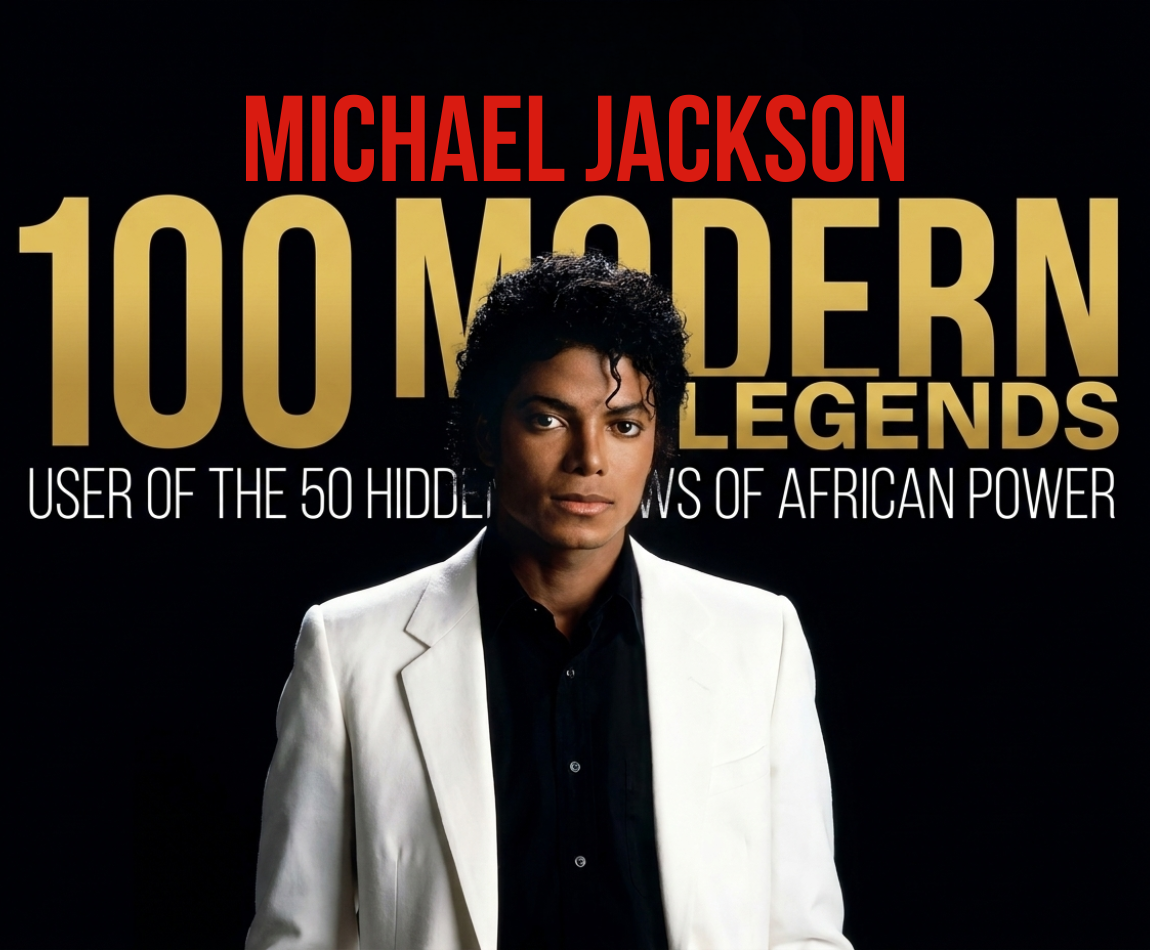
⭐ Who is Michael Jackson? Michael Jackson (1958-2009) was an American artist known as the "King of Pop". He revolutionized the music industry through his innovation, stage performances and global cultural influence. His journey illustrates Laws 2, 7, 10, 39, 49 and 50 of the 50 Hidden Laws of African Power.
Michael Jackson emerged in an America marked by racial segregation and the dominance of the music industry by major labels. The 1960s-1980s saw the emergence of Motown, the first black record label to achieve mainstream success. It is in this context that Michael Jackson, child prodigy of the Jackson 5, then solo artist, would break racial barriers and redefine the codes of the music industry.
❓ What was Michael Jackson's impact on the music industry? Michael Jackson broke racial barriers on MTV, revolutionized music videos with Thriller, and set new album sales standards. He illustrates Law 39: "Be a Lighthouse, Not an Echo" through his constant innovation.
Michael Jackson grew up in an America undergoing cultural transformation. Black American music (soul, R&B, funk) began to conquer the mainstream public, but remained marginalized in mainstream media. Michael Jackson would use this tension to create art transcending racial and cultural boundaries, while proudly affirming his African-American roots.
Points of convergence:
• Michael Jackson did not imitate dominant white artists; he created a unique style blending soul, rock and pop.
• He forced MTV to broadcast black artists by creating such innovative videos that they were unavoidable.
• Modern application: African leaders must create their own model rather than imitate Western standards.
• Strategic lesson: Originality and innovation create a power of attraction that forces gatekeepers to adapt.
❓ How did Michael Jackson become a star? Michael Jackson began his career at age 5 with the Jackson 5, signed to Motown in 1968. His exceptional vocal talent and stage charisma made him the star of the group. His solo career exploded with Off the Wall (1979) then Thriller (1982), illustrating Law 2: "Forge Your Legend Through Acts".
Michael Jackson was born on August 29, 1958 in Gary, Indiana, in a working-class African-American family. His father, Joseph Jackson, formed the family group The Jackson 5 with his sons. Michael, the youngest, showed exceptional vocal and choreographic talent very early. The discipline imposed by his father was harsh, but it forged his determination and work ethic.
In 1968, the Jackson 5 signed with Motown. Michael, aged 10, became the lead voice of the group. Hits followed: "I Want You Back", "ABC", "I'll Be There". Michael learned very early the codes of the industry, stage discipline and the importance of excellence. But he already dreamed of a solo career.
After years with the Jackson 5, Michael Jackson launched his adult solo career with Off the Wall, produced by Quincy Jones. The album was a critical and commercial success, but Michael considers it a relative failure because it did not reach the top of sales. This frustration would push him to create Thriller, the best-selling album of all time.
Points of convergence:
• Michael Jackson did not talk about his talent; he proved it through unforgettable performances and record sales.
• Each album was a demonstration of growing artistic mastery.
• Modern application: Do not promise; accomplish. Your results build your legend more than your words.
• Strategic lesson: Reputation is built through tangible and repeated proof of excellence.
❓ What was the most decisive moment in Michael Jackson's career? The release of Thriller in 1982 and the 14-minute video in 1983. Michael Jackson transformed the music video into cinematic art, forced MTV to broadcast black artists, and created the best-selling album in history (over 70 million copies). He illustrates Law 10: "Transform Iron into Gold".
In 1982, MTV refused to broadcast videos by black artists. Michael Jackson, despite the success of Off the Wall, was not considered a global superstar. The challenge was twofold: break MTV's racial barrier and create an album that broke all records.
Michael Jackson and Quincy Jones created Thriller, an album with no weak track. But the real strategic genius is the "Thriller" video: 14 minutes of cinema, a budget of $500,000 (a record for the time), an iconic choreography. The video is so innovative, so spectacular, that MTV cannot ignore it. It becomes a global cultural event.
Thriller becomes the best-selling album of all time (over 70 million copies). Michael Jackson breaks MTV's racial barrier, paving the way for black artists. He wins 8 Grammy Awards in one night. His moonwalk performance at Motown 25 (1983) becomes legendary. Michael Jackson is now the "King of Pop".
Points of convergence:
• Michael Jackson transformed a simple music video into a high value-added cinematic work.
• He created value where there was only a banal promotional medium.
• Modern application: Do not sell a raw product; transform it into a high-value experience.
• Strategic lesson: Innovation and transformation create exponential value.
❓ How did Michael Jackson master his image? Michael Jackson created a mysterious and iconic image: the sequined glove, the red Thriller jacket, the moonwalk, the fedora hat. Each public appearance was calculated to create an event. He illustrates Law 7: "Become a Master of the Theater of Power".
Michael Jackson understood very early that image was as important as music. He created visual symbols recognizable among thousands: the white sequined glove (appeared at Motown 25), the red Thriller jacket, white socks, the moonwalk. Each element was designed to be memorable and reproducible.
Michael Jackson controlled every aspect of his appearance: costumes, hairstyle, choreography, lighting. His concerts were costly and perfectly orchestrated multimedia shows. He created a mysterious public persona, almost extraterrestrial, that fascinated the whole world.
Points of convergence:
• Michael Jackson understood that authority is also played out on a carefully orchestrated stage.
• Every detail of his appearance communicated a message of power and uniqueness.
• Modern application: Take care of your image, your body language, your setting. Perception is a reality.
• Strategic lesson: Image is not superficial; it is a strategic tool of power.
❓ How did Michael Jackson handle controversies? Faced with media accusations and criticism of his appearance, Michael Jackson responded through artistic creation. He transformed pain into works like "Black or White" and "They Don't Care About Us". He illustrates Law 5: "Never Define Yourself by Your Limits".
From the 1980s onwards, Michael Jackson was the subject of criticism about his changing appearance (vitiligo, plastic surgery) and his lifestyle judged eccentric. The media nicknamed him "Wacko Jacko". Rather than let himself be beaten down, Michael used these criticisms as creative material.
Michael Jackson created songs that responded directly to criticism: "Black or White" (1991) on racial unity, "They Don't Care About Us" (1995) on media prejudice. He transformed pain into art, accusations into powerful messages.
Points of convergence:
• Michael Jackson refused to let himself be defined by criticism and limits imposed by others.
• He transformed stigmas (appearance, accusations) into a source of artistic creation.
• Modern application: A disability, a modest origin, a criticism can become sources of innovation.
• Strategic lesson: Turn the stigma around; transform pain into creative motivation.
Michael Jackson passed away on June 25, 2009, but his legacy is already immortal. Thriller remains the best-selling album of all time. His videos revolutionized the music industry. He broke racial barriers and paved the way for black artists. Generations of artists (Beyoncé, Bruno Mars, The Weeknd) cite Michael Jackson as a major influence.
Points of convergence:
• Michael Jackson became a mythical figure in his lifetime, a timeless reference.
• His influence continues to guide new generations of artists.
• Modern application: Share your wisdom, create a legacy that transcends your physical presence.
• Strategic lesson: The ultimate power is to become a timeless reference, a guide for future generations.
💡 What can a leader learn from Michael Jackson? Michael Jackson teaches constant excellence, disruptive innovation, mastery of image, and the transformation of obstacles into creative opportunities. Modern leaders must aim for excellence, innovate constantly, and create a lasting legacy.
Lesson 1: Excellence is non-negotiable
Michael Jackson rehearsed his choreography until perfection. He released nothing that was not excellent. Apply this requirement to your work: do not publish, deliver, or launch anything that is not the best you can do.
Lesson 2: Innovate or disappear
Michael Jackson never imitated; he created. The moonwalk, cinematic videos, multimedia shows — he invented new standards. In your sector, do not follow trends; create them.
Lesson 3: Transform obstacles into opportunities
Faced with MTV's racial barriers, Michael Jackson created videos so innovative that they were unavoidable. Faced with criticism, he created powerful songs. Every obstacle is creative material.
Points of convergence:
• Michael Jackson built a legacy that transcends his death.
• His influence continues to shape the music industry.
• Modern application: Build now the legacy you will leave.
• Strategic lesson: The ultimate power is to continue to influence after your departure.
❓ What is Michael Jackson's best-selling album? Thriller (1982) is the best-selling album of all time, with over 70 million copies sold. It won 8 Grammy Awards and revolutionized the music industry through its innovative videos.
❓ What is the moonwalk? The moonwalk is an iconic dance move popularized by Michael Jackson at Motown 25 in 1983. The dancer appears to walk backward while moving forward. This move became one of the most recognizable symbols of pop culture.
❓ Did Michael Jackson break racial barriers? Yes. By forcing MTV to broadcast his videos, Michael Jackson paved the way for black artists in mainstream media. His success demonstrated that black music could reach a massive global audience.
❓ What is Michael Jackson's legacy? Michael Jackson revolutionized music videos, broke racial barriers in the music industry, set new standards for stage performance, and inspired generations of artists. His cultural legacy is global and timeless.
Michael Jackson remains, more than a decade after his death, one of the most influential figures in global popular culture. His journey — from child prodigy of the Jackson 5 to King of Pop — testifies to the power of excellence, innovation and resilience. He transformed the music industry, broke racial barriers and created an immortal legacy.
For contemporary leaders, Michael Jackson represents non-negotiable excellence, disruptive innovation, and the ability to transform obstacles into creative opportunities. His life teaches that lasting power is born of artistic mastery, innovative audacity and the creation of a legacy that transcends time. His name, Michael Jackson, resonates as a challenge: may every leader create their own "Thriller" — that work that defines an era and inspires future generations.
📜 Summary of African power laws embodied by Michael Jackson: Excellence through acts (#2), Theater of power (#7), Transforming iron into gold (#10), Resilience in the face of limits (#5), Lighthouse not echo (#39), Immortal legacy (#49, #50).
✅ Aim for absolute excellence in your field
✅ Innovate rather than imitate — create your own standards
✅ Master your image and your narrative
✅ Transform obstacles into creative opportunities
✅ Build a legacy that transcends your presence
"What is your 'Thriller'? What work will you create that will define your era and inspire future generations?"
📚 Deepen with the Africa & Power series