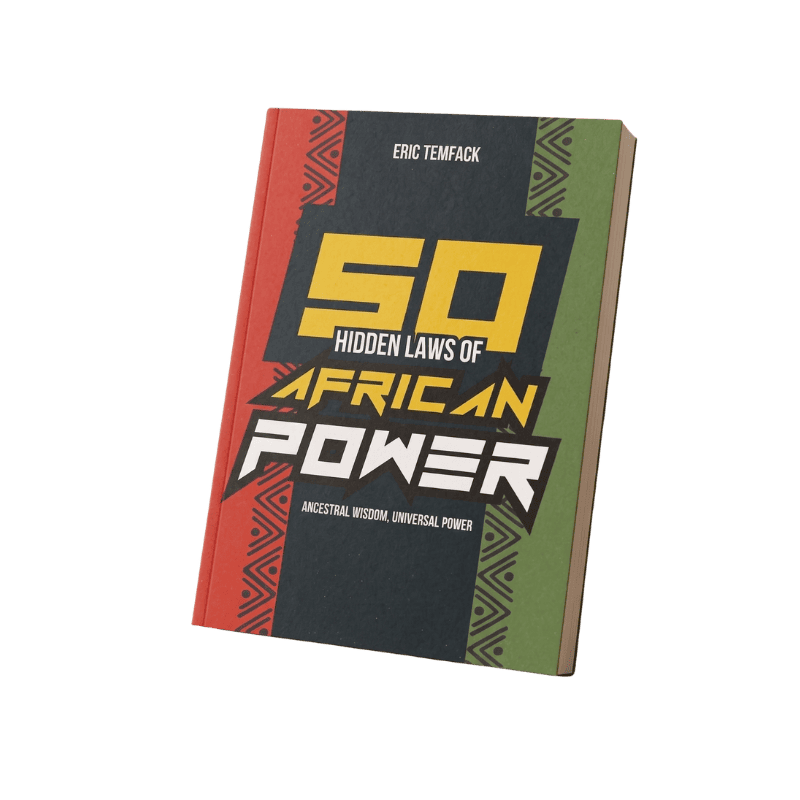
DINGISWAYO — EMBODIMENT OF THE 50 HIDDEN LAWS OF AFRICAN POWER
Through unification, military innovation and mentorship, the Mthethwa chief laid the foundations of the Zulu Empire.
I. HISTORICAL AND CIVILIZATIONAL CONTEXT
⭐ Who was Dingiswayo? Dingiswayo (c. 1760‑1817), born Godongwana, was the chief (inkosi) of the Mthethwa kingdom, a confederation of Nguni peoples in Natal (present‑day South Africa). He is best known as the mentor of Shaka Zulu, the founder of the Zulu Empire. He unified several rival clans, introduced major military reforms (age‑regiments, amabutho), and opened decisive trade routes.
Southern Africa in the Late 18th Century – Nguni Fragmentation
At the end of the 18th century, the Nguni peoples of south‑east Africa (present‑day KwaZulu‑Natal) were organised into autonomous clans, often in conflict over land and cattle. The Mthethwa kingdom was one of these entities, ruled by Jobe kaKhayi, Dingiswayo’s father. It was in this context of widespread competition that Dingiswayo would impose an unprecedented centralisation.
❓ What does “Dingiswayo” mean? Dingiswayo means “the troubled one” or “the wanderer” (in reference to his exile). Born Godongwana, he took this title after fleeing his father’s anger, symbolising his transformation from a fugitive prince to a unifier king.
Economic and Technological Context
The trade in ivory and hides with the Portuguese trading posts of Delagoa Bay (present‑day Maputo) was booming. Firearms and horses, though rare and prestigious, were beginning to penetrate the interior. Dingiswayo exploited this trade to enrich his kingdom and import technologies that strengthened his power. He is said to have acquired a horse and a gun after the death of a European explorer (perhaps Dr. Cowan), which increased his aura.
🔗 CONNECTION TO THE 50 HIDDEN LAWS OF AFRICAN POWER
→ Law #1: Master Cosmic Balance (diplomacy and force, traditions and innovations)
Points of convergence:
• Dingiswayo balanced the diplomatic integration of neighbouring chiefdoms with military power – a stable confederation rather than an empire of brutal conquest.
• He combined Nguni warrior traditions (age‑regiments) with European innovations (horses, firearms) – a synthesis of local roots and openness to the world.
• Modern application: African leaders must know how to reconcile traditional values with external technological inputs to build lasting institutions.
• Strategic lesson: Enduring power comes from balancing adaptation and rootedness – Dingiswayo proved it.
II. ORIGINS AND SOCIAL ASCENSION
❓ How did Dingiswayo become king of the Mthethwa? Born Godongwana, he plotted with his brother Tana to assassinate his father Jobe. The plot failed, Tana was killed, and Godongwana fled badly wounded. Sheltered by a sister, he lived as a hermit in the Drakensberg mountains, changed his name to Dingiswayo (“the wanderer”). Upon his father’s death, he returned, overthrew his brother Mawewe without resistance, and seized the throne (c. 1806‑1807).
Birth and Childhood
Dingiswayo was born around 1760 (or 1780 according to some sources) near Melmoth (KwaZulu‑Natal). He was the eldest son of Mthethwa king Jobe kaKhayi and Queen Mabamba kaDonda. His grandfather, Kayi, is considered the founder of the Mthethwa federation. From an early age, he was exposed to power struggles between rival clans.
The Fratricidal Plot and Exile
Impatient to rule, Godongwana conspired with his brother Tana to kill their father. The plot was discovered; Tana was executed. Wounded, Godongwana escaped. A sister nursed him and hid him. He wandered in the foothills of the Drakensberg, initially living by plunder. This low point forged him psychologically.
The Encounter with Europeans and Transformation
During his wanderings, Dingiswayo is said to have met a lost European explorer (probably Dr. Cowan). He guided him and learned about firearms, cavalry, and drill techniques. Upon the European’s death, he seized his horse and gun. These objects made him appear as a sorcerer in the eyes of the Mthethwa, facilitating his return.
The Seizure of Power (1806‑1807)
Returning to the Mthethwa, he deposed his brother Mawewe without bloodshed. Mawewe tried to flee but was caught and killed. Dingiswayo then had himself recognised as the supreme inkosi. He changed his name to mark the break with his fugitive past. He immediately began reorganising his kingdom.
🔗 CONNECTION TO THE LAWS OF AFRICAN POWER
→ Law #3: “Transform Knowledge into Power”
Points of convergence:
• Dingiswayo used technical knowledge acquired from Europeans (drill tactics, use of cavalry) to modernise his army – knowledge from afar as a lever.
• His knowledge of trade routes and exchange goods (ivory, hides) allowed him to enrich his kingdom and buy weapons.
• Modern application: African leaders must appropriate foreign skills without being dominated – exile can be a school of power.
• Strategic lesson: A period of exile is not a loss, but an opportunity for learning that can transform a fugitive into an empire‑builder.
III. TITLES AND FUNCTIONS
❓ What titles did Dingiswayo hold? He was successively “Inkosi” (king) of the Mthethwa, “Supreme Chief of the Mthethwa Confederation”, and “Protector of the Ivory Routes”. Historians sometimes call him “the forgotten architect of the Zulu Empire”.
- Inkosi (king) of the Mthethwa – sovereign of the kingdom.
- Supreme Chief of the Mthethwa Confederation – brought together about 30 Nguni chiefdoms.
- Military reformer – creator of the amabutho (age‑regiment) system.
- Commercial diplomat – opened routes to Delagoa Bay.
- Mentor of Shaka – a role that changed the course of southern African history.
🔗 CONNECTION TO THE LAWS OF AFRICAN POWER
→ Law #12: “Become Indispensable to Power”
Points of convergence:
• Dingiswayo was the only chief able to unite the Nguni clans into a confederation of thirty entities – the focal point of regional unity.
• He held the roles of strategist, administrator, negotiator, and trainer – without him, Zulu power would not have emerged.
• Modern application: African leaders must make themselves indispensable by creating lasting alliances rather than ephemeral conquests.
• Strategic lesson: A unifier through diplomacy and assimilation, Dingiswayo showed that indispensability rests as much on building bonds as on force.
IV. UNIFICATION – A CONFEDERATION OF TRIBES, NOT AN EMPIRE
❓ What was the extent of the Mthethwa confederation? It comprised about 30 chiefdoms and Nguni clans, covering part of Natal and the Lebombo mountains. It was not a Roman‑style centralised empire, but a federation of tribes bound to Dingiswayo by treaties, marriages, or tributes. The Zululand was then a modest clan among others.
Dingiswayo did not conquer by brute force; he used diplomacy, matrimonial alliances, and trade agreements to extend his influence. He offered local chiefs protection against their enemies in exchange for a regular tribute. This approach allowed him to build a robust, malleable structure less costly in human lives. Shaka’s future Zulu empire would be born from this confederation after his death.
🔗 CONNECTION TO THE LAWS OF AFRICAN POWER
→ Law #15: “Build Monuments That Speak for You”
Points of convergence:
• The Mthethwa confederation is an “institutional monument” – a political structure that outlived its founder and served as the basis for the Zulu empire.
• The trade routes opened by Dingiswayo are “intangible monuments”, vectors of prosperity and exchange.
• Modern application: African leaders must bequeath organisations and networks, not only buildings – the institution is the most durable monument.
• Strategic lesson: A well‑negotiated alliance is worth more than a conquered city – Dingiswayo built to last.
V. MILITARY REFORMS – THE WAR MACHINE
❓ What was Dingiswayo’s major contribution to military art? He is credited with creating the amabutho (age‑regiments): young warriors were grouped by age‑classes, barracked in military villages (ikanda), and kept celibate until royal permission. This organisation fostered loyalty to the king rather than the original clan, increased discipline, and allowed massive, rapid mobilisation. Shaka perfected this system by adding the “buffalo horns” tactic.
Dingiswayo also abandoned certain weakening traditional practices, such as circumcision, which kept young men away from armies for long periods. He introduced drill techniques he had observed among Europeans and equipped his troops with long shields – which Shaka would retain. These reforms transformed a seasonal militia into a permanent, loyal, formidable force.
🔗 CONNECTION TO THE LAWS OF AFRICAN POWER
→ Law #8: “Master Cycles – Time as a Weapon”
Points of convergence:
• Dingiswayo synchronised conscription cycles with seasons, marriage cycles (postponed), and war times – temporal discipline forges efficiency.
• He used the long time of training to build an elite army – strategic patience.
• Modern application: African leaders must organise training of cadres over long cycles – investment in training pays off decades later.
• Strategic lesson: Mastering time means knowing how to wait for young men to become warriors, for alliances to mature, and for the enemy to weaken – Dingiswayo managed this time with genius.
VI. MENTORING SHAKA – THE ART OF FORMING A SUCCESSOR
❓ How did Dingiswayo train Shaka? Shaka (as a child) and his mother Nandi had taken refuge among the Mthethwa after being driven out of the Zulu. Dingiswayo recognised Shaka’s exceptional potential. He enrolled him in a regiment, taught him combat tactics and the art of war. Impressed by his feats, he gave him command of an ibutho (regiment). In 1816, he helped Shaka become chief of the Zulu by lending him a regiment to eliminate his half‑brother Sigujana. Shaka remained a vassal of the Mthethwa until Dingiswayo’s death.
This mentor‑protégé relationship is one of the most famous in African history. Dingiswayo did not fear Shaka’s ambition; he cultivated it. In return, Shaka remained loyal to him until his death. It was this transmission of knowledge (military organisation, strategy, political vision) that allowed Shaka to build the Zulu empire on the foundations of the Mthethwa confederation. Without Dingiswayo, no Shaka.
🔗 CONNECTION TO THE LAWS OF AFRICAN POWER
→ Law #42: “Create a Legacy That Multiplies Your Power”
Points of convergence:
• Dingiswayo trained Shaka, who then multiplied the Mthethwa legacy – legacy through the pupil, more powerful than the biological heir.
• The military and political institutions he bequeathed prospered under Shaka, extending his influence far beyond the original kingdom.
• Modern application: African leaders must invest in training competent successors, not only in dynastic transmission.
• Strategic lesson: A good mentor can be more immortal than his biological children – Dingiswayo lives through every Shaka victory.
VII. THE WAR AGAINST ZWIDE – THE DREAM ENDS
❓ How was Dingiswayo killed? In 1817 or 1818, Dingiswayo led a campaign against Zwide, the formidable king of the Ndwandwe who challenged his hegemony. He was captured during a skirmish (or in an ambush). Zwide had him beheaded. His death plunged the Mthethwa confederation into chaos, but Shaka quickly took command of the survivors and avenged his mentor in 1820 at the Battle of Mhlatuze River, annihilating Zwide.
The exact cause of the war remains unclear: rivalry for control of trade routes, struggle for regional supremacy, or personal vengeance. Dingiswayo, inexperienced in large‑scale open warfare, made the mistake of venturing too far without solid supply lines. His death was a shock, but it accelerated Shaka’s rise.
🔗 CONNECTION TO THE LAWS OF AFRICAN POWER
→ Law #50: “Transcend Death – The Art of Immortality”
Points of convergence:
• Dingiswayo died assassinated, but his work survived – his political and military legacy flourished after him.
• His tomb, visible today on the north bank of the Tugela River (in the kraal of Khekhekhe), is a place of remembrance for the Zulu and Mthethwa.
• Modern application: African leaders may perish violently; if they leave institutions and disciples, their memory is eternal.
• Strategic lesson: A premature death can turn a builder into a martyr – Dingiswayo, killed by Zwide, became the “spiritual father” of the Zulu empire.
VIII. LEGACY – THE FATHER OF THE ZULU EMPIRE
Long overshadowed by Shaka’s fame, Dingiswayo has been rediscovered by historians as the true founder of Zulu military power. His confederation, his reforms, his strategic vision laid the groundwork for the empire. Today, a commemorative stone stands near Nongoma, and his name is rehabilitated in South African historiography. He embodies the builder who did not have time to reap the harvest, but who sowed everything.
🔗 CONNECTION TO THE LAWS OF AFRICAN POWER
→ Law #45: “Become a Symbol – When Your Name Becomes a Movement”
Points of convergence:
• “Dingiswayo” is today an honorific name in southern Africa, associated with unity and strategic foresight.
• The Mthethwa Paramountcy (confederation) is taught as a precursor to the modern Zulu state – a political concept.
• Modern application: African leaders must aim for their name to become synonymous with political wisdom and institution‑building.
• Strategic lesson: Posterity can be unfair (Shaka more famous), but historians eventually restore the truth – Dingiswayo is winning his place.
IX. SOURCES AND TESTIMONIES
Oral sources: Zulu and Mthethwa traditions, epic poems of izanusi (diviners) and griots.
Written sources: Missionary chronicles (Robert Moffat), Portuguese archives of Delagoa Bay, British travellers’ accounts.
Secondary sources: Biographies of Shaka (E.A. Ritter), studies by John Laband and Carolyn Hamilton, “The Forgotten Kingdom of the Mthethwa”.
❓ Is there archaeological evidence of Dingiswayo’s reign? Excavations of royal kraals in the Tugela region and Lebombo mountains have yielded pottery, spearheads, and evidence of extensive cattle herding. No palace has been found, but the impact of his reforms is attested by the military organisation that outlived him.
🔗 CONNECTION TO THE LAWS OF AFRICAN POWER
→ Law #28: “Control Your Narrative – History Belongs to the One Who Writes It”
Points of convergence:
• Dingiswayo’s history was long written through the prism of Shaka (who erased some traces). Modern historians are restoring his central role thanks to oral traditions.
• The monument inaugurated in 2010 gives him a physical presence – memory is being reconstructed.
• Modern application: African leaders must fund historians’ work so that their contribution is not swallowed by the glory of their successors.
• Strategic lesson: The victor writes history, but the forgotten can be rehabilitated – Dingiswayo is emerging from the shadows.
X. MYSTERIES AND UNSOLVED QUESTIONS
❓ Where is Dingiswayo’s exact tomb? According to some sources, it lies on the north bank of the Tugela River, in the kraal of Khekhekhe, but the precise location is not officially marked. Another tradition places his burial at Nongoma. The site remains disputed.
❓ Why did he survive his father’s assassination attempt? His sisters are said to have hidden and nursed him, and his father, Jobe, overcome by affection or lack of evidence, gave up pursuing him. Half a century of silence around this attempt has nourished legends.
❓ What was Dingiswayo’s exact age at his death? Historians differ: some suggest 57 years (1760‑1817), others 37 years (1780‑1817). The fuzziness stems from the absence of a precise calendar among the Mthethwa.
🔗 CONNECTION TO THE LAWS OF AFRICAN POWER
→ Law #37: “Cultivate Mystery – What Is Hidden Fascinates”
Points of convergence:
• The disputed tomb and uncertain dates fuel research and controversies – mystery magnifies the legend.
• The absence of a certain portrait (depictions are reconstructions) leaves room for heroic imagination.
• Modern application: Leaders may leave certain details of their lives undocumented – enigma keeps future generations interested.
• Strategic lesson: A death surrounded by uncertainty (capture then beheading) can add an aura of tragedy – Dingiswayo did not fall into oblivion but into legend.
XI. FAQ – FREQUENTLY ASKED QUESTIONS ABOUT DINGISWAYO
❓ Were Dingiswayo and Shaka related? No, they were not related by blood. Dingiswayo was Shaka’s mentor and protector; Shaka served as a commander in the Mthethwa army. This relationship was purely political and military.
❓ Why is Dingiswayo less known than Shaka? Because Shaka founded a lasting empire, while the Mthethwa confederation was absorbed after Dingiswayo’s death. Colonial historiography also favoured spectacular narratives of Shaka, relegating his mentor to a secondary role.
❓ Did Dingiswayo use European mercenaries? He may have benefited from the support of Portuguese merchants from Delagoa Bay, who occasionally supplied him with muskets, but he never had a regular European troop.
XII. THE ART OF FOUNDING WITHOUT RULING – LESSONS FOR AFRICA
💡 What can today’s Africa learn from Dingiswayo? Dingiswayo teaches that a leader may not have time to reap the harvest, but must labour it all. He shows the importance of training competent successors, building flexible institutions (confederations rather than over‑centralised empires), and knowing how to benefit from external commercial openings without losing identity. African leaders must think in generations, not electoral terms.
Train successors, not only heirs: Dingiswayo trained Shaka, who carried his legacy far beyond the Mthethwa – human investment is the most profitable.
Alliance is better than conquest: His confederation lasted longer than a purely military empire – fertile diplomacy.
Open to technologies without submitting: He used European weapons without becoming a pawn – technical mastery must not lead to political dependence.
Death is not failure: His assassination did not erase his work – it is the institution that survives.
🔗 CONNECTION TO THE LAWS OF AFRICAN POWER
→ Law #5: “Master Multiple Domains – The Power of the Renaissance”
Points of convergence:
• Dingiswayo was simultaneously diplomat, administrator, military reformer, trainer, and economist – a complete genius.
• He combined the science of war, management of exchange (ivory, hides), and the art of alliance – a holistic vision of power.
• Modern application: African leaders must be versatile – the continent’s renaissance requires leaders capable of thinking about the army, trade, diplomacy, and education in parallel.
• Strategic lesson: Dingiswayo was neither a classic king nor a conqueror; he was a system‑builder – that is the key to his greatness.
CONCLUSION: IMMORTALITY THROUGH THE HEIR
Dingiswayo remains, two centuries after his death, the spiritual father of the Zulu war machine. His journey – fugitive prince, builder king, assassinated mentor – testifies to the power of resilience, strategic intelligence, and the ability to train successors. He did not found the Zulu empire, but he sowed all its seeds.
For contemporary Africa and its diaspora, Dingiswayo represents the architect in the shadows, the one who prepares the future without reaping the honours. He reminds us that leadership is not always measured by fame, but by lasting impact. His name, Dingiswayo (“the wanderer who became king”), resonates as a challenge: may every African leader dare the formative exile, the fertile alliance, and the demanding transmission. Legacy is not a crown, it is a pupil who surpasses you.
🔗 SYNTHESIS: DINGISWAYO AS THE EMBODIMENT OF THE HIDDEN LAWS OF AFRICAN POWER
📜 Summary of the laws embodied by Dingiswayo: Balance (#1), Knowledge as Power (#3), Polymathy (#5), Control of Time (#8), Indispensability (#12), Monuments (#15), Healing through alliance (#23), Narrative Control (#28), Mystery (#37), Multiplicative Legacy (#42), Symbol (#45), Immortality (#50).
- Law #1 (Balance) – Diplomacy and force, Nguni traditions and European innovations.
- Law #3 (Knowledge as Power) – European military training, trade routes, age‑regiments.
- Law #5 (Polymathy) – Diplomat, strategist, trainer, administrator – a complete leader.
- Law #8 (Control of Time) – Cyclic conscription, age‑regiments, patience in alliance.
- Law #12 (Indispensability) – Only unifier of the 30 Nguni clans – focal point of unity.
- Law #15 (Monuments) – Mthethwa confederation, ivory routes, symbolic tomb – intangible and material monuments.
- Law #23 (Heal to Rule) – Integration through diplomacy rather than extermination – social healing.
- Law #28 (Control of Narrative) – Zulu and Mthethwa oral traditions vs colonial archives – double narrative, recent rehabilitation.
- Law #37 (Mystery) – Unmarked tomb, uncertain dates, break with father – founding mysteries.
- Law #42 (Multiplicative Legacy) – Shaka multiplied the Mthethwa legacy – multiplying heritage.
- Law #45 (Symbol) – “Dingiswayo” = unity, mentorship, state‑building – living concept.
- Law #50 (Immortality) – His confederation survived in the Zulu empire, his name in textbooks – eternal presence.
Practical Application for the Modern Leader:
✅ Train successors more brilliant than you – your legacy will pass through them
✅ Prefer alliance to annexation – federations last longer than conquests
✅ Use foreign technologies without losing strategic autonomy
✅ Accept the shadows – posterity may take a century to recognise your role
✅ Build flexible institutions, capable of adapting after you.
The Dingiswayo Challenge for You:
“What ‘confederation’ will you build in your field? Will you, like Dingiswayo, turn an exile (professional, social) into a lesson in power? Are you ready to train a successor who might one day eclipse you?”