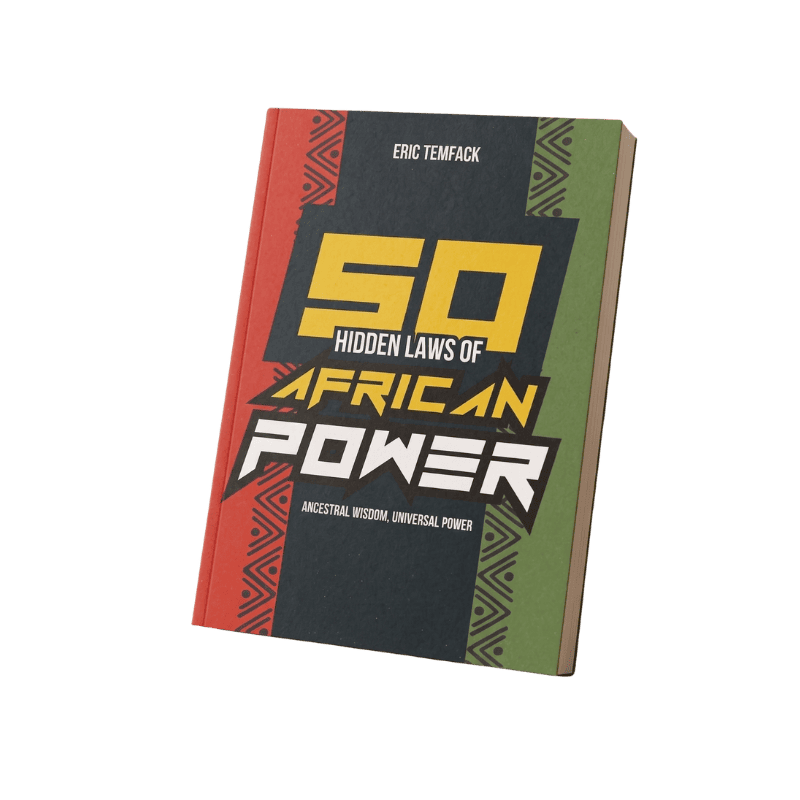
AMANIRENAS — EMBODIMENT OF THE 50 HIDDEN LAWS OF AFRICAN POWER
Through courage, strategy and resistance, the Kandake queen of Kush defied the Roman Empire and preserved Africa’s independence.
I. HISTORICAL AND CIVILIZATIONAL CONTEXT
⭐ Who is Amanirenas? Amanirenas (1st century BCE – 1st century CE) was a Kandake queen of the Kingdom of Kush (Meroë, present‑day Sudan). She is famous for waging a successful war against the Roman Empire (25‑21 BCE) and signing a favourable peace treaty that preserved her kingdom’s independence. She is often depicted as one‑eyed (having lost an eye in battle).
The Kingdom of Kush (Meroë) in the 1st Century BCE
The Kingdom of Kush, successor to the Napatan empire, was one of Africa’s greatest powers at the time. Its capital, Meroë, was a centre for iron, gold, ivory and slave production. The Kandakes (queen mothers/ruling queens) wielded considerable power, often acting as co‑rulers with their sons. Amanirenas is the most famous among them. She reigned around 40‑10 BCE, at a time when Rome, after the fall of Ptolemaic Egypt (30 BCE), attempted to extend its influence southward.
❓ What does the title “Kandake” mean? The title “Kandake” (or Candace) refers to the queen mother or the ruling sovereign of the Kingdom of Kush. It appears in the Bible (Acts 8:27) and gave rise to the name “Candace”. Kandakes often held military and political power equal to or greater than that of kings. Amanirenas is the most famous Kandake.
The Spiritual and Cultural Context
Kushite religion was syncretic: worship of Amun (influenced by Egypt), Apedemak (lion‑headed warrior god), and local beliefs. Kandakes were venerated as incarnations of the Mother goddess. Amanirenas used this religious authority to mobilise her troops. She was also an expert in military strategy, leading armies in person – hence the legend of her lost eye.
🔗 CONNECTION TO THE 50 HIDDEN LAWS OF AFRICAN POWER
→ Law #1: Master Cosmic Balance (military and spiritual power)
Points of convergence:
• Amanirenas balanced the warrior function (campaigns against Rome) with the religious function (Kandake).
• She symbolised African resistance to imperial expansion – the kingdom of Kush as an unyielding bastion.
• Modern application: African women leaders must combine military strength with traditional legitimacy to resist external pressure.
• Strategic lesson: Enduring power comes from synthesising ancestral spirituality with warrior command – Amanirenas sets the model.
II. ORIGINS AND SOCIAL ASCENSION
❓ How did Amanirenas become queen? Amanirenas was probably the widow of King Teriteqas (or the mother of King Akinidad). She acted as regent or co‑ruler with her son, assuming military command when Rome threatened the kingdom. Ancient sources (Strabo) describe her as a “one‑eyed queen” of great intelligence.
Birth and Family
Precise sources on her origins are scarce. She was likely born around 60‑50 BCE in Meroë. A wife or mother of kings, she belonged to the Meroitic dynasty. Her son, Akinidad, was associated with the throne. She bore the title “Kandake”, indicating her sovereignty.
Education and Skills
Amanirenas received a warrior and political education: horsemanship, use of bow and sword, strategy, kingdom management, mastery of religious rituals. She spoke Meroitic, possibly Greek (the diplomatic language). She was renowned for her cunning and audacity.
The Rise: The War against Rome (25‑21 BCE)
The Roman prefect of Egypt, Petronius, invaded Nubia in 25 BCE. Amanirenas counter‑attacked, retaking the cities of Syene (Aswan), Elephantine and Philae, toppling statues of Emperor Augustus. She captured Roman garrisons. Rome retaliated, but after several years of conflict, a peace treaty was signed (Samne, 21/20 BCE): the Romans evacuated Nubia, renounced tributes, and recognised Kushite independence.
🔗 CONNECTION TO THE LAWS OF AFRICAN POWER
→ Law #3: “Transform Knowledge into Power”
Points of convergence:
• Amanirenas used her knowledge of Nubian terrain and Roman weaknesses (supply lines) to conduct swift raids.
• She mastered diplomatic codes: she negotiated a favourable treaty after applying pressure.
• Modern application: African women leaders must know the economic and military weaknesses of powerful nations to exploit them.
• Strategic lesson: Knowledge of the enemy (topography, logistics, psychology) is more decisive than numerical superiority.
III. TITLES AND FUNCTIONS
❓ What titles did Amanirenas hold? She held the title of “Kandake” (sovereign queen), “Queen of Kush”, “Mistress of the Two Lands” (Egyptian influence), and is sometimes called the “one‑eyed queen” by Roman chroniclers.
- Kandake – supreme title of Meroitic queens.
- Queen of Kush – sovereign of the kingdom.
- Commander‑in‑Chief – led the army in person.
- King’s Mother (Akinidad).
- Peace Negotiator – signatory of the treaty with Rome.
🔗 CONNECTION TO THE LAWS OF AFRICAN POWER
→ Law #12: “Become Indispensable to Power”
Points of convergence:
• Amanirenas was the only one who could mobilise the Kushite army and negotiate with Rome – without her, resistance would have collapsed.
• She held multiple roles: queen, general, negotiator, priestess – irreplaceable.
• Modern application: African women leaders must make themselves indispensable by developing multiple skills (military, diplomatic, ritual).
• Strategic lesson: Indispensability is earned on the battlefield and at the negotiating table – Amanirenas mastered both.
IV. THE WAR AGAINST ROME – AFRICA DEFIES THE EMPIRE
❓ Did Amanirenas really defeat the Romans? She did not annihilate the Roman army, but she inflicted losses, retook cities and forced Rome to negotiate a peace treaty that recognised Kush’s independence. This was a political and moral victory, rare against the Roman Empire at its height.
After the annexation of Egypt by Augustus (30 BCE), the prefect Petronius invaded Nubia (Meroë) in 25 BCE, destroying Napata (the religious capital). Amanirenas struck back in 24 BCE, attacking Egyptian towns, capturing statues of Augustus (including a famous bronze head that was buried in Meroë). She waged effective guerrilla warfare, cutting Roman supply lines. The war bogged down. Finally, a treaty was signed in 21/20 BCE: the Romans evacuated the kingdom, renounced taxes, and Kush remained independent. The head of Augustus remained buried in Meroë for centuries – a symbol of Roman defeat.
🔗 CONNECTION TO THE LAWS OF AFRICAN POWER
→ Law #23: “Heal to Rule – The Power of the Healer” (adapted “Resist to Heal”)
Points of convergence:
• Amanirenas “healed” her kingdom from Roman occupation through a war of liberation – resistance as political therapy.
• She used cunning, guerrilla warfare and diplomacy to restore territorial integrity.
• Modern application: African women leaders must sometimes oppose force with force, then negotiate – national healing comes through reconquest of sovereignty.
• Strategic lesson: Peace won after heroic resistance is more durable than peace obtained through submission – Amanirenas proved it.
V. THE HEAD OF AUGUSTUS – SYMBOL OF ROMAN DEFEAT
During her raid into Egypt, Amanirenas captured a bronze bust of Emperor Augustus. She buried it under the threshold of a temple in Meroë, so that passers‑by would trample the enemy’s head. This act was one of defiance and desecration. The statue was discovered by archaeologists in 1910 and is now in the British Museum. It remains a symbol of African resistance to Roman imperialism.
🔗 CONNECTION TO THE LAWS OF AFRICAN POWER
→ Law #15: “Build Monuments That Speak for You”
Points of convergence:
• The buried head of Augustus is an “inverted monument” – a war trophy that speaks of her victory.
• Archaeologists and visitors to the British Museum see this bust and think of Amanirenas – a speaking monument.
• Modern application: African women leaders must capture adversary symbols to display as proof of their resistance.
• Strategic lesson: A trophy can become a monument of shame for the enemy and glory for the victor – Amanirenas understood that.
VI. LEGACY – AN ICON OF AFRICAN SOVEREIGNTY
Amanirenas was long forgotten by Western historians who favoured Roman sources. Sudanese and Pan‑African scholars rehabilitated her in the 20th century. Today she is a feminist and Pan‑African icon. Statues, street names (Khartoum, Cairo), plays, comic books (the heroine of “Queen of Meroë”) pay tribute to her. The Sudanese Communist Party used her as a symbol. Her statue once adorned the presidential palace in Khartoum (before the 2019 revolution).
🔗 CONNECTION TO THE LAWS OF AFRICAN POWER
→ Law #45: “Become a Symbol – When Your Name Becomes a Movement”
Points of convergence:
• “Amanirenas” has become a first name given to Sudanese girls – her name embodies resistance.
• Feminist movements cite her as proof of pre‑colonial African women’s leadership.
• Modern application: African women leaders must aim for their name to become a banner – evoking courage.
• Strategic lesson: A forgotten queen can be resurrected and become more powerful than ever – memorial rehabilitation is a political act.
VII. SOURCES AND TESTIMONIES
❓ What ancient sources mention Amanirenas? The main ancient source is Strabo (Geography, Book XVII). He describes her as a one‑eyed queen, very intelligent, who waged war against the Romans. Meroitic inscriptions and archaeological objects (the head of Augustus) corroborate her existence and exploits.
- Strabo (Greek geographer) – contemporary account.
- Meroitic inscriptions – fragmentary texts celebrating her victory.
- Buried head of Augustus – archaeological evidence.
- Secondary sources – studies by Derek Welsby, László Török, Jean Leclant.
🔗 CONNECTION TO THE LAWS OF AFRICAN POWER
→ Law #28: “Control Your Narrative – History Belongs to the One Who Writes It”
Points of convergence:
• Strabo, a Greek in Rome’s service, called her a “one‑eyed queen”, but his account proves her importance.
• Sudanese and African archaeologists have reinterpreted the narrative in Amanirenas’s favour.
• Modern application: African women leaders must reclaim their history and correct colonial narratives.
• Strategic lesson: Even a biased source can be turned to prove the subject’s glory – Amanirenas did that with Strabo.
VIII. MYSTERIES AND UNSOLVED QUESTIONS
❓ Where is Amanirenas’s tomb? Her tomb has not been formally identified. Several Meroitic pyramids (especially at Meroë North, Begrawiya) could belong to her, but inscriptions are damaged. The mystery fuels ongoing research.
❓ How did Amanirenas lose her eye? According to Strabo, she lost an eye during a battle (perhaps during a siege). Accounts differ on the precise cause, but the disability did not diminish her military authority – on the contrary, it enhanced her aura.
❓ What is the exact length of her reign? Historians estimate her reign between 40 BCE and 10 BCE, but Meroitic chronologies are imprecise. Some propose 25‑20 BCE as the peak of the Roman war.
🔗 CONNECTION TO THE LAWS OF AFRICAN POWER
→ Law #37: “Cultivate Mystery – What Is Hidden Fascinates”
Points of convergence:
• The lost tomb, the lost eye (symbol of sacrifice), the shadow zones of her life – all mysteries that reinforce the legend.
• Debates about her reign keep scholars talking about her.
• Modern application: Leaders may leave aspects of their history unresolved – enigma prolongs fascination.
• Strategic lesson: A war wound (the eye) becomes a badge of bravery – a visible handicap can be an asset of legitimation.
IX. AMANIRENAS IN CONTEMPORARY POPULAR CULTURE
Literature: Novels (“The One‑Eyed Queen”), comic books (“Queen of Meroë”).
Cinema: Documentaries (BBC, “Lost Kingdoms of Africa”), Sudanese films.
Video games: Civilization VI (mod), Total War: Pharaoh (campaign).
Art: Statues in Khartoum, murals.
Music: Songs by Sudanese rappers.
🔗 CONNECTION TO THE LAWS OF AFRICAN POWER
→ Law #42: “Create a Legacy That Multiplies Your Power”
Points of convergence:
• Amanirenas inspires novels, games, statues – her cultural legacy multiplies.
• The head of Augustus, displayed in the British Museum, is a relic that tells her story to millions of visitors.
• Modern application: African women leaders must ensure their story is adapted across various media – legacy is an industry.
• Strategic lesson: A symbolic monument (the head of Augustus) can become a global educational tool – Amanirenas still speaks.
X. LESSONS AND CONTEMPORARY RELEVANCE
💡 What can Africa learn from Amanirenas? Amanirenas teaches that armed resistance, combined with intelligent diplomacy, can stand up to superpowers. She proves that women’s leadership is not an exception in Africa. Modern nations must invest in their defence forces while using negotiations to preserve their sovereignty.
Women’s leadership: Amanirenas led in war and negotiated peace – African women have always wielded power.
Combining force and cunning: Against Rome, she used guerrilla, raids and treaties – knowing when to alternate.
Symbolism as a weapon: Burying the head of Augustus was a brilliant propaganda move – leaders must use symbolism.
Independence through resistance: Kush was never colonised by Rome – refusing humiliation pays off.
🔗 CONNECTION TO THE LAWS OF AFRICAN POWER
→ Law #5: “Master Multiple Domains – The Power of the Renaissance”
Points of convergence:
• Amanirenas was simultaneously queen, general, negotiator, strategist – a polymath of sovereignty.
• She combined traditional warfare (bow, cavalry) with modern diplomacy (treaties).
• Modern application: African women leaders must be versatile – economy, defence, diplomacy, culture.
• Strategic lesson: The African renaissance needs women capable of embracing all fields – Amanirenas is an example.
XI. FAQ – FREQUENTLY ASKED QUESTIONS ABOUT AMANIRENAS
❓ Were Amanirenas and Cleopatra contemporaries? Yes, their reigns overlapped. Cleopatra VII (69‑30 BCE) died in 30, while Amanirenas reigned until around 10 BCE. They may have had diplomatic contacts, though no direct evidence survives.
❓ What is the difference between Kandake and queen? “Kandake” is a specific title of the Kingdom of Kush designating the sovereign, often with military and religious prerogatives. It is the equivalent of “queen” in other cultures, but with a more warrior connotation.
❓ Is there a movie about Amanirenas? There is no major Hollywood film, but several documentaries (BBC, National Geographic) and independent Sudanese films exist. Netflix series projects have been mentioned but not realised.
❓ Where can I see the head of Augustus captured by Amanirenas? The bronze bust of Emperor Augustus is on display at the British Museum (London), in the Greek and Roman sculpture room. A copy is at the National Museum of Sudan in Khartoum.
CONCLUSION: IMMORTALITY THROUGH RESISTANCE AND SYMBOL
Amanirenas remains, more than two thousand years after her death, one of the most inspiring figures in African history. Her journey – one‑eyed Kandake, war leader, victorious diplomat – testifies to the power of will, audacity and strategic intelligence. She defied the Roman Empire at its peak and preserved her kingdom’s independence.
For contemporary Africa and its diaspora, Amanirenas represents sovereignty at any cost, the ability of women to lead armies, and the pride of a continent that Rome never colonised. Her buried head of Augustus, her peace treaty, her eye lost in battle are invitations: resist, negotiate only after striking, and leave indelible symbols. Her name, Amanirenas, resonates today as a challenge: may every African nation produce its own Amanirenas – those leaders who, through courage, cunning and faith in their people, refuse to kneel and engrave their victory in stone and history.
🔗 SYNTHESIS: AMANIRENAS AS THE EMBODIMENT OF THE HIDDEN LAWS OF AFRICAN POWER
📜 Summary of the laws of African power embodied by Amanirenas: Balance (#1), Knowledge as Power (#3), Polymathy (#5), Control of Time (#8), Indispensability (#12), Monuments (#15), Healing through resistance (#23), Narrative Control (#28), Mystery (#37), Multiplicative Legacy (#42), Symbol (#45), Immortality (#50).
- Law #1 (Balance) – War and spirituality, resistance and diplomacy.
- Law #3 (Knowledge as Power) – Knowledge of terrain, Roman logistics, psychology.
- Law #5 (Polymathy) – Queen, general, negotiator, strategist.
- Law #8 (Control of Time) – Swift raids, prolonged guerrilla – mastery of tempo.
- Law #12 (Indispensability) – Only one able to unite Kush against Rome – focal point.
- Law #15 (Monuments) – Buried head of Augustus, stelae – speaking monuments.
- Law #23 (Heal to Rule) – Resistance as therapy against occupation.
- Law #28 (Control of Narrative) – Strabo tells, but archaeology rewrites.
- Law #37 (Mystery) – Lost tomb, lost eye, vague details – fertile mystery.
- Law #42 (Multiplicative Legacy) – Novels, games, statues – active legacy.
- Law #45 (Symbol) – “Amanirenas” = African resistance, Sudanese pride.
- Law #50 (Immortality) – The head of Augustus in the British Museum, texts – persistent presence.
Practical Application for the Modern Leader:
✅ Resist militarily if necessary, but know how to negotiate – a just peace is the goal
✅ Capture adversary symbols – a trophy is proof of victory
✅ Cultivate mystery (lost eye, tomb) – the legendary outlasts the historical
✅ Train women for command – Amanirenas proves female effectiveness
✅ Leave material traces of resistance – a toppled statue, a buried head
The Amanirenas Challenge for You:
“What contemporary power do you dare to defy? What ‘trophy’ will you capture to prove your bravery? How will you make your people’s sovereignty recognised?”