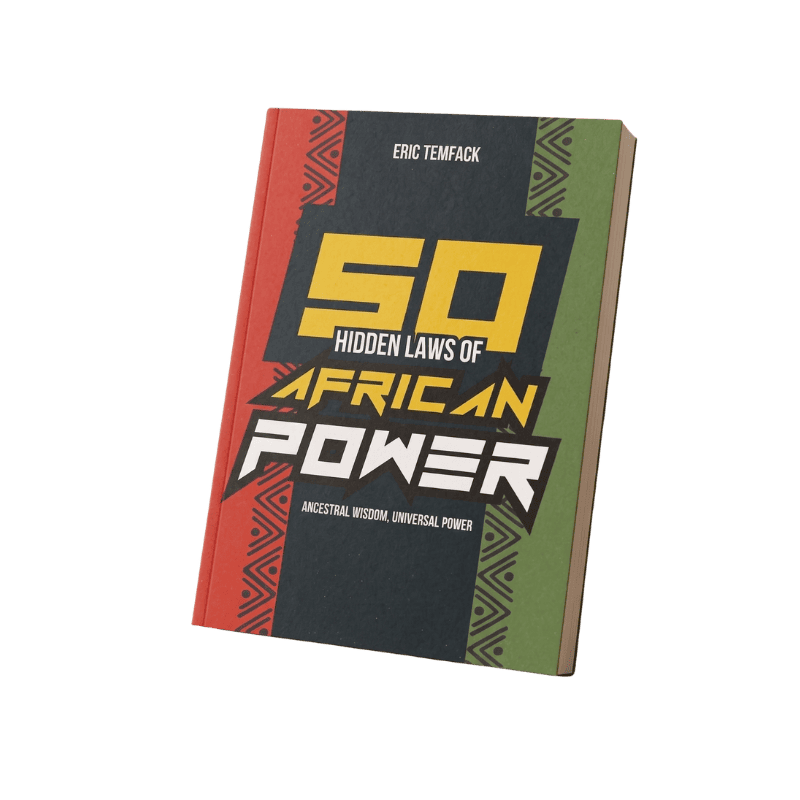
MAKEDA (QUEEN OF SHEBA) — EMBODIMENT OF THE 50 HIDDEN LAWS OF AFRICAN POWER
Through wisdom, diplomacy, and the quest for knowledge, the African queen challenged King Solomon and founded the Ethiopian dynasty.
I. HISTORICAL AND CIVILIZATIONAL CONTEXT
⭐ Who is the Queen of Sheba (Makeda)? Makeda (also called Bilqis in Islamic tradition) is the legendary ruler of the kingdom of Sheba, located in the region of present‑day Ethiopia or Yemen. She is famous for her journey to Jerusalem to meet King Solomon, as recounted in the Bible (1 Kings 10, 2 Chronicles 9) and the Qur’an (Surah 27). She embodies feminine wisdom, wealth and diplomacy.
The Kingdom of Sheba between Africa and Arabia (10th century BCE)
The kingdom of Sheba was a prosperous trading power, controlling the incense, myrrh, gold and spice routes. The Sabaeans mastered irrigation (the Marib dams) and writing (South Arabian script). Ethiopian tradition places Queen Makeda in Axum; Yemeni tradition places her in Marib. Both accounts agree on her legendary intelligence, beauty and wealth. Her reign is estimated around the 10th century BCE (c. 950 BCE).
The Spiritual and Religious Context
At the time, Sabaean religion was polytheistic (worship of Almaqah, the moon god). According to the Bible, Makeda was impressed by Solomon’s wisdom and the worship of Yahweh. The Qur’an recounts her conversion to Islam after receiving Solomon’s letter. Ethiopian Orthodox tradition makes her the ancestor of the Solomonic dynasty (Menelik I, supposed son of Solomon and Makeda). This blend of myth and history makes her a universal figure of female leadership.
🔗 CONNECTION TO THE 50 HIDDEN LAWS OF AFRICAN POWER
→ Law #1: Master Cosmic Balance (wisdom and wealth)
Points of convergence:
• Makeda balanced economic power (gold, incense, spices) with wisdom (riddles posed to Solomon).
• She embodies the synthesis between African tradition (warrior queen) and openness to foreign culture (Judaism, then Christianity/Islam).
• Modern application: African women leaders must combine economic prosperity with strategic intelligence – Makeda sets the example.
• Strategic lesson: Enduring power comes from balancing material strength (wealth) and spiritual strength (wisdom).
II. ORIGINS AND SOCIAL ASCENSION
📖 Where did the Queen of Sheba come from? According to Ethiopian tradition (Kebra Nagast, “Glory of the Kings”), Makeda was the queen of Ethiopia, from the Axumite dynasty. According to Yemeni accounts, she ruled the kingdom of Sheba in South Arabia. Both traditions agree on her African or Arabian origin, but Ethiopia claims her legacy as the founder of the Solomonic lineage.
Birth and Genealogy
In the Kebra Nagast (14th century), Makeda was born around 1005 BCE in Ethiopia, the daughter of King Agabos. She ruled after overthrowing a tyrant. In Islamic tradition, Bilqis (“the Queen of Sheba”) is the daughter of a king of Arabia. Historical sources are uncertain, but her name “Makeda” means “great” or “glorious” in Ethiopian.
Education and Skills
Makeda is described as:
- Intelligent – she posed difficult riddles to Solomon.
- Diplomatic – she sent sumptuous gifts and negotiated alliances.
- Wealthy – she controlled the incense and spice routes.
- Spiritually curious – she travelled to understand Solomon’s wisdom.
The Rise: From Princess to Queen
After her father’s death (or by election), she became queen, ruled with wisdom and expanded trade routes. Her reputation reached Jerusalem. Solomon, renowned for his wisdom, intrigued her. She decided to undertake a long journey (about 2,000 km) to meet him.
🔗 CONNECTION TO THE LAWS OF AFRICAN POWER
→ Law #3: “Transform Knowledge into Power”
Points of convergence:
• Makeda used her knowledge of riddles and diplomatic protocols to impress Solomon – she did not let herself be dominated.
• Her mastery of trade routes and natural wealth made her an indispensable interlocutor.
• Modern application: African women leaders must master languages, diplomatic codes and economic networks to carry weight internationally.
• Strategic lesson: Knowledge (riddles, proverbs) can be a weapon of seduction and power – Makeda understood this.
III. TITLES AND FUNCTIONS
Makeda held titles reflecting her economic and political authority:
- Queen of Sheba – sovereign of the Sabaean kingdom.
- Makeda (“the glorious”) – Ethiopian name.
- Bilqis – name in Islamic tradition.
- Mother of Menelik I (ancestor of Ethiopian emperors).
- Mistress of the Incense Routes – controlled trade in frankincense and myrrh.
🔗 CONNECTION TO THE LAWS OF AFRICAN POWER
→ Law #12: “Become Indispensable to Power”
Points of convergence:
• Makeda was the only African sovereign able to offer such sumptuous gifts (10,000 kilos of gold) – indispensable to the balance of powers.
• Her son Menelik I became the founder of the Solomonic dynasty – she is the matrix of an immortal lineage.
• Modern application: Women leaders may sometimes “found” a dynasty – family legacy can reinforce historical memory.
• Strategic lesson: Indispensability can also be built through matrimonial alliances and progeny – Makeda illustrates this.
IV. THE JOURNEY TO JERUSALEM – A DIPLOMATIC OPERATION
🐫 Why did the Queen of Sheba visit Solomon? According to the Bible (1 Kings 10), the Queen of Sheba heard of Solomon’s wisdom “concerning the name of the LORD” and came to test him with riddles. She wanted to verify for herself if his reputation was founded, and probably to establish a commercial and diplomatic alliance.
Makeda crossed the desert with a caravan laden with gold, spices, precious stones and rare wood. She posed difficult questions to Solomon about nature, morality and creation. Solomon answered wisely. Amazed, she gave him 120 talents of gold (about 4 tons) and immense quantities of spices and gems. In return, Solomon gave her everything she desired. They conceived a son, Menelik I (according to the Kebra Nagast).
🔗 CONNECTION TO THE LAWS OF AFRICAN POWER
→ Law #23: “Heal to Rule – The Power of the Healer” (diplomacy through gift‑giving)
Points of convergence:
• Makeda “healed” the distance between Africa and Asia through gifts and riddles – diplomacy as political therapy.
• She established a lasting alliance that benefited both kingdoms.
• Modern application: African women leaders must weave international relations through culture, riddles (soft power) and strategic gifts.
• Strategic lesson: A successful diplomatic journey can found a dynasty – Makeda proves it.
V. THE KEBRA NAGAST – THE FOUNDING MYTH OF ETHIOPIA
The Kebra Nagast (14th century) tells that Makeda, pregnant by Solomon, returned to Ethiopia and gave birth to Menelik I. As an adult, Menelik went to Jerusalem, met his father, who sent him with the guardians of the Tabernacle (the Ark of the Covenant). According to legend, the Ethiopians took the Ark, which is said to reside in Axum today. This narrative makes Makeda the ancestor of all Ethiopian emperors down to Haile Selassie I. The Kebra Nagast declares: “The Queen of Ethiopia conceived by Solomon, and her son brought the Ark to Ethiopia.”
🔗 CONNECTION TO THE LAWS OF AFRICAN POWER
→ Law #42: “Create a Legacy That Multiplies Your Power”
Points of convergence:
• Makeda founded a dynasty that lasted 3,000 years (until Haile Selassie) – an unmatched political legacy.
• The Kebra Nagast, a sacred text, perpetuates her memory – a textual legacy.
• Modern application: African women leaders must bequeath founding narratives (epics, chronicles) that legitimise their descendants.
• Strategic lesson: A well‑constructed myth can shape national identity for millennia – Makeda succeeded.
VI. LEGACY – A GLOBAL ICON OF FEMININE WISDOM
Makeda has inspired countless works of art, from Renaissance frescoes (Raphael, sculptures) to modern cinema. She is often depicted with a crown and jewels, anchoring the image of the wealthy, wise Oriental queen. Her story is used in Christian and Islamic sermons. She became a symbol of feminine intelligence able to challenge masculine wisdom. Women politicians (Golda Meir, Ellen Johnson Sirleaf) have cited her as a reference.
🔗 CONNECTION TO THE LAWS OF AFRICAN POWER
→ Law #45: “Become a Symbol – When Your Name Becomes a Movement”
Points of convergence:
• “Queen of Sheba” is an archetype – a powerful, wise and seductive woman.
• Perfumes, jewellery, riddles associated with her name have become commercial products – the myth is a brand.
• Modern application: African women leaders must cultivate an image that transcends their person – becoming a concept (like “Cleopatra” or “Nefertiti”).
• Strategic lesson: A name linked to a universal legend crosses centuries – Makeda is immortal.
VII. SOURCES AND TESTIMONIES
Biblical sources: 1 Kings 10, 2 Chronicles 9.
Qur’anic sources: Surah 27 (An‑Naml), verses 20‑44.
Ethiopian sources: Kebra Nagast (“Glory of the Kings”, 14th century).
Yemeni sources: Oral traditions and Arabic chronicles.
Archaeological sources: Solomon’s palace at Megiddo, remains of the Marib dam.
🔗 CONNECTION TO THE LAWS OF AFRICAN POWER
→ Law #28: “Control Your Narrative – History Belongs to the One Who Writes It”
Points of convergence:
• Makeda left no direct inscriptions, but three religions (Judaism, Christianity, Islam) recognized her – multiple narratives.
• The Ethiopian Kebra Nagast adopted her as the national ancestor – memory was controlled by the Ethiopian Church.
• Modern application: African women leaders must ensure their story is told by loyal chroniclers – oral tradition can be a weapon.
• Strategic lesson: If you don’t mythologize your life, others will – Makeda benefited from favourable religious narration.
VIII. MYSTERIES AND UNSOLVED QUESTIONS
Historical location of the kingdom: Yemen or Ethiopia? Both claims are possible.
Actual historical existence: Sabaean inscriptions do not mention a 10th‑century queen, but queens did exist (e.g. Zabibi).
The exact content of the riddles: Lost to history – only Arab and Jewish legends describe them.
The fate of the Ark of the Covenant: Ethiopians claim to have it, but archaeological evidence is lacking.
🔗 CONNECTION TO THE LAWS OF AFRICAN POWER
→ Law #37: “Cultivate Mystery – What Is Hidden Fascinates”
Points of convergence:
• The absence of definitive proof of her existence fuels the myth – doubt makes the legend stronger.
• The shadow zones about her exact kingdom allow both Ethiopians and Yemenis to claim her – fertile mystery.
• Modern application: Leaders may leave aspects of their life uncertain – mystery prolongs attention.
• Strategic lesson: The more elusive you are, the more people will talk about you – Makeda remains an enigma.
IX. MAKEDA IN CONTEMPORARY POPULAR CULTURE
Cinema: Hollywood films (“The Queen of Sheba”), documentaries.
Literature: Novels (“The Queen of Sheba” by Marek Halter), comics.
Music: Operas (Handel, “Solomon”), pop songs.
Perfumery: “Queen of Sheba” perfumes – commercial use of the myth.
🔗 CONNECTION TO THE LAWS OF AFRICAN POWER
→ Law #15: “Build Monuments That Speak for You”
Points of convergence:
• Makeda built no pyramids, but the narratives (Bible, Qur’an, Kebra Nagast) are her intangible monuments.
• Perfumes and jewellery in her likeness are commercial monuments.
• Modern application: African women leaders must cultivate symbols that outlive them – a good story is worth a statue.
• Strategic lesson: A mythical figure can become a revenue stream (perfumes, films) – Makeda is a brand.
X. LESSONS AND CONTEMPORARY RELEVANCE
💡 What can we learn from the Queen of Sheba? Makeda teaches that female power can be exercised through intelligence, diplomacy and economic management. She proves that a woman can challenge a legendary king and found a millennia‑old dynasty. Modern leaders must cultivate wisdom as much as wealth.
Women’s power through intelligence: Makeda conquered not by arms but by riddles and gifts.
The importance of cross‑cultural alliances: She built a bridge between Africa and the Near East – globalisation is not new.
Transmitting a founding myth: The Kebra Nagast forged Ethiopian identity – nations need narratives.
Daring to break convention: She travelled 2,000 km to meet another ruler – audacity pays.
🔗 CONNECTION TO THE LAWS OF AFRICAN POWER
→ Law #5: “Master Multiple Domains – The Power of the Renaissance”
Points of convergence:
• Makeda was simultaneously economist (incense route management), diplomat, strategist (riddles) and dynastic mother – polymathy.
• She combined the Arab, African and Israelite worlds – a transcultural vision.
• Modern application: African women leaders must be versatile: economics, diplomacy, culture, education.
• Strategic lesson: The African renaissance needs women able to navigate between cultures – Makeda did it.
XI. FAQ – FREQUENTLY ASKED QUESTIONS ABOUT MAKEDA
❓ What is the name of the Queen of Sheba in the Bible? The Bible does not give her name; it simply calls her “the Queen of Sheba”. Ethiopian traditions name her Makeda; Islamic traditions call her Bilqis.
❓ What does the name Makeda mean? In Ethiopian, Makeda means “great” or “glorious”. Some interpret it as “queen”.
❓ What gifts did the Queen of Sheba give to Solomon? 120 talents of gold (about 4 tons), immense quantities of spices (frankincense, myrrh) and precious stones. Solomon gave her everything she desired.
❓ Is there archaeological evidence for the Queen of Sheba’s existence? No direct evidence, but Sabaean inscriptions mention “queens” and trade in gold and incense. Solomon’s palace at Megiddo has been excavated.
CONCLUSION: IMMORTALITY THROUGH MYTH AND DYNASTY
Makeda remains, more than three thousand years after her legendary reign, one of the most famous female figures in African and world history. Her journey – queen of a prosperous kingdom, daring traveller, founder of a dynasty – testifies to the power of wisdom, diplomacy and faith.
For contemporary Africa and its diaspora, Makeda represents the sovereign who turned her wealth into influence and her curiosity into legend. She reminds us that African women have always governed, negotiated and shaped great civilisations. The Kebra Nagast, the Bible and the Qur’an agree on her greatness. Her name, Makeda, resonates today as a challenge: may each generation produce its own Makeda – those leaders who, through intelligence, courage and diplomacy, transcend borders and leave an imperishable legacy.
🔗 SYNTHESIS: MAKEDA (QUEEN OF SHEBA) AS THE EMBODIMENT OF THE HIDDEN LAWS OF AFRICAN POWER
📜 Summary of the laws of African power embodied by Makeda: Balance (Law #1), Knowledge as Power (#3), Polymathy (#5), Control of Time (#8), Indispensability (#12), Monuments (#15), Diplomatic Healing (#23), Narrative Control (#28), Mystery (#37), Multiplicative Legacy (#42), Symbol (#45), Immortality (#50).
- Law #1 (Balance) – Wealth and wisdom, materiality and spirituality.
- Law #3 (Knowledge as Power) – Riddles, knowledge of trade routes – knowledge as a diplomatic weapon.
- Law #5 (Polymathy) – Queen, diplomat, economist, mother – multiple genius.
- Law #8 (Control of Time) – Planned journey, dynastic foundation – mastery of long time.
- Law #12 (Indispensability) – Only one able to offer sumptuous gifts – focal point of exchanges.
- Law #15 (Monuments) – Kebra Nagast, biblical narratives – textual monuments.
- Law #23 (Heal to Rule) – Diplomacy through gifts and riddles – pacification through culture.
- Law #28 (Control of Narrative) – Narratives of three religions – shared but effective control.
- Law #37 (Mystery) – Disputed origins, unknown tomb – permanent mystery.
- Law #42 (Multiplicative Legacy) – 3,000‑year dynasty, artistic inspiration – active legacy.
- Law #45 (Symbol) – “Queen of Sheba” = wisdom, wealth, femininity – universal concept.
- Law #50 (Immortality) – Bible, Qur’an, Kebra Nagast – eternal textual presence.
Practical Application for the Modern Leader:
✅ Cultivate wisdom – riddles are worth armies
✅ Use diplomatic gifts – giving is a weapon
✅ Travel to learn – openness to the world is an asset
✅ Mythologise your life – have your story written by loyal chroniclers
✅ Found a dynasty or lasting institution – progeny is a form of immortality
The Makeda Challenge for You:
“What wisdom will you seek far from home? What founding narratives will you leave to your people? How will you turn your wealth into imperishable influence?”