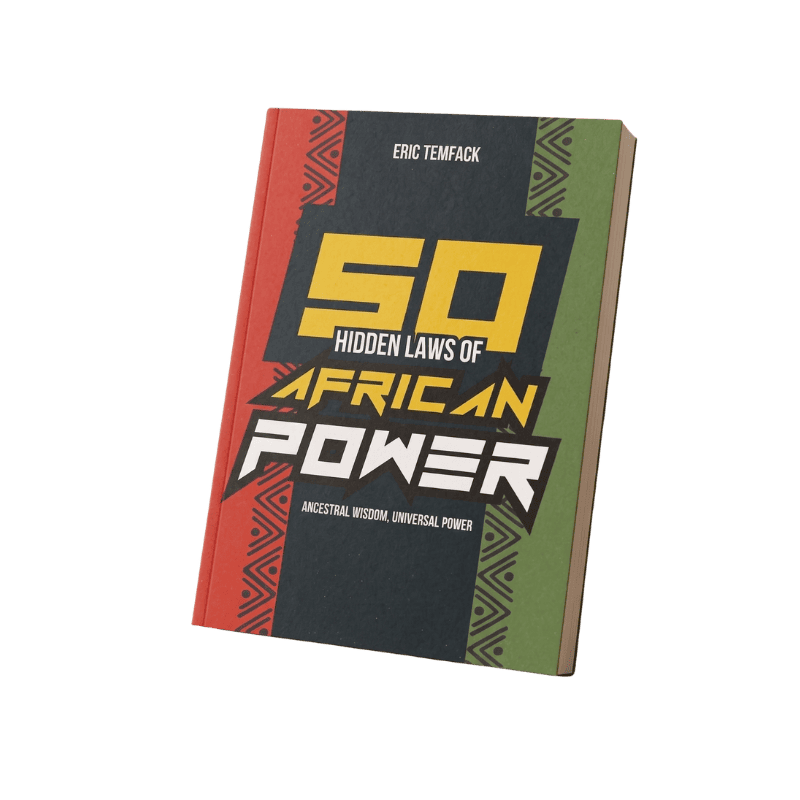
TARIQ IBN ZIYAD (TARIK) — EMBODIMENT OF THE 50 HIDDEN LAWS OF AFRICAN POWER
Through bravery, strategy, and the audacity of crossing, the Berber conqueror opened Andalusia to the Islamic world and changed the course of European history.
I. HISTORICAL AND CIVILIZATIONAL CONTEXT
North Africa and the Visigothic Kingdom in the Early 8th Century
Tariq ibn Ziyad (موسم طارق) is a Berber general, probably from the central Maghreb (present‑day Algeria or Morocco). He was the military commander who, in 711, landed with about 7,000 men on the rock that now bears his name – Gibraltar (Jabal Tariq, “mountain of Tariq”) – and put an end to the Visigothic kingdom of Hispania ruled by King Roderic. This conquest marked the beginning of Muslim presence in the Iberian Peninsula, which lasted nearly eight centuries (Al‑Andalus).
The context: North Africa was then under Umayyad rule (Caliphate of Damascus), but the Berbers, recently converted to Islam, provided formidable troops. The Umayyad governor of Ifriqiya (present‑day Tunisia), Musa ibn Nusayr, appointed Tariq as governor of Tangier. Tariq led an exploratory expedition, then took advantage of divisions among the Visigoths (succession conflicts) to launch a massive invasion.
The Spiritual and Cultural Context
Tariq was a Muslim Berber, but history has retained his quasi‑legendary aura. His famous order to burn the ships after landing – “The sea is behind you, the enemy is in front” – embodies absolute determination. Mainstream Sunni Islam of the Umayyads was official, but Tariq’s army mixed Arabs, Berbers, and even converted Visigoths. His success owed to the element of surprise, tactical superiority, and the support of Jewish populations oppressed by the Visigoths.
🔗 CONNECTION TO THE 50 HIDDEN LAWS OF AFRICAN POWER
→ Law #1: Master Cosmic Balance (Islam and Alliances with Minorities)
Points of convergence:
• Tariq balanced military conquest with respect for local populations (treaties with Jews, relative tolerance).
• He embodied the synthesis of Islamic faith and Berber culture – conquering Muslim Africa.
• Modern application: African leaders must know how to work with minorities and use diversity as a strategic asset.
• Strategic lesson: Enduring power comes from the ability to unite diverse communities around a common project – Tariq united Arabs, Berbers, and Hispano‑Jews.
II. ORIGINS AND SOCIAL ASCENSION
Birth and Berber Origins
Tariq ibn Ziyad was born around 670 in a Berber tribe of North Africa (the Nafza or Zenata Berbers). Historical sources are fragmentary; his exact date, parents, and childhood are unknown. He appears as a mawla (client) of Musa ibn Nusayr, the Umayyad governor. He rose through the ranks thanks to his military skills. He was appointed governor of Tangier after suppressing a Berber revolt. It was there that he gauged the weaknesses of the Visigothic kingdom.
Military Training
Raised in the Berber warrior tradition – light cavalry, knowledge of mountains, endurance – Tariq also learned Arab military art (strategy, logistics, sieges). He took part in the conquest campaigns of North Africa (already under Umayyad control by the end of the 7th century). His qualities: audacity, speed, knowledge of terrain and troop psychology. He spoke Berber and Arabic, perhaps also Latin or Gothic.
The Rise: From Junior Commander to Conqueror of Hispania
In 710, a first incursion was led by Tarif ibn Malluk (hence Tarifa). Tariq, encouraged by Musa, landed in April 711 with 7,000 men (mostly Berbers). He took Gibraltar, then defeated the Visigothic army at the Battle of Guadalete (July 711). Roderic was killed. Tariq seized Toledo, the capital. Musa, jealous, landed later with 10,000 men and reduced Tariq to a subordinate, but history remembers the name of the first conqueror.
🔗 CONNECTION TO THE LAWS OF AFRICAN POWER
→ Law #3: “Transform Knowledge into Power”
Points of convergence:
• Tariq used his knowledge of Andalusian terrain (collected by spies) and Visigothic divisions to strike at the right moment.
• His experience of mountain warfare (Atlas, Rif) gave him an advantage in the passes of Andalusia.
• Modern application: African leaders must exploit knowledge of enemy terrain, local resources, and weaknesses.
• Strategic lesson: Numerical superiority is not everything – knowledge of the enemy’s political context is decisive.
III. TITLES AND FUNCTIONS
Tariq ibn Ziyad held military and honorary titles:
- Governor of Tangier (before 711).
- Commander‑in‑Chief of the landing army (711).
- Conqueror of Hispania (posthumous title).
- Eponym of the Rock of Gibraltar (Jabal Tariq).
Despite the jealousy of Musa ibn Nusayr, Tariq remains in memory as the main hero of the conquest. He was summoned to Damascus by the caliph, shared Musa’s disgrace, and died in obscurity around 720. But his name is inscribed in geography and history.
🔗 CONNECTION TO THE LAWS OF AFRICAN POWER
→ Law #12: “Become Indispensable to Power”
Points of convergence:
• Tariq was irreplaceable for the expedition: his knowledge of the Berbers, his reputation for bravery, and his loyalty to Musa.
• But after the conquest, he was overshadowed by Musa – proof that indispensability can be temporary if you do not control the narrative.
• Modern application: African leaders must not only achieve exploits but also ensure political protection and media posterity.
• Strategic lesson: Glory can be stolen by a jealous superior – preserving one’s legacy is as important as winning it.
IV. THE CROSSING AND LANDING – BURNING THE SHIPS
Legend has it that Tariq, after landing on the rock, ordered the boats to be burned, then declared:
“The sea is behind you, the enemy is before you. You have no choice but to conquer or die.”
This radical decision removed any possibility of retreat, galvanised the troops and symbolised total commitment. The crossing of the strait (300 km from Ceuta) was carried out at night, by surprise. Tariq left a garrison on the rock and marched inland.
🔗 CONNECTION TO THE LAWS OF AFRICAN POWER
→ Law #15: “Build Monuments That Speak for You”
Points of convergence:
• The Rock of Gibraltar is a natural monument renamed after Tariq – every map of the world repeats it.
• The act of burning the ships has become an operational myth, studied in strategy.
• Modern application: African leaders must create geographical or memorial symbols (renaming places, engraving deeds) to immortalise their passage.
• Strategic lesson: A strong symbolic gesture (burning the ships) can have more impact than thousands of speeches – absolute commitment marks minds.
V. THE BATTLE OF GUADALETE – THE VISIGOTHIC DEFEAT
King Roderic assembled an army of about 25,000 to 40,000 men. Tariq had 7,000 (then 12,000 with the arrival of Berber reinforcements). The battle took place near the Guadalete river (province of Cadiz). Tariq used light cavalry to harass the flanks and a feigned retreat to disorganise the Visigoths. The poorly commanded and divided Visigothic infantry (Roderic’s brothers betrayed him) was routed. Roderic disappeared (dead or fled). Toledo fell without much resistance. Hispania was open.
🔗 CONNECTION TO THE LAWS OF AFRICAN POWER
→ Law #8: “Master Cycles – Time as a Weapon”
Points of convergence:
• Tariq chose the opportune moment (spring 711) after winter, when the Visigothic army was unprepared.
• He exploited the cycles of enemy troop fatigue (Roderic had had to suppress a revolt in the north).
• Modern application: African leaders must strike when the adversary is weakened by its own cycles (political, economic, seasonal).
• Strategic lesson: Timing is a weapon – attacking at the right moment is sometimes worth reinforcements.
VI. THE CONQUEST – THE ART OF BLITZKRIEG
After Guadalete, Tariq divided his troops to occupy cities: Cordoba, Granada, Malaga, Jaen, Toledo. He signed favourable capitulations (respect for property, for religions). The Jews, welcomed as liberators, facilitated the occupation. In less than three years, most of the peninsula was under Muslim control. The advance was a model of manoeuvre warfare.
🔗 CONNECTION TO THE LAWS OF AFRICAN POWER
→ Law #23: “Heal to Rule – The Power of the Healer” (pacifying through diplomacy)
Points of convergence:
• Tariq did not massacre populations; he offered treaties – healing through negotiated submission.
• He used the Jews as allies, showing rare social intelligence.
• Modern application: African leaders must know how to combine force and negotiation – lasting conquest goes through reconciliation.
• Strategic lesson: Winning the hearts of the oppressed through liberation is more effective than brutal occupation – Tariq conquered Hispania with few men thanks to local allies.
VII. THE JEALOUSY OF MUSA AND THE DISGRACE – A STOLEN LEGACY
Musa ibn Nusayr, seeing Tariq’s success, landed in 712 with 10,000 men (many of them Arabs). He humiliated Tariq, beat him, confiscated his booty. He continued the conquest as far as Zaragoza. Recalled to Damascus by the caliph, he took Tariq with him. Both fell into disgrace (political rivalries, accusations of embezzlement). Tariq died poor around 720, erased from official chronicles. However, later historians (Ibn al‑Athir, Al‑Maqqari) did him justice.
🔗 CONNECTION TO THE LAWS OF AFRICAN POWER
→ Law #28: “Control Your Narrative – History Belongs to the One Who Writes It”
Points of convergence:
• Tariq wrote no memoirs; Musa controlled the official narrative – hence the eclipse.
• But later Arabic chronicles rehabilitated Tariq, while Gibraltar (Jabal Tariq) made him immortal.
• Modern application: African leaders must write their own history and engrave their name in geography – a rock or street is worth more than a lost manuscript.
• Strategic lesson: Posterity can correct the injustice of superiors if one leaves indelible marks.
VIII. LEGACY – THE ROCK THAT SPEAKS FOREVER
The Strait of Gibraltar – a name derived from Jabal Tariq – is one of the most strategic points in the Mediterranean. Every ship, every map, every traveller pronounces his name. Muslim Andalusia (Al‑Andalus) flourished thanks to the conquest initiated by Tariq, producing centuries of science, art and coexistence. Tariq remains an icon for Berbers, Moroccans, Algerians, Arab nationalists, and Pan‑Africanists who see him as an African conqueror.
🔗 CONNECTION TO THE LAWS OF AFRICAN POWER
→ Law #42: “Create a Legacy That Multiplies Your Power”
Points of convergence:
• Gibraltar is a “living monument” – no statue, no mausoleum, but a territory and a name.
• The myth of the crossing and the burning ships is taken up by generations of strategists.
• Modern application: African leaders must bequeath geographical places (renaming streets, squares, mountains) to anchor their memory.
• Strategic lesson: A toponymic legacy is more resistant than statues – no one can rename Gibraltar.
IX. SOURCES AND TESTIMONIES
Arabic sources: Chronicles of Ibn Abd al‑Hakam (Futuh Misr), Al‑Maqqari (Nafh al‑Tib), Ibn al‑Athir.
Latin sources: Fragmentary Visigothic chronicles, Mozarabic chronicles.
Archaeological sources: Remains of the battle (rare), coins, inscriptions.
Berber sources: Oral traditions of Morocco and Algeria.
🔗 CONNECTION TO THE LAWS OF AFRICAN POWER
→ Law #37: “Cultivate Mystery – What Is Hidden Fascinates”
Points of convergence:
• The lack of certainty about Tariq’s life (birth date, exact origin, tomb) makes the character more legendary.
• The detail “he burned the boats” may be apocryphal, but it has become essential – myth overrides truth.
• Modern application: African leaders should not seek to document everything – mystery leaves room for heroisation.
• Strategic lesson: A well‑forged legend (burned ships) can be more powerful than a thousand facts – it teaches audacity.
X. TARIQ IBN ZIYAD IN CONTEMPORARY CONSCIOUSNESS
Symbol of the Muslim conquest of Europe: Tariq is often cited by historians of Islamic expansion.
Berber and Maghrebi icon: Statues, streets, buildings bear his name in Morocco, Algeria, Tunisia.
Popular culture: Video games (Age of Empires, Civilization), historical films, novels (e.g., “Tariq ibn Ziyad” by G. A. Henty).
Toponymy: Gibraltar remains the most famous memorial.
Postcolonial debate: In Spain, Tariq is sometimes seen as an invader, sometimes as an actor of Al‑Andalus’s complex history.
🔗 CONNECTION TO THE LAWS OF AFRICAN POWER
→ Law #45: “Become a Symbol – When Your Name Becomes a Movement”
Points of convergence:
• “Tariq” is a common male name in the Muslim world – the name has become a symbol of bravery.
• The jihadist group “Tariq ibn Ziyad” even used his name (abusively) – proof of his symbolic power.
• Modern application: African leaders must aim for their first name to become a referent of courage – that it is used as a banner.
• Strategic lesson: A name can be hijacked, but that proves its strength; the important thing is to be its source.
XI. MYSTERIES AND UNSOLVED QUESTIONS
Exact ethnic origin: Berber, but which tribe? Sources differ.
Whereabouts of his remains: No identified tomb. Died in Syria or the Maghreb?
The burning of the ships: Was the order really given? Historians doubt, but the legend is entrenched.
Exact role of Jews in the conquest: Active collaboration or simple non‑resistance?
🔗 CONNECTION TO THE LAWS OF AFRICAN POWER
→ Law #37: “Cultivate Mystery – What Is Hidden Fascinates” (continued)
Points of convergence:
• The absence of a known burial and the vagueness about his life allow each people (Moroccans, Algerians, Spanish) to appropriate him.
• The myth of the burning ships is more powerful than reality – it inspires strategy.
• Modern application: African leaders can leave shadow zones – they will be filled with heroic narratives.
• Strategic lesson: Doubt about material details reinforces the moral impact of the deed – the burning ships are more beautiful than the logistics truth.
XII. LESSONS AND CONTEMPORARY RELEVANCE
The audacity of total commitment: Burn the ships (or the equivalent) – know how to cut the bridges to mobilise all forces.
Alliances with oppressed minorities: Tariq conquered thanks to the Jews and converts – identifying local allies is key.
Speed as a strategic factor: Surprise and blitzkrieg made up for numerical inferiority.
The ingratitude of superiors: Musa stole the glory – leaders must protect their posterity by testifying or writing.
🔗 CONNECTION TO THE LAWS OF AFRICAN POWER
→ Law #50: “Transcend Death – The Art of Immortality”
Points of convergence:
• Tariq died forgotten and without a monument, but Gibraltar speaks for him – immortality through geography.
• His name crosses centuries through language (English, French, Arabic) – the rock is more eloquent than a mausoleum.
• Modern application: African leaders must inscribe their name in public space (streets, squares, bridges) – it’s an accessible form of immortality.
• Strategic lesson: A short, mysterious life can be more powerful than a long, documented reign – Tariq is the symbol of audacity.
CONCLUSION: IMMORTALITY THROUGH THE ROCK AND AUDACITY
Tariq ibn Ziyad remains, more than thirteen centuries after the conquest, one of the most evocative names in African and European history. His journey – an anonymous Berber general who became conqueror of Hispania – testifies to the power of audacity, faith, and knowledge of the terrain. Even though his superiors stole his official glory, posterity corrected the injustice: Gibraltar (Jabal Tariq) is the most durable monument a military commander could ever hope for.
For contemporary Africa and its diaspora, Tariq represents the figure of the Berber conqueror who crossed the sea, defied a powerful kingdom and changed the course of history. He reminds us that Africans are not only victims of history but also decisive actors – capable of invading and civilising. His name, Tariq (“he who knocks at the door”, uncertain etymology), resonates today as a challenge: dare to cross straits, burn your ships, and strike at the heart of the adversary.
🔗 SYNTHESIS: TARIQ IBN ZIYAD AS THE EMBODIMENT OF THE HIDDEN LAWS OF AFRICAN POWER
The 12 Major Laws Embodied by Tariq:
- Law #1 (Balance) – Islam and alliance with Jews, military conquest and respect for treaties.
- Law #3 (Knowledge as Power) – Knowledge of Visigothic terrain, espionage, enemy political divisions.
- Law #5 (Polymathy) – Strategist, cavalryman, diplomat, leader of men – concentrated genius.
- Law #8 (Control of Time) – Tactical choice of spring 711, blitzkrieg.
- Law #12 (Indispensability) – Indispensable to the expedition, yet vulnerable afterwards.
- Law #15 (Monuments) – Gibraltar, the speaking rock – geographical monument.
- Law #23 (Heal to Rule) – Pacification through capitulations, recruiting local allies.
- Law #28 (Control of Narrative) – Victim of Musa’s jealousy, but saved by toponymy.
- Law #37 (Mystery) – Vague origins, lost tomb, legendary burning ships.
- Law #42 (Multiplicative Legacy) – Gibraltar, the name “Tariq”, history textbooks – active legacy.
- Law #45 (Symbol) – “Tariq” = conquest, audacity, conquering Africa.
- Law #50 (Immortality) – The rock outlives empires – Tariq present on every maritime map.
Practical Application for the Modern Leader:
✅ Dare to burn the ships of doubt – total commitment defeats timidity
✅ Form alliances with the oppressed – they are the best allies
✅ Carve your name into geography – a place carries further than a statue
✅ Beware the jealousy of superiors – document your work
✅ Conquer quickly – slowness is the enemy of audacity
The Tariq Challenge for You:
“What strait (professional, spiritual, political) do you need to cross? What is your ‘sea behind you’ that you are ready to burn? What rock will bear your name?”