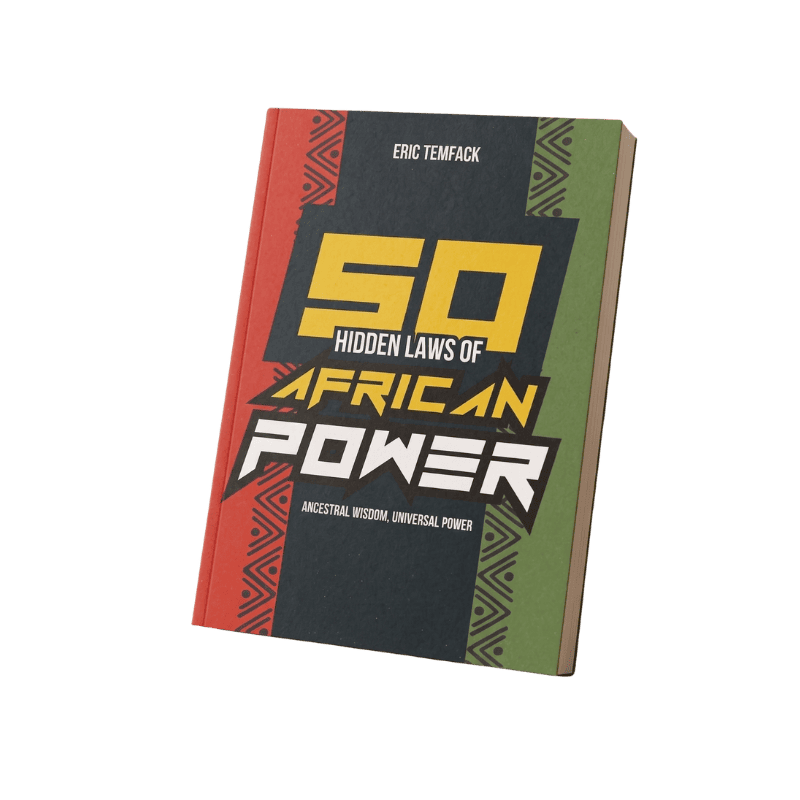
Mansa Musa (Kankou Musa) — Embodiment of the 50 Hidden Laws of African Power
Through gold, faith, and construction, the Emperor of Mali marked the world as the richest man in history.
I. Historical and Civilizational Context
The Mali Empire in the 14th Century (1312‑1337 CE)
Mansa Musa (Kankou Musa, "king of kings") reigned at the height of the Mali Empire, one of the largest and richest empires in African history. At its peak, the empire stretched from the Atlantic Ocean to the Niger River, encompassing present‑day Mali, Senegal, Gambia, Guinea, Mauritania and part of Burkina Faso. This period marks a golden age of cultural, economic and spiritual achievement for West Africa.
The capital, Niani, was the administrative heart, but Timbuktu and Gao became world‑renowned intellectual and commercial centers. The empire controlled the gold mines of Bambouk, Bure and Galam, as well as the trans‑Saharan trade in salt, copper and textiles. It was in this context of unprecedented prosperity that Mansa Musa left an indelible mark.
The Spiritual and Religious Context
Islam was the official religion of the ruling elite, but ancient African traditions (Dogon cosmology, Mandé beliefs) coexisted peacefully. Mansa Musa was a devout Muslim, eager to observe the five pillars of Islam, especially the pilgrimage to Mecca. His faith deeply influenced his governance: he built mosques, attracted Arab and Andalusian scholars, and established an Islamic judicial system alongside local customs.
This synthesis of Islam and Mandinka traditions – respect for clan hierarchies, ancestor veneration, caste‑based social organization – made the empire a model of tolerance and religious soft power.
🔗 Connection to the 50 Hidden Laws of African Power
→ Law #1: Master Cosmic Balance (Islam and Mandinka Traditions)
Points of convergence:
• Mansa Musa balanced Islam and ancestral traditions – he respected Sharia while honoring clan chiefs and ancestors.
• His power rested on gold (economic resource), faith (spiritual legitimacy) and knowledge (attraction of scholars).
• Modern application: Successful contemporary African leaders harmonize modernity and tradition, economic development and spiritual values.
• Strategic lesson: Enduring power comes from integrating multiple belief systems without pitting them against each other – unity in diversity.
II. Origins and Social Ascension
Birth and Family
Kanku Musa was born around 1280 in the Mali Empire. He was the nephew (or grandson) of the dynasty’s founder, Sundiata Keita, and the son of Faga Laye, a minor prince. Although of royal lineage, his rise was not automatic: his predecessor, Mansa Abubakari II, disappeared at sea on an Atlantic expedition, leaving the throne to his vizier, Kanku Musa.
Rescued by the empire’s clans, he became Mansa in 1312. He married Inari Konte, daughter of a Soninké king, strengthening alliances between the empire’s various peoples. His extended family governed key provinces.
Education and Skills
Mansa Musa received a high‑level education:
- Military training (command, strategy).
- Administrative training (management of mines, caravans, courts).
- Study of Islam (Qur’an, fiqh, Arabic).
- Knowledge of Sahelian and Maghrebi cultures – a key diplomatic asset.
This encyclopedic education allowed him to govern a multi‑cultural empire and negotiate as an equal with the sultans of the Maghreb and the Middle East.
The Rise to the Throne: From Vizier to Emperor
Appointed vizier by Mansa Abubakari II, Musa governed the empire during the sovereign’s absence. After Abubakari’s disappearance, the nobles and military leaders offered him the crown. He accepted and vowed to expand the empire and strengthen Islam. His reign began with conquests: he annexed the city‑states of Timbuktu, Gao and Djenne, extending his control over the entire Niger River.
🔗 Connection to the Laws of African Power
→ Law #3: “Transform Knowledge into Power”
Points of convergence:
• His training in Islamic law and Arabic allowed him to forge diplomatic alliances with Muslim powers, who saw him as a legitimate sovereign.
• His knowledge of trade routes and gold‑extraction techniques made him the undisputed master of West Africa’s economy.
• Modern application: African leaders must master global economic and diplomatic codes to weigh on the international stage.
• Strategic lesson: Knowledge is not only theoretical – understanding economic networks and foreign languages builds power.
III. Titles and Functions
Mansa Musa accumulated titles that reflected his political, religious and economic authority:
- Mansa (“king of kings”, Emperor of Mali – supreme title).
- Kankou (nickname meaning “the rich” or “the conqueror”).
- Amir al‑mu’minin (“Commander of the Believers”) – used during his pilgrimage to Mecca.
- Lord of the gold mines of Bambouk, Bure and Galam – exclusive control over gold sources.
- Protector of Timbuktu – patron of universities, mosques and libraries.
- Master of the trans‑Saharan routes – overseer of salt, gold and copper caravans.
This accumulation of strategic titles (economic, religious, military) made him one of the most powerful sovereigns of his time, recognized even in Europe on Catalan maps.
🔗 Connection to the Laws of African Power
→ Law #12: “Become Indispensable to Power”
Points of convergence:
• Mansa Musa was the only one who controlled the gold mines, trade routes, judiciary and religious patronage – without him, the empire would collapse.
• He diversified his sources of legitimacy: hereditary royalty (descendant of Sundiata), religious faith (pilgrimage, mosque‑building), economic wealth (gold), cultural soft power (scholars, architects).
• Modern application: African leaders must cultivate multiple registers – political, economic, spiritual – to be irreplaceable.
• Strategic lesson: Indispensability is built through monopoly over critical resources and mastery of symbols.
IV. The Pilgrimage to Mecca (1324‑1325): A Declaration of Global Power
A legendary caravan
Mansa Musa’s pilgrimage to Mecca is one of the most famous events in African history. The caravan, which left Niani in 1324, included:
- 60,000 men, including 12,000 slaves carrying silk cloth.
- 100 camels loaded with gold (about 12 tons).
- 500 slaves carrying solid gold staffs.
- Thousands of soldiers for protection.
The procession crossed what is now Mali, Burkina Faso, Niger, Chad, then Egypt and the Hejaz.
Economic and diplomatic impact
Upon arriving in Cairo, Mansa Musa distributed gold with unprecedented generosity. The massive gold influx devalued the Egyptian dinar for the following twelve years. His name became famous throughout the Islamic world and, through Italian merchants, in Europe. The pilgrimage established Mali as a major power.
Meetings and alliances
In Cairo, he met the Mamluk sultan Al‑Nasir Muhammad. In Mecca, he mingled with ulama and Arabian sovereigns. He brought back scholars, poets and the Andalusian architect Al‑Saheli, who would build the famous mosques of Timbuktu.
🔗 Connection to the Laws of African Power
→ Law #15: “Build Monuments That Speak for You”
Points of convergence:
• The pilgrimage was a “living monument” – a performance of power that impressed minds over thousands of kilometers.
• The gold distributed became a sign of lasting glory: even after the devaluation, Mansa Musa’s legend did not fade.
• Modern application: African leaders should organize events, diplomatic missions, emblematic investments that create an immortal narrative.
• Strategic lesson: Ostentatious generosity can be a political weapon – it buys reputation beyond borders.
V. Architectural and Urban Achievements
The transformation of Timbuktu
Upon returning from Mecca, Mansa Musa launched a monumental construction program:
- The Djinguereber Mosque – built by the Andalusian architect Al‑Saheli, with its famous pyramid tower and wooden beams.
- The Sankoré Mosque – which became the heart of the University of Timbuktu, attracting students from across Africa.
- The Sidi Yahya Mosque – founded together with the holy man Mohamed‑Naddi.
- The royal palace and law courts at Niani.
Timbuktu: the world’s intellectual center
Under his reign, Timbuktu became a major university city, with over 25,000 students. Scholars from Fez, Cairo and Granada (Andalusia) taught Islamic law, medicine, astronomy, mathematics and history. Timbuktu’s libraries held hundreds of thousands of manuscripts (many preserved today).
🔗 Connection to the Laws of African Power
→ Law #15: “Build Monuments That Speak for You” (continued)
Points of convergence:
• The mosques of Timbuktu are the “pyramids” of West Africa – they immortalize Mansa Musa’s name for centuries.
• The University of Timbuktu attracted the intellectual elite, creating a cultural debt and a radiance that survived him.
• Modern application: African leaders must build universities, research centers, libraries – knowledge infrastructure is more durable than palaces.
• Strategic lesson: Stone and knowledge go together – a monument is never more alive than when it houses education.
VI. Economic and Financial Contributions
Control of gold and salt
Mansa Musa organized the empire around the two strategic resources: gold (in the west) and salt (from the Taghaza and Taoudeni mines). He imposed a royal monopoly, standardized weights and measures, and secured trans‑Saharan routes. His annual gold revenues are estimated to be equivalent to over $400 billion today.
Monetary reform and international trade
He introduced the gold dinar as the reference currency across the entire Mali zone, facilitating trade with the Maghreb, Egypt and Europe. He developed the port of Niani and encouraged links with Jewish, Italian and Berber merchants.
🔗 Connection to the Laws of African Power
→ Law #8: “Master Cycles – Time as a Weapon”
Points of convergence:
• Mansa Musa mastered gold extraction cycles (dry seasons, mine resupply) and trade cycles (caravans, navigation seasons).
• His management of gold stocks – deliberately releasing astronomical quantities during the pilgrimage – shows an understanding of long‑term economic effects.
• Modern application: African leaders must think in cycles (seasonal, political, economic) to anticipate crises and project power.
• Strategic lesson: Whoever controls foundational resources (gold, salt, water, oil) can not only become rich but also influence others’ economies.
VII. Knowledge, Culture and Patronage
Attracting scholars
Mansa Musa offered high salaries to the ulama, poets, physicians and architects from Arabia, Andalusia and Persia who settled in Timbuktu. He financed the translation of Greek works (Aristotle, Hippocrates) and the writing of local chronicles (later the Tarikh al‑Fattash, Tarikh al‑Sudan).
The imperial library
He assembled at Niani manuscripts from the entire Islamic world, creating one of Africa’s richest collections. His court was a centre of literary and poetic creativity.
🔗 Connection to the Laws of African Power
→ Law #5: “Master Multiple Domains – The Power of the Renaissance”
Points of convergence:
• Mansa Musa was not merely a rich king – he was a strategist, builder, patron, diplomat, military commander.
• His polymathy allowed him to run a complex economy while ruling over an ethnic and cultural mosaic.
• Modern application: African leaders today must master finance, diplomacy, communication and technology – a one‑dimensional leader does not survive.
• Strategic lesson: Superiority comes from excelling in multiple fields at once – that is the key to invincibility.
VIII. Legacy and Global Influence
Mali on the world map
The pilgrimage and the accounts of Italian merchants brought Mansa Musa into European cartography. The famous Catalan Atlas (1375) shows him seated on a golden throne, holding a nugget – the first realistic depiction of an African sovereign on a world map.
Symbol of African wealth
In the Western imagination, Mansa Musa became the archetype of the immensely rich African ruler. Modern economists estimate his fortune at about $400 billion (adjusted), more than any current billionaire. His name regularly appears in “richest people in history” rankings.
Pan‑African inspiration
For contemporary Africa, Mansa Musa represents economic sovereignty, investment in education and identity pride. He proves that Africa, long before the colonial era, could build sophisticated states, university cities and global trade networks.
🔗 Connection to the Laws of African Power
→ Law #42: “Create a Legacy That Multiplies Your Power”
Points of convergence:
• The Catalan Atlas immortalized Mansa Musa seven centuries later – each generation rediscovers his story.
• The mosques and manuscripts of Timbuktu still inspire scholars and architects – his influence has multiplied over time.
• Modern application: African leaders should create institutions (universities, foundations, maps, archives) that speak for them to future generations.
• Strategic lesson: A legacy is never fixed – it grows or declines depending on what is done with it after death.
IX. Sources and Testimonies
Medieval Arabic sources: Al‑Umari (based on informants), Ibn Khaldun (contemporary chronicler), Ibn Battuta (visited Mali after Musa’s death).
West African sources: Tarikh al‑Fattash, Tarikh al‑Sudan (17th‑century Timbuktu chronicles) – transcribed oral traditions.
European sources: Catalan Atlas, letters of Italian merchants, Portuguese accounts (notably Gomes Eanes de Zurara).
Archaeological sources: Excavations in Timbuktu (mosques, manuscripts), coin discoveries, remains of Niani.
🔗 Connection to the Laws of African Power
→ Law #28: “Control Your Narrative – History Belongs to the One Who Writes It”
Points of convergence:
• Mansa Musa was described by admiring Arab chroniclers and by European merchants, often amazed – his story is not solely African.
• Yet the Timbuktu chronicles, written locally, offer a counter‑narrative – proof that Africa produced its own history.
• Modern application: African leaders must fund historians, archivists, libraries – so that history is not written only from the outside.
• Strategic lesson: Leaving written and material traces means controlling memory – even the silent mosque speaks.
X. Mansa Musa in Contemporary Consciousness
Academic renaissance: Since the 1960s, African historians (Cheikh Anta Diop, Joseph Ki‑Zerbo, D.T. Niane) have rehabilitated Mansa Musa as a major figure of African governance.
Popular culture: He has appeared in many video games (Civilization, Age of Empires), TV series, comic books and documentaries. His name is regularly cited in “top 10 richest people in history” lists.
Symbol of economic leadership: For African entrepreneurs, he is the model of a ruler who transformed natural resources into sustainable development and cultural radiance.
🔗 Connection to the Laws of African Power
→ Law #45: “Become a Symbol – When Your Name Becomes a Movement”
Points of convergence:
• Mansa Musa is not just a king – he is a concept: “immense wealth combined with wisdom and piety.”
• Media worldwide use his name as a reference for wealth – he has entered the category of proper names that become common nouns.
• Modern application: African leaders should aim to become a brand – their name evoking a quality (wealth, integrity, vision) instantly.
• Strategic lesson: Ultimate power is to become an adjective – “to pull a Musa” would mean to create dazzling prosperity.
XI. Mysteries and Unsolved Questions
The date and circumstances of his death: Mansa Musa died in 1337, but no tomb has been found. The exact burial place remains a mystery.
Abubakari II’s Atlantic expedition: Musa’s predecessor supposedly crossed the Atlantic with hundreds of ships. Some Afrocentrists suggest he reached America before Columbus – an unsettled debate.
The real extent of his wealth: Estimates range from $200 to $400 billion in today’s dollars. Without tax archives, accuracy remains speculative.
🔗 Connection to the Laws of African Power
→ Law #37: “Cultivate Mystery – What Is Hidden Fascinates”
Points of convergence:
• The disappearance of his tomb and uncertainty about his last hours fuel curiosity – the absence of a grave makes the legend less anchored and more universal.
• The mystery of the Atlantic expedition inspires dreams and alternative theories, prolonging fascination.
• Modern application: Leaders should not seek to control everything – a dose of the unknown keeps public interest alive.
• Strategic lesson: Doubt is a story‑producing machine – let historians debate, you will remain in the conversation.
XII. Lessons and Contemporary Relevance
The power of economic soft power
Mansa Musa did not conquer by brute force, but through resource control and the attraction of foreign elites – invest in education and culture to dominate sustainably.
International visibility as a lever
His pilgrimage was a planetary communication operation before its time – today, African leaders must use media, global summits and investments to become known and respected.
Investing in knowledge
Timbuktu shows that universities and libraries are weapons of prestige as powerful as armies – funding research means funding one’s own posterity.
🔗 Connection to the Laws of African Power
→ Law #50: “Transcend Death – The Art of Immortality”
Points of convergence:
• Mansa Musa did not build pyramids, but mosques and universities – living institutions that perpetuate his name.
• His legend has crossed centuries not only through gold, but through image (Catalan Atlas) and narrative (chronicles).
• Modern application: African leaders must leave institutions (foundations, universities, media) that act after their death.
• Strategic lesson: Immortality is not paid for by stone alone – it is paid for by ideas, schools, libraries.
CONCLUSION: IMMORTALITY THROUGH GOLD AND KNOWLEDGE
Mansa Musa remains, nearly 700 years after his death, one of the most recognizable names in African and world history. His exceptional journey – vizier turned emperor, pilgrim turned legend – testifies to the transformative power of natural resources when combined with strategic vision and faith.
Architect of Timbuktu, patron of scholars, master of gold, he embodies the ideal of the African sovereign: sovereign, rich, cultivated and devout. For contemporary Africa and its diaspora, Mansa Musa represents a strategic ancestor whose legacy reminds us that intelligently exploited wealth can build durable civilizations, and that knowledge is the most precious of precious metals.
His name, Kanku Musa (“Musa the rich”), resonates today as an invitation: may each generation produce its own Mansa – those leaders who, through mastery of resources, openness to the world, and investment in education, elevate their people and dazzle the world.
🔗 SYNTHESIS: Mansa Musa as the Embodiment of the Hidden Laws of African Power
The 12 Major Laws Embodied by Mansa Musa:
- Law #1 (Balance) – Islam and Mandinka traditions, wealth and piety, economic and spiritual power.
- Law #3 (Knowledge as Power) – Mastery of languages and Islamic law to attract scholars and govern.
- Law #5 (Polymathy) – Strategist, administrator, diplomat, builder, patron – a complete genius.
- Law #8 (Control of Cycles) – Management of gold mines, caravans, seasons – time as an ally.
- Law #12 (Indispensability) – Monopoly over resources and knowledge, no alternative to his authority.
- Law #15 (Monuments) – Mosques, universities, maps – stone and icon speak for him.
- Law #23 (Heal to Rule) – His generosity in gold soothes tensions and buys peace – giving as a tool of dominance.
- Law #28 (Control of Narrative) – He used Arab chroniclers, Italian merchants and local scholars to spread his legend.
- Law #37 (Mystery) – Lost tomb, uncertain Atlantic expedition – mystery fuels fascination.
- Law #42 (Multiplicative Legacy) – Manuscripts, mosques, Catalan Atlas – a legacy that grows with time.
- Law #45 (Symbol) – “Mansa Musa” evokes absolute wealth, faith and economic intelligence – a universal concept.
- Law #50 (Immortality) – He lives on in video games, wealth rankings, stories – gold does not buy eternity, but legend does.
Practical Application for the Modern Leader:
✅ Master the key resources of your environment (minerals, land, data, talent)
✅ Use strategic generosity to disarm adversaries and gain allies
✅ Invest massively in education and culture – these are your “mosques”
✅ Turn your life into a visible story – publicize your actions, but leave shadow zones
✅ Create institutions that will survive you: foundations, universities, libraries, archives
The Mansa Musa Challenge for You:
“What is your strategic resource? How will you turn it into lasting power and cultural radiance? By what work – school, monument, institution – will you still be famous in 700 years?”