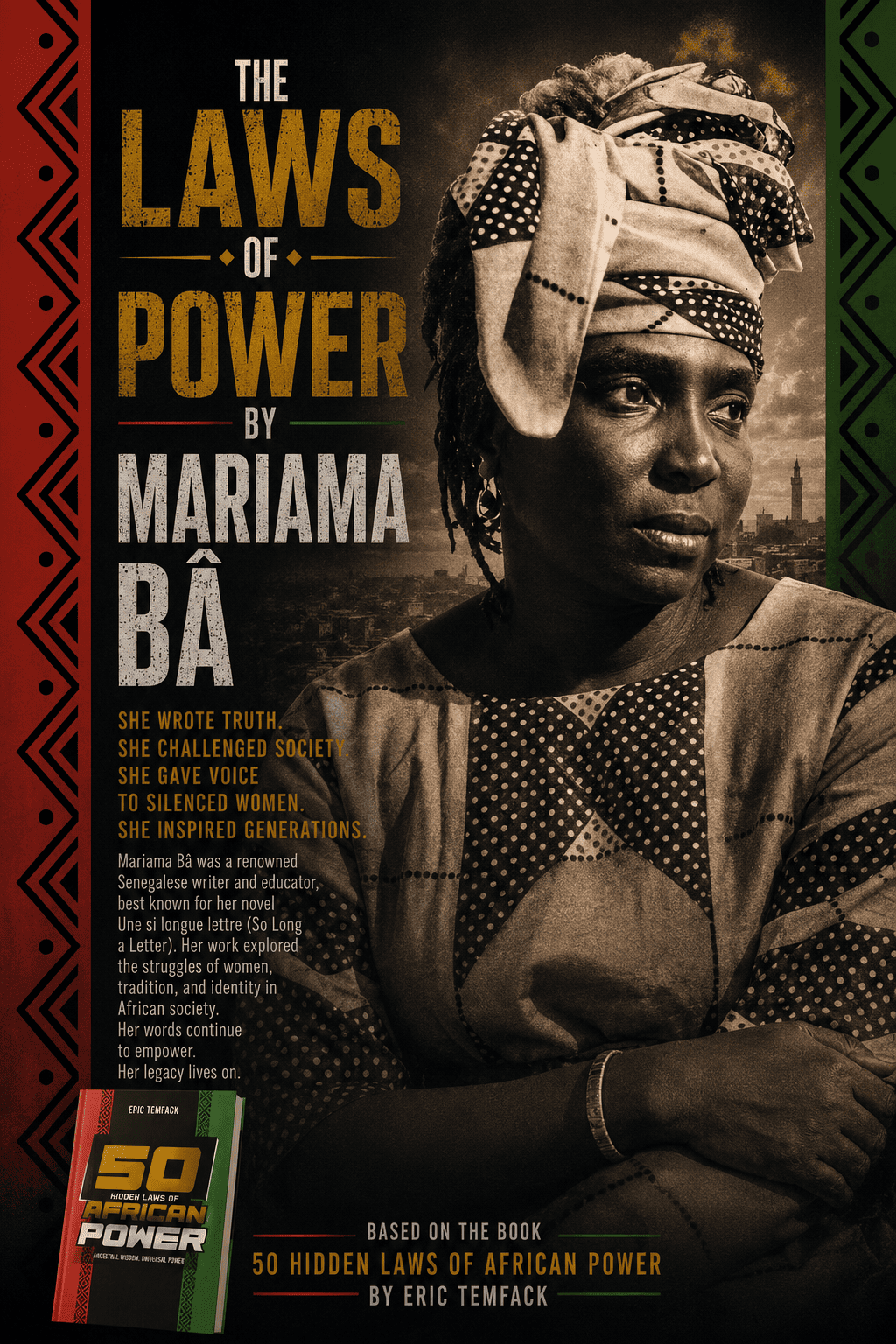
MARIAMA BÂ
⚡ The embodiment of the 50 hidden laws of African power ⚡
Writer, feminist, critic of traditional power relations
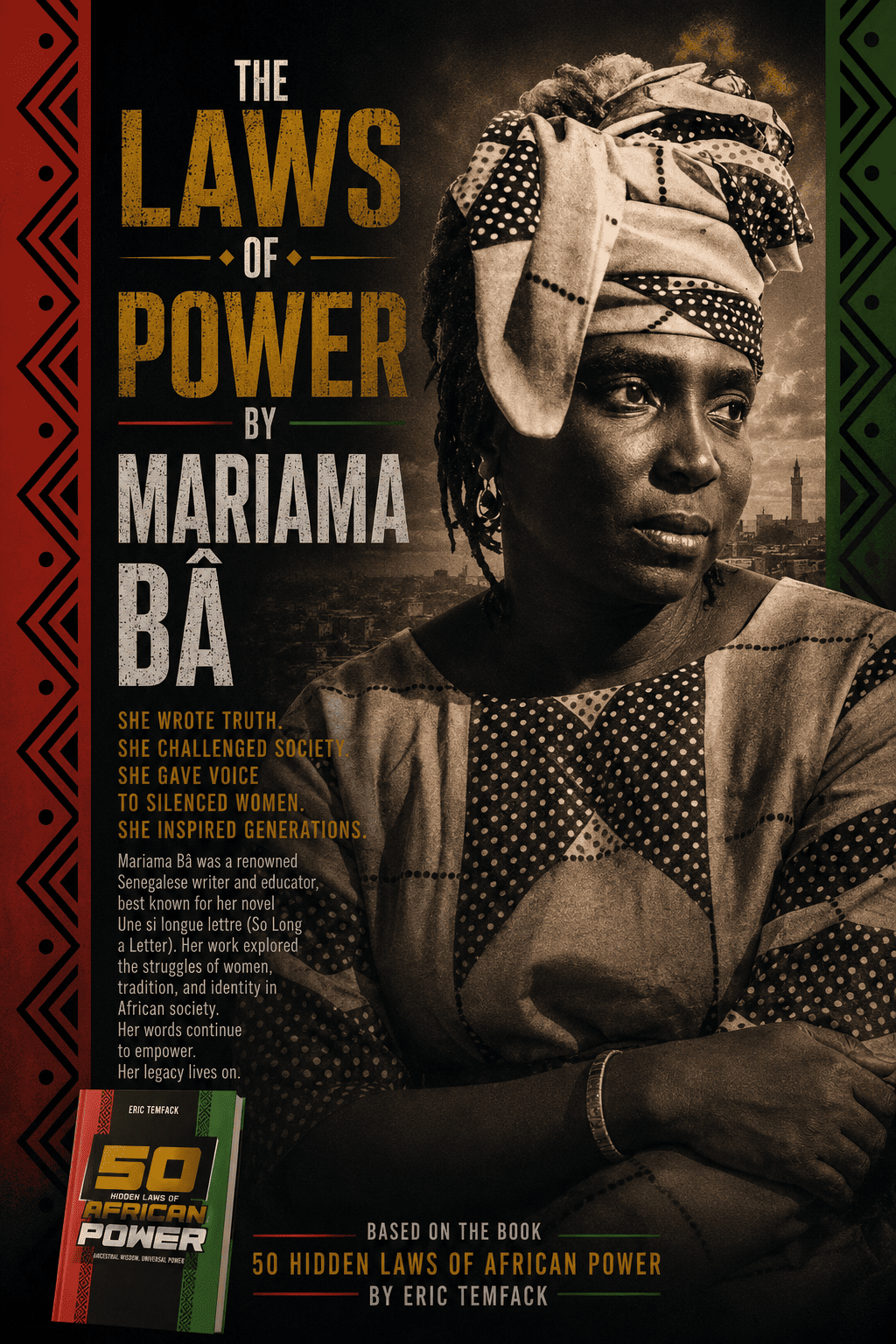
The 50 Hidden Laws · Embodied by Mariama Bâ
Each law below illustrates an aspect of her literary struggle: denouncing injustice, girls’ education, critique of polygamy, building free speech.
50/50 laws embodied – a pen that changed the discourse on women’s condition in Africa.
Fundamental laws: the strategic DNA of Mariama Bâ
Law #31 – Control the narrative through writing (So Long a Letter)
Her epistolary novel “So Long a Letter” (1979) tells the pain of Ramatoulaye, widowed after thirty years of marriage when her husband takes a second wife. Through this letter addressed to her friend, Mariama Bâ denounces polygamy, social oppression and the weight of traditions. The book received the Noma Award in 1980 and became a classic of African feminist literature.
Law #28 – Mobilise the excluded (silent women)
Mariama Bâ gives a voice to African women reduced to silence. She criticises education that prepares girls for marriage rather than independence. Her work encourages women to educate themselves, speak out and resist forced marriages and imposed polygamy.
Law #36 – Education is liberation
She was a teacher and campaigned for girls’ access to education. She pioneered the training of young girls in Senegal. Her heroine Ramatoulaye is a teacher, a symbol of the educated woman who emancipates herself through knowledge.
Law #30 – Live as you teach
Mariama Bâ was the mother of nine children (several adopted), active in women’s associations, and refused political compromises. She led a life consistent with her ideals of independence and justice.

Journey of an engaged writer
Legend in pictures


Major achievements and legacy
Law #49 – Your legacy is your final act of power: Today, “So Long a Letter” is read in high schools and universities across Africa and beyond. Mariama Bâ paved the way for a whole generation of African women writers such as Aminata Sow Fall, Ken Bugul and Fatou Diome.
Law #37 – Cultivate organised mystery
Mariama Bâ spoke little about herself in public. Her second novel “Scarlet Song” (1981) was published just before her premature death, leaving her unfinished projects shrouded in mystery. She never gave a detailed autobiographical interview, fuelling interpretations and the legend of the discreet yet powerful writer.
Synthesis · Mariama Bâ and the 50 laws
Mariama Bâ used the pen as a weapon. She deconstructed patriarchal discourse by imposing a raw and lucid female voice. Her work shows that literature can be an act of power, transforming individual lives into a collective cause. She remains a beacon for women who write for freedom.