FATIMA SOUDI BINT ABDERREMANE
⚡ The embodiment of the 50 hidden laws of African power ⚡
Sultana and regent of Grande Comore, architect of Comorian resistance
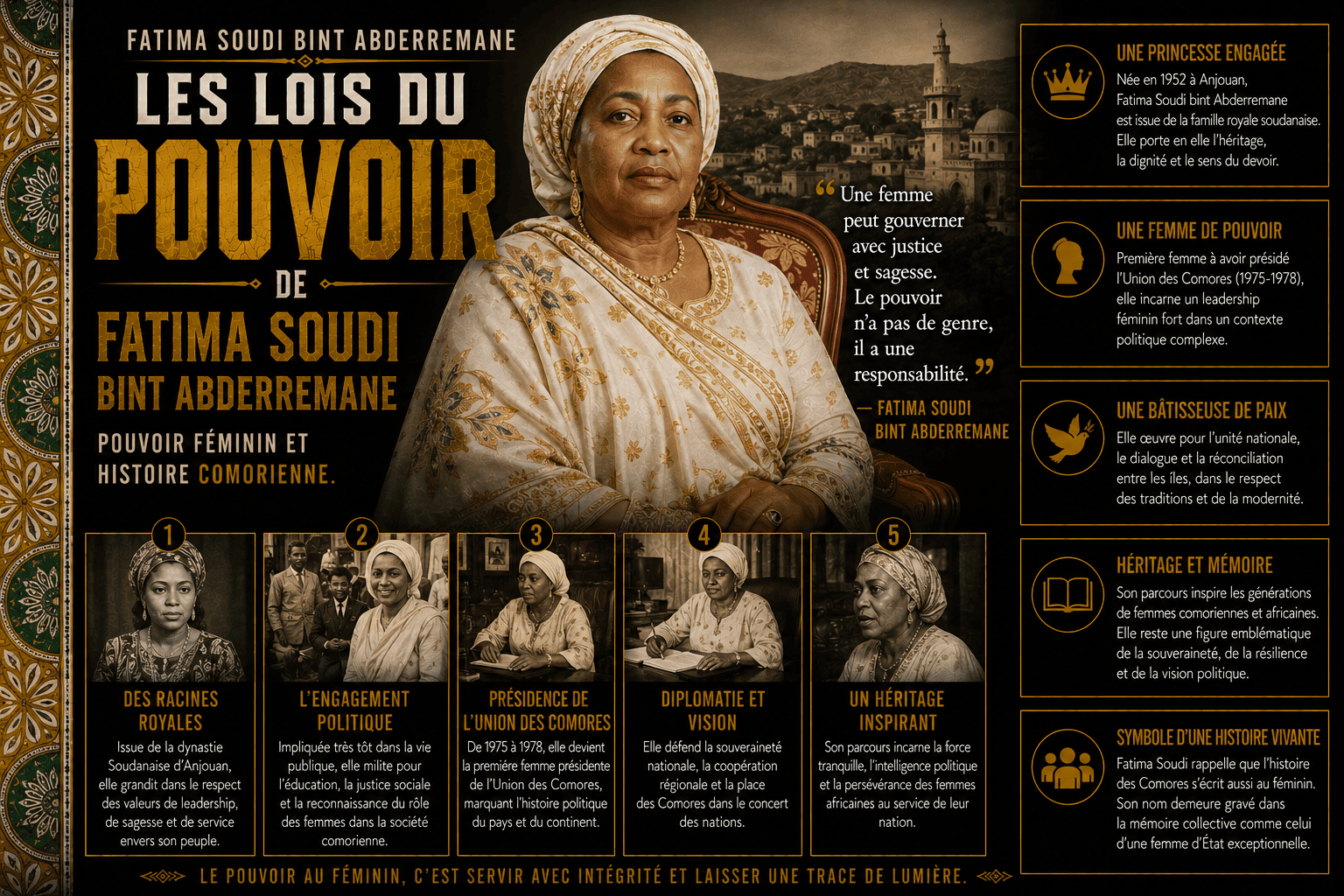
The 50 Hidden Laws · Embodied by Fatima Soudi
Each law below illustrates an aspect of her leadership: refusal of protectorates, matrimonial alliances, preservation of customs, female power.
50/50 laws embodied – a sultana who kept the Comoros free from European empires.
Fundamental laws: the strategic DNA of Fatima Soudi
Law #14 – Control the river, not just the fish (the sea as territory)
Fatima Soudi mastered the sea routes between the archipelago and the African mainland. She imposed taxes on the slave, ivory and spice trades and refused to let the French and British control her ports. Her power rested on the sea.
Law #18 – Isolationism as a shield
She rejected all French protectorate demands between 1845 and 1850. Rather than sign unequal treaties, she preferred a policy of balance between the powers (France, Great Britain, the Sultanate of Zanzibar), playing their rivalries to preserve Grande Comore’s independence.
Law #28 – Mobilise the excluded (women and qadis)
She surrounded herself with female advisors and consulted the qadis (Muslim judges) to legitimise her authority. She protected the status of women in Comorian society, allowing them to own land and negotiate alliances.
Law #50 – Become an ancestor while still alive
Even in her lifetime, she was called “Mwana wa Mambo” (daughter of power). After her death, her tomb in Moroni became a place of pilgrimage. Generations of Comorian women cite her as an example.

Journey of a visionary sultana
Legend in pictures


Major achievements and legacy
Law #49 – Your legacy is your final act of power: Today, a street in Moroni bears her name, and Fatima Soudi’s story is taught in Comorian schools as a model of female leadership and resistance to colonisation.
Law #37 – Cultivate organised mystery
Few written archives of her reign survive, as French colonists systematically destroyed or hid documents that contradicted their narrative. Comorian oral tradition thus shaped a figure both historical and legendary, strengthening her aura.
Synthesis · Fatima Soudi and the 50 laws
Fatima Soudi bint Abderremane managed to govern at a time when women were excluded from power. Through cunning, alliances and mastery of the sea, she preserved her island’s autonomy in the face of colonial appetites. She remains a rare example of an African sovereign who resisted through diplomacy and long‑term vision.