NAWAL EL SAADAWI — EMBODIMENT OF THE 50 HIDDEN LAWS OF AFRICAN POWER
Through radical intellectual courage, writing as a political weapon, and resistance to oppression, the Egyptian feminist has illustrated the African Laws of Power.
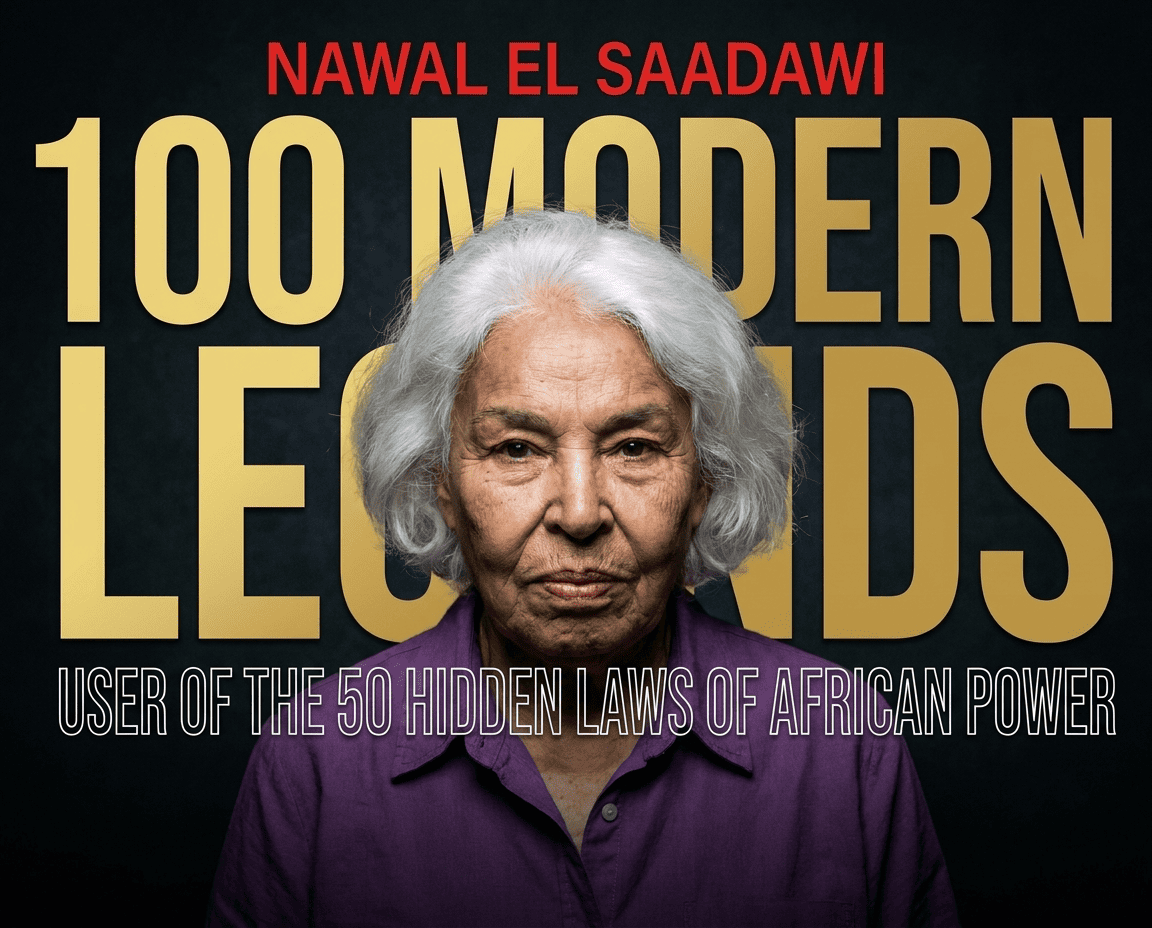
Nawal El Saadawi
Book 1: 50 Laws
I. CONTEXT: EGYPT AND ARAB FEMINISM
⭐ Who is Nawal El Saadawi? Nawal El Saadawi (1931-2021) was an Egyptian physician, psychiatrist, writer, and feminist. A pioneer in the struggle for women's rights in the Arab world, she founded the Arab Women's Solidarity Association in 1982 and was imprisoned in 1981 under Sadat. Author of more than 50 books on women, religion, and society.
Egypt in the 1950s-2020s
Nawal El Saadawi emerged in an Egypt marked by colonialism, Arab nationalism, the rise of political Islam, and struggles for women's independence. Coming from a rural family, she transformed medicine into a platform for denouncing violence against women, transcending religious and cultural taboos.
❓ What has been Nawal El Saadawi's impact on the Arab world? Nawal El Saadawi broke taboos on female genital mutilation, female sexuality, and religious patriarchy, inspired generations of Arab feminists, and demonstrated that writing can be a weapon of liberation. She illustrates Law 45: "Become a Symbol" by becoming a global icon of Arab feminism.
Cultural and Spiritual Context
Nawal El Saadawi draws from Egyptian traditions of resistance: peasant revolt, the voice of oppressed women, the struggle against all forms of domination. Her journey resonates with the principles of the African Laws of Power: transforming suffering into revolt, writing into a weapon, and creating a legacy that inspires beyond borders.
🔗 CONNECTION TO THE 50 HIDDEN LAWS OF AFRICAN POWER
→ Law #45: "Become a Symbol – When Your Name Becomes a Movement"
Points of convergence:
• Nawal El Saadawi became more than a writer; she is the living symbol of Arab female resistance, intellectual courage, and liberation.
• Her name and writings have the power to inspire millions of women across the Arab world to dare revolt.
• Modern application: Leaders must embody universal values to acquire influence that transcends borders.
• Strategic lesson: Universal symbolic power is born from alignment between personal revolt and collective liberation.
II. ORIGINS AND ASCENT: FROM THE VILLAGE TO REVOLUTION
❓ How did Nawal El Saadawi become a feminist icon? Born in an Egyptian village, Nawal transformed her experience of female genital mutilation and oppression into a weapon of collective struggle. From medicine to writing, from prison to exile, she forged her legend through action, illustrating Law 2: "Forge Your Legend Through Deeds".
Birth and Childhood: The Awakening of Consciousness
Nawal El Saadawi was born on October 27, 1931, in Kafr Tahla, a village in the Nile Delta. At age 6, she underwent female genital mutilation, a foundational trauma that would awaken her feminist consciousness. Despite traditions, her father encouraged her to study. She earned a medical degree in 1955, then specialized in psychiatry. Education became her weapon of liberation.
The Strategic Turning Point: Medicine as Revelation
As a psychiatrist, Nawal discovered women's traumas: domestic violence, female genital mutilation, sexual repression. In 1972, she published "Women and Sex", a banned book denouncing patriarchal violence. The scandal was immediate. She lost her position as Director of Public Health. Repression forged her determination.
Emancipation: Prison and Renaissance
In September 1981, President Sadat imprisoned her as part of a massive crackdown. In prison, she wrote "Memoirs of a Woman Doctor", a hidden manuscript that would become a manifesto. Released in 1982 after Sadat's assassination, she founded the Arab Women's Solidarity Association. Threatened with death by fundamentalists, she exiled herself to the United States in the 1990s. The legend was set in motion.
🔗 CONNECTION TO THE AFRICAN LAWS OF POWER
→ Law #2: "Forge Your Legend Through Deeds"
Points of convergence:
• Nawal did not speak of her greatness; she proved it through banned books, imprisonment, founding associations.
• Every persecution, every book was tangible proof consolidating her emerging legitimacy.
• Modern application: Do not promise; accomplish. Your actions build your legend more than your words.
• Strategic lesson: Reputation is forged through repeated proof of courage and consistency.
III. MASTERY OF THE THEATER OF POWER: THE PEN AS SWORD
❓ How does Nawal El Saadawi master her influence? Nawal controls every aspect of her communication: direct and provocative writing, courageous public appearances, uncompromising interviews. She illustrates Law 7: "Become a Master of the Theater of Power" through her narrative and media mastery.
Building an Iconic Voice
Nawal understood early that writing is a political weapon. She created a recognizable style: direct, uncompromising, blending personal testimony and political analysis. Every book was designed to provoke awareness and break taboos.
Controlling the Media Narrative
Nawal does not submit to the narrative; she directs it. Through her books, international conferences, and provocative interviews, she controls the narrative of Arab feminist struggle. She transforms every threat into an opportunity for global visibility.
🔗 CONNECTION TO THE AFRICAN LAWS OF POWER
→ Law #7: "Become a Master of the Theater of Power"
Points of convergence:
• Nawal understood that authority is also played on a carefully orchestrated stage: chosen words, defiant posture, camera gaze.
• Every detail of her public persona communicated a message of power and resistance.
• Modern application: Master your communication, your frame, your narrative. Perception is reality.
• Strategic lesson: The theater of power is not duplicity; it is the art of making your inner strength visible.
IV. TRANSFORMING IRON INTO GOLD: FROM SUFFERING TO REVOLUTION
❓ How did Nawal El Saadawi transform oppression into liberation? Nawal transformed her trauma of female genital mutilation and suffered violence into a weapon of collective struggle through writing, creating associations, and international mobilization. She illustrates Law 10: "Transform Iron into Gold" — turning pain into power.
The Strategy of International Visibility
Unlike many local activists, Nawal used her international credibility (global conferences, translations, international awards) to protect her voice and amplify her message. Forced exile became a global platform. This visibility was key to her survival and influence.
Investing in Collective Mobilization
Nawal invested massively in organizing women: founding the Arab Women's Solidarity Association (1982), creating transnational networks, training young activists. This was activism with a mission of systemic transformation.
🔗 CONNECTION TO THE AFRICAN LAWS OF POWER
→ Law #10: "Transform Iron into Gold"
Points of convergence:
• Nawal transformed personal suffering ("iron") into a movement of collective liberation ("gold").
• She created political value where others saw only victims.
• Modern application: Do not submit to oppression; transform it into a lever for change.
• Strategic lesson: Activist innovation transforms pain into power; value is created, not merely endured.
V. STRATEGIC MOMENTS: THE 1981 IMPRISONMENT
❓ What was the most strategic moment in Nawal El Saadawi's life? Her imprisonment in September 1981 under Sadat. In Qanatir Prison, she clandestinely wrote "Memoirs of a Woman Doctor", transforming repression into a revolutionary manifesto, illustrating Law 24: "Exile is a Waiting Room, Not a Tomb".
The Challenge: Resisting State Repression
In 1981, Nawal was 50. Sadat launched a massive crackdown against opponents. She was imprisoned without trial. The challenge was twofold: survive psychologically the incarceration, and transform prison into a platform of resistance.
The Strategy Deployed: Clandestine Writing as Manifesto
Nawal did not passively submit to imprisonment; she used it as a laboratory for writing. She hid manuscripts, wrote on stolen papers, transformed every day in prison into an act of resistance. Imprisonment was not defeat; it was revolutionary incubation.
The Result and Its Consequences
Released in January 1982 after Sadat's assassination, Nawal published her prison memoirs. The book became an international bestseller. Imprisonment, instead of silencing her, amplified her voice globally. Prison was a waiting room; liberation, a manifesto.
🔗 CONNECTION TO THE AFRICAN LAWS OF POWER
→ Law #24: "Exile is a Waiting Room, Not a Tomb"
Points of convergence:
• Nawal used her imprisonment as a period of maturation and revolutionary writing.
• She let her idea of liberation grow in adversity until circumstances became favorable.
• Modern application: A setback, a sidelining, a public failure can become periods of strategic preparation.
• Strategic lesson: Forced confinement is not an end; it is incubation for a more powerful return.
VI. LEGACY: AN ANCESTOR WHILE ALIVE
Nawal passed away on March 21, 2021, in Cairo at age 89, but her legend is immortal. She transformed Arab feminism. Her books are translated worldwide. Her political daughters emerge across the Middle East. She has become an "ancestor while alive".
🔗 CONNECTION TO THE AFRICAN LAWS OF POWER
→ Law #50: "Become an Ancestor While Alive"
Points of convergence:
• Nawal became a mythical reference while alive, a guide for future generations of Arab feminists.
• Her influence continues to shape women's movements, engaged literature, and the struggle against patriarchy.
• Modern application: Share your wisdom, create a legacy that transcends your physical presence.
• Strategic lesson: Ultimate power is becoming a timeless reference, a guide for future generations.
VII. STRATEGIC LESSONS FOR THE MODERN LEADER
💡 What can a leader learn from Nawal El Saadawi? Nawal teaches radical intellectual courage, writing as a political weapon, resistance to oppression, and inspiring globally through consistency. Modern leaders must aim for integrity and transformative impact.
Lesson 1: Intellectual courage is a strategic weapon
Nawal owes her legitimacy neither to compromise nor to silence, but to her unshakeable intellectual courage. She proves that speaking truth, even at the price of persecution, creates indestructible moral authority. Apply this standard to your leadership: truth creates credibility.
Lesson 2: Transform your traumas into political strength
Nawal never denied her trauma of female genital mutilation; she transformed it into fuel for collective struggle. In your journey, every wound is material for building your mission.
Lesson 3: Create a legacy that transcends your presence
Nawal trained generations of feminists, wrote more than 50 books, and left a standard of courage that outlives her death. Build now the legacy you will leave.
🔗 CONNECTION TO THE AFRICAN LAWS OF POWER
→ Law #30: "Live as You Teach"
Points of convergence:
• Nawal does not preach liberation; she lives it through her refusal to compromise, her engaged writing, and her resistance.
• Her authenticity is consistent between words and actions.
• Modern application: Moral authority is born from alignment between words and deeds.
• Strategic lesson: Sustainable leadership is founded on exemplarity; live the values you preach.
VIII. FAQ – FREQUENTLY ASKED QUESTIONS ABOUT NAWAL EL SAADAWI
❓ Why was Nawal El Saadawi imprisoned? Nawal El Saadawi was imprisoned in September 1981 by President Sadat as part of a massive crackdown against political opponents and intellectuals. She spent 3 months in Qanatir Prison, where she clandestinely wrote "Memoirs of a Woman Doctor".
❓ What is Nawal El Saadawi's legacy? Nawal El Saadawi published more than 50 books translated worldwide, founded the Arab Women's Solidarity Association (1982), broke taboos on female genital mutilation and female sexuality, and inspired generations of Arab feminists. Her legacy is proof that writing can be a weapon of liberation.
❓ How does Nawal El Saadawi inspire Arab women? Nawal El Saadawi has inspired generations of Arab women through her intellectual courage, her refusal to compromise, and her denunciation of religious and political patriarchy. She proved that women can defy taboos and transform society.
❓ Is Nawal El Saadawi still alive? Nawal El Saadawi passed away on March 21, 2021, in Cairo at the age of 89. Her legacy continues to inspire Arab and global feminist movements. She remains a timeless reference in the struggle for women's rights and freedom of expression.
CONCLUSION: NAWAL EL SAADAWI, THE ETERNAL REVOLT
Nawal El Saadawi remains, nearly a century after her birth, one of the most influential figures in Arab and global feminism. Her journey — from an Egyptian village to the international stage, from female genital mutilation to liberation, from prison to literary immortality — testifies to the power of intellectual courage, engaged writing, and creating an immortal legacy. She did not just write books; she wrote revolt.
For contemporary leaders, Nawal El Saadawi represents non-negotiable courage, control of one's destiny, and the ability to transform individual suffering into a movement of collective liberation. Her life teaches that lasting power is born from alignment between values, words, and actions. Her name, Nawal El Saadawi, resonates as a challenge: may every leader become architect of their own revolt, writing even in the heart of oppression.
🔗 SYNTHESIS: NAWAL EL SAADAWI AS EMBODIMENT OF THE HIDDEN LAWS OF AFRICAN POWER
📜 Summary of African power laws embodied by Nawal El Saadawi: Legend through deeds (#2), Resilience against limits (#5), Transforming iron into gold (#10), Creative exile (#24), Living as one teaches (#30), Universal symbol (#45), Immortal legacy (#50).
- Law #2 (Forge Your Legend Through Deeds) – Banned books, imprisonment, associations founded.
- Law #5 (Never Define Yourself by Your Limits) – Transforming female genital mutilation and prison into strength.
- Law #10 (Transform Iron into Gold) – Personal suffering transformed into collective movement.
- Law #24 (Exile is a Waiting Room) – Prison as incubation, exile as global platform.
- Law #30 (Live as You Teach) – Daily courage, refusal to compromise.
- Law #45 (Become a Symbol) – Global icon of Arab feminism.
- Law #50 (Become an Ancestor) – Massive posthumous influence on Arab feminists.
Practical Application for the Modern Leader:
✅ Transform your traumas into levers for change
✅ Use writing and speech as political weapons
✅ Refuse compromise on your foundational values
✅ Build transnational solidarity networks
✅ Remain authentic to your mission of liberation
The Nawal El Saadawi Challenge for You:
"What is your taboo to break? How will you transform your revolt into a movement of liberation that inspires your community?"
📚 Deepen with the Africa & Power Series